There’s a quiet comfort in a slow cooker. You add ingredients in the morning, and by evening, a warm, fragrant meal is waiting. It’s a promise of convenience and nourishment. But that long, gentle simmer can sometimes come at a cost to the very vitamins and minerals we’re hoping to preserve. While slow cooking is excellent for tenderizing proteins and developing flavors, certain nutrients are sensitive to heat, time, and exposure to water. The good news is that by learning to spot the subtle signs, you can adjust your methods to get the most from your meals.
The process isn’t inherently bad—far from it. The sealed environment of a slow cooker can actually help retain water-soluble nutrients better than boiling, where vitamins literally leach out into the cooking water you then discard. The key is understanding what to look for so you can cook smarter, not just longer.
What happens to nutrients during a long cook?
Heat, air, and water are the main forces that degrade nutrients. Vitamin C and many B vitamins (like thiamine and folate) are particularly vulnerable; they are water-soluble and can break down under sustained heat. Prolonged cooking can also diminish the potency of some antioxidants found in vegetables. The goal isn’t to avoid cooking—which makes many nutrients more bioavailable—but to find the sweet spot where food is safely cooked, delicious, and still nutrient-dense.
Think of it as stewardship: you’re guiding the ingredients from raw to ready while safeguarding their nutritional value.
The first sign: a dramatic loss of color
One of the most visual cues that nutrients may be fading is a significant change in the color of your vegetables. Vibrant greens turning a dull, olive drab is a classic indicator. That bright green comes from chlorophyll, and its degradation often parallels the loss of heat-sensitive vitamins like vitamin C.
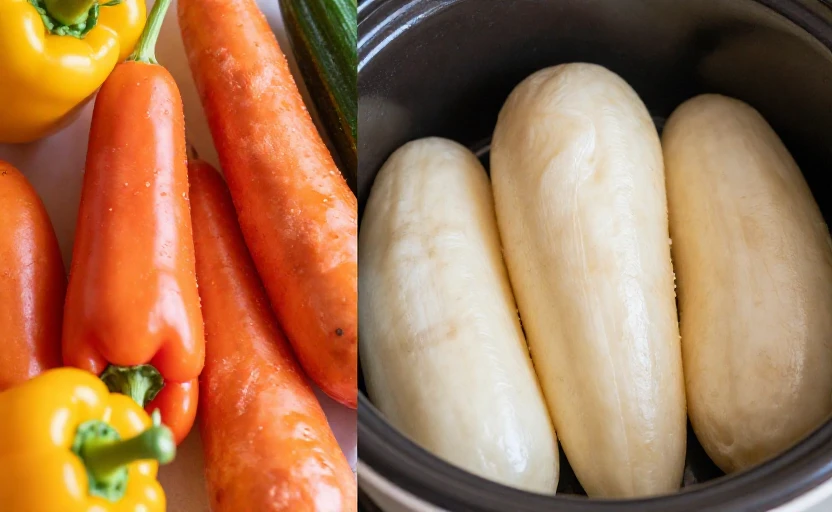
Similarly, watch for deeply colored vegetables like red peppers, purple cabbage, or orange carrots becoming washed out and pale. The pigments responsible for these colors—carotenoids, anthocyanins—are antioxidants. When they fade, it often signals those beneficial compounds have started to break down.
This doesn’t mean a slight softening of color is a problem. But if your broccoli florets look army-green and lifeless, or your red potatoes have lost their rosy hue entirely, it’s a sign they’ve been cooking too long for optimal nutrient retention.
The second sign: vegetables turning mushy and flavorless
Texture and taste are powerful guides. When vegetables dissolve into a indistinct mush, losing all structural integrity, it’s more than a textural issue. That breakdown of cell walls means nutrients have had more opportunity to leach out into the cooking liquid. A carrot that still has a slight bite to it retains more of its integrity—and its nutrients—than one that disintegrates at the touch of a spoon.
Along with texture, pay attention to flavor. Vegetables that taste flat, watery, or strangely bland compared to their usual sweetness or earthiness have likely given up a lot of their soluble compounds, including minerals and natural sugars, to the surrounding broth. The flavor should be in the food, not just the liquid around it.
How to adapt your slow cooker routine
Spotting these signs is the first step. The next is making simple adjustments to protect your meal’s nutritional profile.
- Layer wisely: Place hardier, longer-cooking root vegetables (potatoes, carrots) at the bottom near the heat source. Add more delicate vegetables (zucchini, peas, spinach, peppers) during the last 30-60 minutes of cooking.
- Consider size and shape: Cutting vegetables into larger, uniform chunks exposes less surface area to heat and liquid, helping them hold onto nutrients better than tiny dice.
- Use less liquid: Only add the liquid called for in the recipe. Excess water increases nutrient leaching. Remember, vegetables release their own water as they cook.
- Embrace the “keep warm” function: If your meal is done but you’re not ready to eat, switching to “keep warm” halts the active cooking process, preventing further nutrient degradation.
Maximizing nutrition without sacrificing convenience
The beauty of the slow cooker is its set-and-forget nature. You don’t have to lose that. A few thoughtful habits can bridge the gap between ultimate convenience and optimal nutrition.
For instance, if you’re making a stew or soup, consider blending a portion of the cooked vegetables back into the broth at the end. This recaptures any nutrients that did leach out and creates a wonderfully thick, creamy texture. Also, finishing a dish with a handful of fresh herbs, a drizzle of good olive oil, or a squeeze of citrus juice just before serving adds a burst of fresh flavor and raw, heat-sensitive nutrients right at the table.
Ultimately, your slow cooker is a tool for wholesome cooking. By tuning into the visual and textural clues your food gives you, you can use it to create meals that are as nourishing as they are comforting.