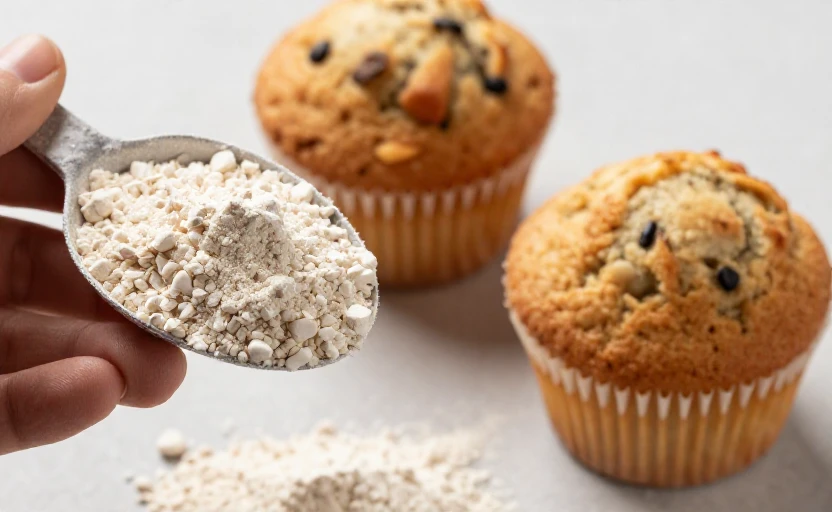
You’ve followed the recipe to the letter, measured with precision, and baked with care. Yet, when you bite into your gluten-free muffin or cookie, you’re met with an unwelcome, sandy texture. That grittiness can turn a labor of love into a disappointing crumble. Often, the culprit isn’t your technique—it’s hiding in the flour blend itself.
Understanding what’s in your blend and how those ingredients interact is the first step toward achieving the smooth, tender crumb you’re after. Let’s look at the two most common signs that your chosen flour blend is working against you.
The composition of your blend matters more than you think
Not all gluten-free flours are created equal. Wheat flour has a unique protein structure that provides elasticity and strength. Gluten-free baking relies on a careful combination of alternative flours and starches to mimic that structure. When that combination is off, texture suffers.
The base flours—like rice flour, almond flour, or sorghum flour—provide substance. Starches—such as tapioca, potato, or cornstarch—add lightness and help bind moisture. Binders like xanthan or guar gum replicate gluten’s sticky, elastic quality. A gritty result often points to an imbalance in this delicate ecosystem.
Sign 1: A high proportion of coarse, whole-grain flours
This is the most straightforward cause of grittiness. Many wholesome, nutrient-dense gluten-free flours have a naturally coarser grind.
- Brown rice flour is a common offender. Unless it’s labeled “superfine” or “extra-fine,” it often retains a granular texture that can be perceptible in the final bake.
- Certain bean flours (like garbanzo or fava bean flour) can have a distinct, slightly gritty mouthfeel if not perfectly ground.
- Some almond meals, as opposed to blanched almond flour, contain the almond skins, which don’t break down completely during baking.
A blend leaning heavily on these ingredients without enough fine starch to balance them will almost always produce a denser, grainier texture.
It’s not that these flours are “bad”—they bring great flavor and nutrition. The issue is their particle size. In a commercial blend, they may not be milled finely enough for your sensitive palate. If the first ingredient on your blend’s bag is a whole-grain flour and you’re experiencing grittiness, this is likely the primary reason.
Sign 2: An insufficient binder or the wrong starch balance
Grittiness isn’t always about large particles. Sometimes, it’s a failure of cohesion. Without proper binding, the individual flour particles don’t unite into a smooth matrix; they remain separate, creating a sandy, crumbly feel.
Check your blend’s ingredient list. Does it include a binding agent like xanthan gum, guar gum, or psyllium husk? Many all-purpose blends do, but some “single flour” bags or DIY blend recipes may not. If it’s absent, your baked goods may lack the necessary structure to hold a fine crumb.
Similarly, the ratio of flour to starch is critical. Starches like tapioca starch (tapioca flour) or potato starch are incredibly fine powders. They act as fillers in the microscopic spaces between flour particles, creating a smoother mouthfeel. A blend that’s too high in gritty base flours and too low in these fine, smoothing starches will highlight the texture of those base flours.
What you can do about it
If your current blend is letting you down, you have a few paths to a smoother outcome.
Choose a different commercial blend
Look for blends that prioritize fine textures. Descriptors like “superfine,” “pastry blend,” or “cup-for-cup” (which are formulated to include binders) are good indicators. Often, blends that use white rice flour instead of brown rice flour as a base will yield a finer crumb.
Try a simple sifting test
Take a spoonful of your flour blend and sift it through a fine-mesh strainer. If a significant amount of coarse granules are left behind, you’ve visually identified the source of your grittiness. You can try sifting the entire batch before use, though this may alter the intended ratio of ingredients if starches are finer and sift through first.
Modify your recipe slightly
For a blend lacking binder, you can often add ¼ to ½ teaspoon of xanthan gum per cup of flour blend for cookies and cakes (a bit more for bread). Adding an extra tablespoon of a fine starch, like tapioca or arrowroot, can also help soften the texture of a coarse blend. These are small adjustments, but they can make a meaningful difference.
Ultimately, finding the right flour blend is a personal journey. It depends on what you’re baking, your taste preferences, and any dietary restrictions beyond gluten. By paying attention to these two signs—a coarse flour base or a lack of binding support—you can diagnose the problem and move closer to baked goods that are not just edible, but delightfully smooth.