Coming off hormonal birth control when you have Polycystic Ovary Syndrome (PCOS) can feel like stepping into the unknown. Your cycles may be irregular, unpredictable, or absent altogether in the first few months. For many women, the biggest question is: Am I ovulating? Without the steady rhythm of a pill-induced cycle, recognizing ovulation signs becomes a crucial skill for either planning a pregnancy or simply understanding your body’s new normal.
The challenge with PCOS is that classic ovulation tracking methods—like calendar counting—often fail because cycles are rarely textbook 28 days. You might experience multiple waves of cervical fluid or confusing temperature shifts. That’s why a targeted, two-pronged approach, backed by reproductive endocrinology, offers clarity without the guesswork. Below are the two expert-backed steps to help you identify ovulation signs after stopping the pill.
Step 1: Master the Art of Cervical Mucus Observation
Cervical mucus is your body’s most reliable, real-time ovulation indicator—especially for those with PCOS. Estrogen rises in the days before ovulation, prompting your cervix to produce a distinctive discharge. On the pill, synthetic hormones suppress this pattern, so you’re essentially learning a new language for your body. For best results, check your mucus every time you use the restroom. Wipe before urinating, and observe the texture and color on the toilet paper. You can also insert a clean finger to feel the sensation at the vaginal opening.
What you’re looking for is a shift from dry or sticky (non-fertile) to a wet, slippery consistency that resembles raw egg whites. This fertile-quality mucus is the hallmark sign that estrogen has peaked, and ovulation is imminent—usually within 24 to 48 hours. Women with PCOS may experience this pattern multiple times in a cycle before actual ovulation occurs, or they might see it only briefly. The key is consistency: log your observations daily. Apps like Fertility Friend or Read Your Body can help you spot patterns over several cycles.
A quick tip: If you have PCOS, be aware that elevated androgens can sometimes mimic fertile mucus. If the discharge feels thin but doesn’t stretch like an egg white, it might be anovulatory bleeding or estrogen fluctuation, not true ovulation. Always cross-reference with other signs.
Step 2: Layer in Basal Body Temperature (BBT) Charting
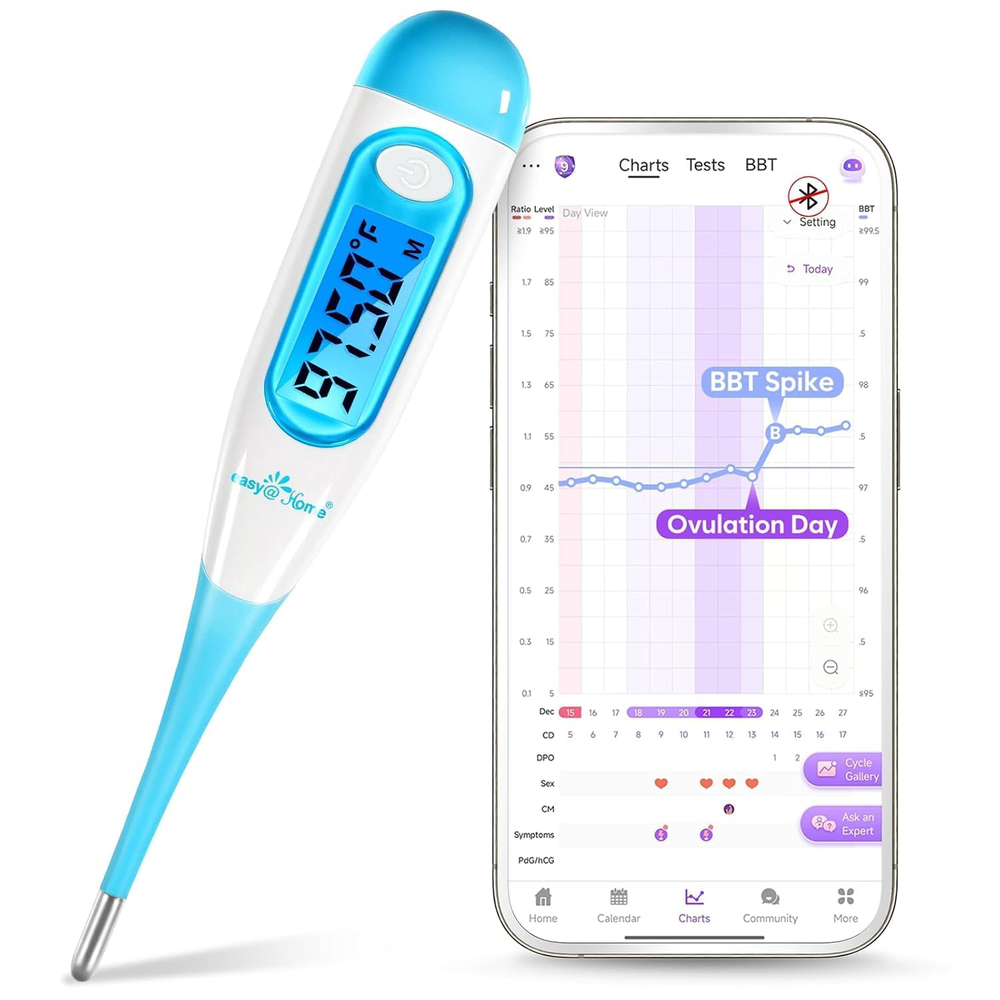
While cervical mucus tells you when ovulation is approaching, basal body temperature confirms that it actually happened. BBT charting involves taking your temperature with a sensitive thermometer (accurate to two decimal places) every morning before you get out of bed, eat, drink, or move around. After ovulation, progesterone rises and raises your resting body temperature by about 0.5 to 1.0 degrees Fahrenheit. A sustained shift for three or more days confirms that ovulation occurred.
For the post-pill PCOS crowd, BBT can be frustrating initially. You might see a flat, low-temperature line for weeks without any clear shift. Do not get discouraged—this tells you that ovulation hasn’t happened yet, but it’s still valuable data. When you do see a sustained temperature rise, you can look back at your cervical mucus logs to see what the fertile window looked like. The combination of these two signs creates a powerful feedback loop: mucus predicts, BBT proves. If you see several days of egg-white mucus followed by a thermal shift, you’ve documented a successful ovulatory cycle.
It is worth noting that sleep disturbances, illness, alcohol, or a late night can spike your temperature artificially. For best accuracy, use a dedicated basal body thermometer and take it at roughly the same time each morning—even on weekends. If you have irregular circadian rhythms due to shift work or young children, consider a wearable sensor like TempDrop or Oura Ring, which samples skin temperature throughout the night for a more forgiving algorithm.
Common Pitfalls for PCOS Trackers
Even with these two steps, women with PCOS face unique hurdles. One common issue is “false alarms”—a temp shift that lasts only a day or two before dropping back down. This often indicates an anovulatory surge (your body tried to ovulate but didn’t succeed). Another is “lugging” Luteinizing Hormone (LH) test strips. Many women with PCOS have chronically elevated LH, which makes standard ovulation predictor kits unreliable. They might show positive results for days or even weeks. Stick to the mucus and BBT method first, and only use LH strips if you already know your typical mucus pattern.
You also need patience. After stopping the pill, it can take three to six months for your natural hormone production to reestablish its baseline. During this time, it is normal to have a mix of anovulatory and ovulatory cycles. Tracking both “wins” and “failures” gives your healthcare provider richer information than any single blood test. Over time, you may notice that your fertile window moves around—that is normal with PCOS. The goal is not to predict with perfect precision from day one, but to build a running log of how your unique body behaves off the pill.
When to Seek Medical Guidance
These tracking steps are powerful self-awareness tools, but they are not a substitute for medical care. If you have been tracking for six months without any signs of ovulation (no sustained temperature shifts and no fertile mucus), or if your cycles are consistently longer than 45 days, it’s time to consult a reproductive endocrinologist or a gynecologist familiar with PCOS. They may want to run labs like progesterone on day 21 of a suspected ovulatory cycle (adjusted for longer cycles) or perform an ultrasound to assess ovarian morphology.
For those trying to conceive, tracking ovulation signs helps you time intercourse efficiently. For women with PCOS who are not trying to conceive, knowing that you are ovulating provides reassurance that your cycle is functioning, which can reduce anxiety around metabolic health and fertility. Either way, the two-step method of cervical mucus observation plus BBT charting gives you concrete, daily evidence of what your body is doing—replacing guesswork with confidence.