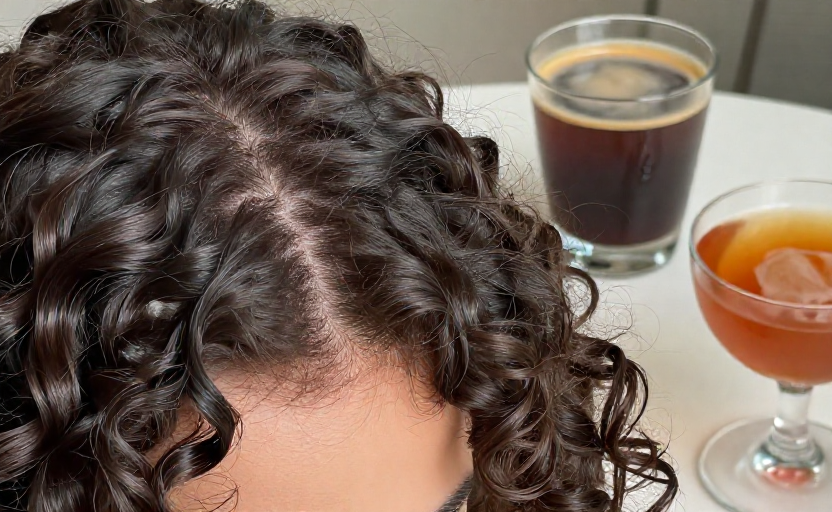
If you have curly or coily hair, you know the struggle: frizz that appears out of nowhere, a dry, itchy scalp that no conditioner seems to fix, and ends that feel brittle no matter what you do. The usual suspects are weather, humidity, and hair products. But what if the problem starts from the inside? Two common drinks could be making your frizz and scalp irritation worse—without you realizing it.
Curly hair is naturally more porous and prone to dryness. When certain beverages alter your body's hydration balance or trigger inflammation, your scalp responds with itchiness and flakes, and your curls lose their definition. Here's what to look out for and what to sip instead.
Sugary Coffee and Energy Drinks
Coffee itself isn't the enemy. In moderation, black coffee may even offer antioxidants. The trouble comes from the added sugar, syrups, and creamers that turn your morning cup into a dehydrating cocktail. High sugar intake can disrupt gut health and trigger low-grade inflammation, which often shows up on the scalp as itchiness, dandruff, or increased sensitivity. Meanwhile, caffeine acts as a mild diuretic, which can leave your body—and your hair—less hydrated. Dehydrated hair loses moisture faster, leading to more frizz, especially in curly textures.
If you rely on several sugary lattes or energy drinks a day, try scaling back. Switch to black coffee with a splash of unsweetened milk, or sip green tea, which provides a gentler caffeine lift without the sugar spike. Your scalp and curls may feel calmer within a few days.
Alcohol-Heavy Cocktails and Beer
Alcohol is well known for its dehydrating effects—it's a direct diuretic that pulls water out of your system. When you drink, your body prioritizes processing the alcohol over absorbing water, which means your skin and scalp are among the first to feel the dryness. For curly hair, that translates to rough, swollen cuticles that cause frizz. Dehydration also reduces the natural oil production on your scalp, worsening itchiness and flaking.
Cocktails with added mixers—think soda, sweet juices, or syrups—double the problem by adding sugar. Beer and wine can also trigger histamine reactions in some people, leading to scalp inflammation and redness. If you notice your hair feels extra unruly after a night out, alcohol could be the culprit.
You don't have to quit completely. Limit yourself to one serving, and match each alcoholic drink with a glass of water. For festive occasions, try a mocktail made with sparkling water, fresh lime, and a few mint leaves—it'll keep you hydrated without the negative effects on your curls.
What to Drink for Happy Curls and a Healthy Scalp
The goal is to support hydration and reduce inflammation. Plain water is the obvious best choice, but other options can help too. Herbal teas like chamomile or rooibos are caffeine-free and provide antioxidants that may soothe the scalp. Coconut water is rich in electrolytes and can replenish minerals without added sugar. Bone broth or vegetable broth offers silica and collagen-supporting nutrients that promote hair strength and elasticity. If you want something warm and cozy, a turmeric-ginger tea with a dash of black pepper can fight inflammation from the inside out.
A simple swap: replace one sugary coffee or after-work cocktail with a glass of water or herbal tea. After two weeks, notice how your scalp feels and how your curls behave.
Other Factors That Can Trigger Frizz and Scalp Itch
While drinks are a big piece of the puzzle, they aren't the only factor. Stress raises cortisol levels, which can increase oil production and scalp inflammation. Hard water with high mineral content can leave a residue on curly hair that builds up and causes itchiness. And seasonal allergies—especially to pollen or dust mites—can make the scalp react with redness and flakes. Paying attention to these triggers alongside your beverage choices gives you a fuller picture of what's bothering your curls.
When to See a Dermatologist
If your scalp itch is persistent, accompanied by visible scaling or redness, or if you notice significant hair thinning, it's a good idea to see a dermatologist. Conditions like seborrheic dermatitis, psoriasis, or contact allergies require professional diagnosis and treatment. What you drink is an important daily habit to manage, but it's not a substitute for medical care when needed.