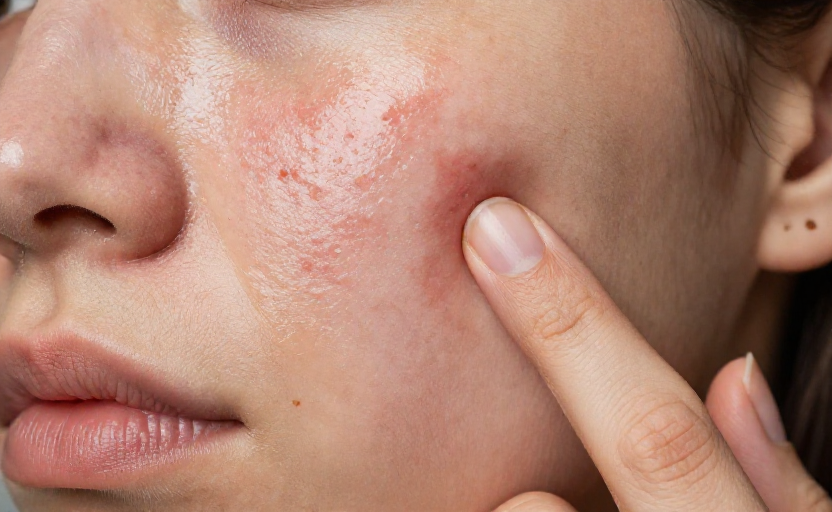
You catch a glimpse in the mirror and see a fresh whitehead rising on your oily T-zone. It’s tempting to squeeze it clean, but that momentary satisfaction often backfires—especially when your skin already runs oily. Picking at acne on oily skin doesn’t just leave a red mark; it actively triggers a cascade of new breakouts.
Understanding the biology behind this chain reaction can help you break the cycle. Here’s what happens beneath the surface when you pick, and why oily skin is particularly vulnerable.
What happens when you squeeze a pimple on oily skin?
Your pore is like a tiny oil gland lined with skin cells. When excess sebum and dead cells clog the opening, bacteria (Cutibacterium acnes) multiply in the trapped oil, causing inflammation—that red, tender bump you see. Picking ruptures the follicle wall, spilling bacteria, pus, and oil deeper into the dermis. This internal contamination inflames neighboring pores and can trigger fresh lesions within days.
For oily skin, the stakes are higher because you have more sebum production to begin with. Each squeeze adds to the mess, spreading the very ingredients that cause acne across a wider area.
The inflammation ripple effect
Once you break the skin’s barrier, your immune system rushes repair cells to the site. This localized swelling and redness is the visible part of the inflammatory cascade. But the signal doesn’t stay contained. Inflammatory mediators diffuse into surrounding tissue, activating immune cells in nearby follicles. Those follicles then become “primed” to clog and swell. This is why picking one pimple on an oily chin can produce two or three new ones next to it within a week.
Picking doesn't remove acne—it relocates the problem beneath the skin where it can spread undetected.
Oily skin’s unique vulnerability
Oily skin has larger sebaceous glands and more active oil production. This creates a moist, nutrient-rich environment for bacteria. When you pick, you’re essentially injecting bacteria into deeper tissue that already has an abundant food supply. Research in dermatology shows that trauma to an inflamed follicle in high-sebum skin is far more likely to result in secondary pustules or nodules compared to dry skin types.
Additionally, the excess oil on the surface of your skin acts like a sticky trap for dirt, dead cells, and makeup residue. After picking, the broken skin is an open wound, and that oily surface debris can easily enter the breach, causing infection and more acne.
Scarring and post-inflammatory hyperpigmentation
Repeated picking on oily skin often leaves behind two types of marks: depressed scars (atrophic) and dark spots (PIH). Oily skin tends to heal with more pigmentation irregularities because of higher melanocyte activity in response to inflammation. The deeper the original squeeze, the longer the dark spot lasts. Over time, these permanent texture changes can be more distressing than the original pimple.
How to resist the urge and break the cycle
Behavioral change is the hardest part. Here are practical strategies that help:
- Use a spot treatment with salicylic acid or benzoyl peroxide to reduce inflammation and dry the lesion without manual pressure.
- Apply a hydrocolloid patch overnight. These absorb fluid, protect the break from your fingers, and physically block picking.
- Keep your hands busy with a fidget object or a small stress ball when you’re near a mirror.
- Limit mirror time in bright bathroom lighting, which magnifies imperfections and tempts picking.
- Ice the pimple for 60 seconds to reduce swelling and redness, which makes it less noticeable and less tempting to touch.
If you absolutely must extract a whitehead—say, before an important event—use sterilized tools (a comedone extractor) and never your fingernails. But even then, the safest approach for oily skin is to let the blemish resolve on its own or with professional help.
When to see a dermatologist
If you find yourself picking regularly or if oily acne is leaving scars despite your best efforts, a board-certified dermatologist can help. Prescription topical retinoids lower oil production and help pores shed cells normally, reducing the raw material that leads to clogs. Oral medications or in-office extractions may also be appropriate for severe cases.
The inner message is straightforward: For oily skin, picking is not a shortcut—it’s a detour into more breakouts and lasting marks. Giving your skin a hands-off week often yields better results than any squeeze session.