Carbohydrate counting is a common, practical tool for managing blood sugar, especially for people with diabetes. Most people who use it will admit they’ve occasionally skipped the scale or the measuring cup—guesstimating a portion here, eyeballing a serving there. In many cases, that’s not a big deal. But a growing number of registered dietitians are noticing a problematic pattern: more people are relying entirely on visual estimates for every single meal. And that, they warn, can be a serious red flag.
Two dietitians recently spoke candidly about why this habit is concerning. They aren't saying that every guess is dangerous. Instead, they point out that when 'eyeballing' becomes your primary—or only—method for carbohydrate counting, it often signals deeper issues with a diabetes management plan.
What does it mean to 'eyeball' your carbs?
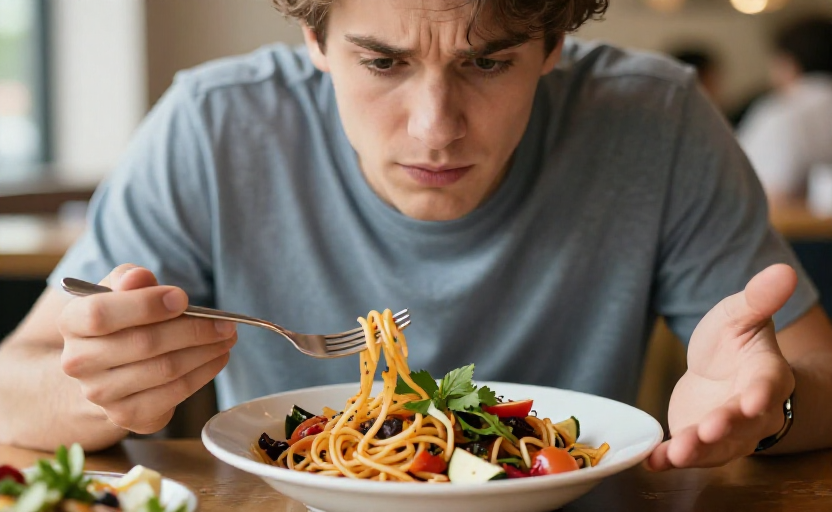
Eyeballing is the practice of estimating the carbohydrate content of a food by looking at it. You might look at a pile of rice and think, “That’s about one cup,” which translates to roughly 45 grams of carbs. You might guess that a serving of french fries is around 30 grams based on its size. Dietitians acknowledge that experienced counters can become quite accurate at this, especially with foods they eat regularly.
The problem isn't the occasional estimate. The problem is the assumption that your eyes are as accurate as a food scale or a nutrition label. Research published in the Journal of the Academy of Nutrition and Dietetics shows that even seasoned adults with type 1 diabetes can misestimate carbohydrate content by 40% or more. For a person aiming for 45 grams of carbs per meal, a 40% error could mean consuming 63 grams instead—a difference that can significantly spike blood glucose.
The hidden warning dietitians see
According to the dietitians, the act of relying purely on visual estimates often reveals one of three underlying problems:
- Meal-planning fatigue. After years of careful measuring, some people simply burn out. Eyeballing becomes a shortcut that can slowly erode glycemic control.
- Lack of proper education. Many patients were taught to count carbs but never learned the actual portion sizes of common foods. They guess because they don't have a solid reference point.
- Anxiety or avoidance. Some individuals become so stressed about the complexity of counting that they under-eat out of fear, or they give up on tracking altogether—eyeballing every meal loosely while hoping for the best.
This last point is especially important. Dietitians note that a person who suddenly switches from precise counting to full-time eyeballing may be silently struggling with burnout, fear of hypoglycemia, or even disordered eating patterns around food control.
When eyeballing might work—and when it won't
Visual estimation can be reasonably reliable for certain foods. For example, a medium apple, a small orange, or a standard slice of bread are fairly consistent in size and carbohydrate load. Many dietitians teach the "hand method" as a useful starting point: a fist-sized portion of rice or pasta is about one cup, a thumb-sized piece of cheese is about one ounce, and a cupped hand holds roughly a half-cup serving of fruit.
However, eyeballing fails more often with foods that are dense, variable, or prepared differently. Common pitfalls include:
- Restaurant meals. Portions can vary wildly. A plate of pasta from one Italian place may hold twice the carbs of the same order from another.
- Baked goods and sweets. A muffin from a coffee shop may actually contain 60 to 80 grams of carbohydrates—far more than the typical homemade muffin.
- Mixed dishes. Casseroles, soups, and stir-fries make it nearly impossible to guess the proportion of rice, beans, or starch in each spoonful.
- Snack foods. Chips, crackers, and granola are notoriously easy to underestimate because their density varies.
Tip: If you regularly eyeball portions, try a brief “reality check” week. Use a food scale or measuring cups for two to three days to see how close your estimates actually are. You may be surprised.
The real risk of inconsistent carb counting
For someone who takes insulin or certain oral diabetes medications, inconsistent carb counting can cause erratic blood sugar levels. Large surprises—eating 80 grams of carbs when you thought you were eating 45—can trigger hyperglycemia. Conversely, underestimating and taking too much insulin can cause hypoglycemia, which can be dangerous.
Beyond the immediate glucose swings, dietitians worry about the long-term pattern. Relying on guesses rather than data can make it difficult for both the patient and the care team to make informed adjustments to medication doses or meal plans. If your food log says you ate 45 grams of carbs, but you actually ate 70, your healthcare provider might think your insulin sensitivity has changed or that you need a different meal strategy. In reality, the problem may simply be inaccurate reporting based on eyeballed estimates.
How to replace eyeballing with a sustainable system
The dietitians stress that the goal is not to make people measure every crumb for the rest of their lives. The goal is to build enough accuracy that occasional shortcuts don't cause trouble. Here are their practical recommendations:
- Use a food scale consistently for at least one week. This builds a mental library of what real portions look like.
- Learn the "reference" method. Compare foods to everyday objects—a deck of cards for a serving of meat, a tennis ball for a cup of fruit, a hockey puck for a serving of meat.
- Pre-portion high-carb foods at home. Cook rice, pasta, and potatoes and store them in measured containers so you know exactly how much you are reheating.
- Check nutrition labels for serving sizes, not just total carbohydrate grams. Many packages contain 2 or 2.5 servings, which is easy to overlook.
- Use a smartphone app for a period of time that lets you log food and see a running total of your carb intake.
These steps don't have to be permanent. Even a short, focused period of accurate tracking can dramatically improve a person's ability to estimate correctly later on.
When to talk to your dietitian
If you find yourself consistently skipping the scale, avoiding label checks, or feeling overwhelmed by the idea of counting, it is worth bringing up at your next appointment. A good dietitian will not scold you. They will help you find a method that feels manageable—whether that means using a different counting system, focusing on carbohydrate types instead of grams, or incorporating more structured meal plans so you don't have to count every single item.
The warning sign is not just about the accuracy of your eyes. It is about whether your current approach to carb counting is working for you—or gradually working against your goals.