
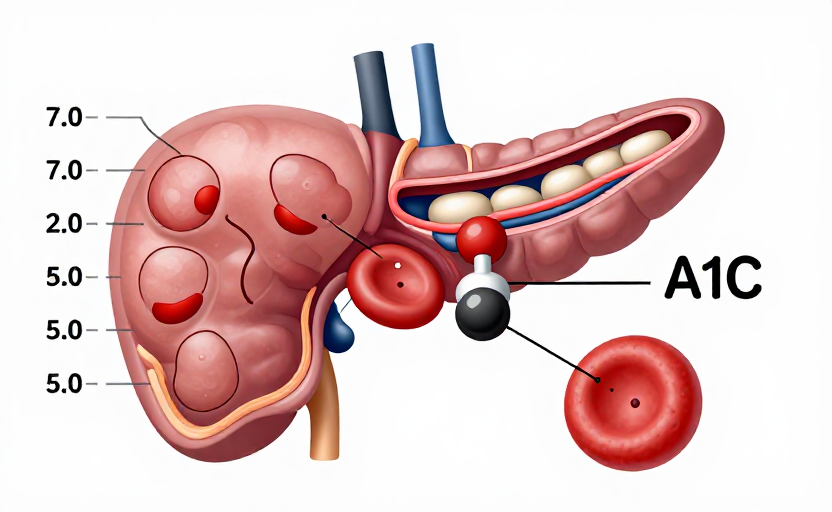
Your A1C number is one of the most telling markers of metabolic health, but it's often reduced to a single blood sugar score. In reality, that percentage reflects something deeper: how well your pancreas has been managing glucose production and regulation over the past two to three months. Understanding this connection can transform a routine lab result into a clear window into pancreatic function.
When you eat carbohydrates, your digestive system breaks them down into glucose, which enters the bloodstream. In response, beta cells in the pancreas release insulin, the hormone that tells your cells to take in glucose for energy or storage. Over time, if your cells become resistant to insulin or your beta cells become less efficient, glucose lingers in the blood longer than it should. Glucose molecules attach to hemoglobin in red blood cells—and the higher your average blood glucose, the higher the percentage of glycated hemoglobin, or A1C.
What does A1C actually measure?
Unlike a finger-stick reading that captures a moment in time, A1C provides a rolling average. Because red blood cells typically live about 120 days, the test reflects the average blood sugar level over roughly three months. The result is given as a percentage:
- Below 5.7% – considered normal
- 5.7% to 6.4% – indicates prediabetes
- 6.5% or higher – suggests diabetes
But these numbers aren't just diabetes thresholds. They tell you something about the pancreas's workload. A rising A1C may signal that beta cells are struggling to keep up with demand, a condition called beta-cell dysfunction. In the early stages, the pancreas can often compensate by producing more insulin, but eventually, those cells can become exhausted or damaged.
How the pancreas responds to rising A1C levels
When A1C climbs into the prediabetic range (5.7–6.4%), the pancreas is often still functional but under significant stress. At this stage, lifestyle changes—like diet modification, increased physical activity, and weight management—can reduce demand on beta cells and potentially lower A1C back into a healthy range. The pancreas has remarkable plasticity; early intervention can sometimes reverse the trajectory.
Once A1C crosses 6.5%, the pancreas has typically lost a substantial portion of its beta-cell mass or responsiveness. In type 2 diabetes, this happens gradually, partly due to insulin resistance and partly due to progressive beta-cell loss. In type 1 diabetes, an autoimmune attack destroys beta cells more rapidly, leading to an abrupt rise in A1C and a near-total dependence on external insulin. While these are different disease processes, both underscore the same principle: the A1C number is a readout of pancreatic health under real-world conditions.
Think of A1C as a dashboard light. When it glows yellow, you have time to make repairs. When it turns red, the engine needs more serious attention—and professional guidance becomes essential.
Can a normal A1C guarantee a healthy pancreas?
Not necessarily. Some people maintain a normal A1C despite significant insulin resistance because their pancreas works harder by pumping out extra insulin. This compensatory state can mask early trouble. Over years, the extra burden can exhaust beta cells, eventually leading to rising blood sugar and A1C. This is part of the rationale behind checking fasting insulin levels alongside A1C to get a fuller picture of pancreatic stress.
On the flip side, a slightly elevated A1C does not always mean irreversible pancreatic damage. Temporary factors like illness, stress, certain medications, or anemia can skew results. That's why doctors rarely diagnose based on a single A1C number; repeat testing and other measures like fasting glucose or oral glucose tolerance tests are often used to confirm findings.
Lifestyle factors that support pancreatic function
While A1C screening is a diagnostic tool, there are everyday habits that can support the pancreas and help maintain healthy glucose regulation:
- Balanced meals – Prioritize fiber-rich vegetables, lean proteins, healthy fats, and complex carbohydrates over refined sugars and starches. This slows glucose absorption and reduces post-meal insulin spikes.
- Regular movement – Muscles use glucose for energy even without insulin, especially during and after exercise. Walking after meals is a particularly gentle and effective practice.
- Maintaining a healthy weight – Excess abdominal fat is closely linked to insulin resistance. Even modest weight loss (5–7% of body weight) can improve A1C and reduce strain on beta cells.
- Stress management and sleep – Elevated cortisol from chronic stress can raise blood glucose, while poor sleep disrupts insulin sensitivity. Both indirectly increase demand on the pancreas.
None of these practices replace medical advice, but they can work alongside professional care to preserve beta-cell function over time.
When to talk to your doctor about A1C results
If your A1C comes back above 5.7%, it's worth having a conversation with a healthcare provider about next steps. The discussion should include repeat testing, additional labs, and a personalized plan that reflects your overall health picture. For those already managing diabetes, trends in A1C over several tests can indicate whether current treatments are protecting pancreatic function or if adjustments are needed.
Your A1C number is not a verdict—it's a signal. It tells you, in simple terms, how well your pancreas is handling the glucose load you're giving it. That's a valuable piece of information, and when used wisely, it can guide choices that support long-term metabolic health.