When the sun goes down and your mind refuses to follow suit, dinner might be part of the solution. Sleep anxiety—that restless, wired-but-tired feeling that keeps you staring at the ceiling—often has roots in what you ate (or didn't eat) a few hours earlier. Researchers have been studying how certain foods and nutrients can help quiet the nervous system and prepare the brain for sleep. Here's what the evidence suggests for your evening meal.
Why dinner matters for sleep anxiety
The connection between food and sleep isn't just about being too full or too hungry. Your brain uses specific amino acids, minerals, and hormones to shift from alert mode to rest mode. Tryptophan, magnesium, zinc, and complex carbohydrates all play a role in producing serotonin and melatonin—the chemical messengers that calm the mind and regulate the sleep-wake cycle. If your dinner lacks these building blocks, your brain may struggle to power down at night.
A 2023 review in Nutrients found that dietary patterns rich in fruits, vegetables, whole grains, and lean protein were associated with better sleep quality and fewer symptoms of anxiety. The key is not a single magic food but a combination of nutrients that work together.
Tryptophan-rich proteins: the sleep starter
Tryptophan is an essential amino acid that the body uses to make serotonin, which then converts into melatonin. Turkey is the classic example, but chicken, eggs, fish, tofu, and pumpkin seeds also provide tryptophan. The catch is that tryptophan competes with other amino acids to cross the blood-brain barrier. That's where carbohydrates come in. Eating a small amount of complex carbs alongside your protein helps the brain absorb more tryptophan, increasing serotonin production.
Try this: Grilled chicken or baked tofu with a side of roasted sweet potatoes and steamed broccoli. The carbs from the sweet potato help shuttle tryptophan where it needs to go.
Magnesium: nature's relaxant
Magnesium is involved in over 300 biochemical reactions, including those that regulate the nervous system. Low magnesium levels have been linked to higher cortisol (the stress hormone) and poorer sleep. Research suggests that magnesium supplementation can improve insomnia symptoms, but getting it from food is a gentler, more sustainable approach. Good dinner sources include leafy greens like spinach, nuts and seeds (almonds, cashews, pumpkin seeds), legumes, and whole grains.
A 2021 study in Current Psychiatry Reports noted that magnesium glycinate, in particular, has a calming effect because the glycine molecule also acts as an inhibitory neurotransmitter. You can find magnesium naturally in foods like black beans, quinoa, and dark leafy greens.
Complex carbs: steadying blood sugar and mood
Blood sugar crashes during the night can trigger the release of cortisol and adrenaline, waking you up with a jolt of anxiety. Eating a dinner that stabilizes blood sugar can help prevent these middle-of-the-night spikes. Complex carbohydrates—think whole grains, starchy vegetables, and legumes—digest slowly and provide a steady release of glucose. Simple sugars and refined carbs, by contrast, can cause a sharp rise and then a crash, potentially disrupting sleep.
One small study found that people who ate a high-glycemic-index meal four hours before bedtime fell asleep faster, but they also experienced more nighttime awakenings. The takeaway is that high-fiber, nutrient-dense carbs are the best choice for sustained sleep quality.
Omega-3 fatty acids: anti-inflammatory support
Chronic inflammation is linked to anxiety and sleep disorders. Omega-3 fatty acids, particularly EPA and DHA found in fatty fish, help reduce inflammation and support brain health. A 2022 systematic review in Sleep Medicine Reviews found that higher omega-3 intake was associated with better sleep quality and less anxiety. Salmon, mackerel, sardines, and trout are excellent dinner choices. For plant-based options, walnuts, flaxseeds, and chia seeds offer ALA, a type of omega-3 that the body converts (though less efficiently).
What to avoid at dinner
Just as important as what to include is what to limit. Caffeine after midday can linger in your system for hours; even afternoon coffee may interfere with sleep onset. Spicy foods, acidic dishes, and heavy, high-fat meals can cause indigestion or acid reflux, making it hard to fall asleep. Large portions close to bedtime also force your body to work on digestion instead of relaxing. Alcohol is another common culprit: it may help you fall asleep faster, but it suppresses REM sleep and increases nighttime awakenings.
A sample calming dinner plate
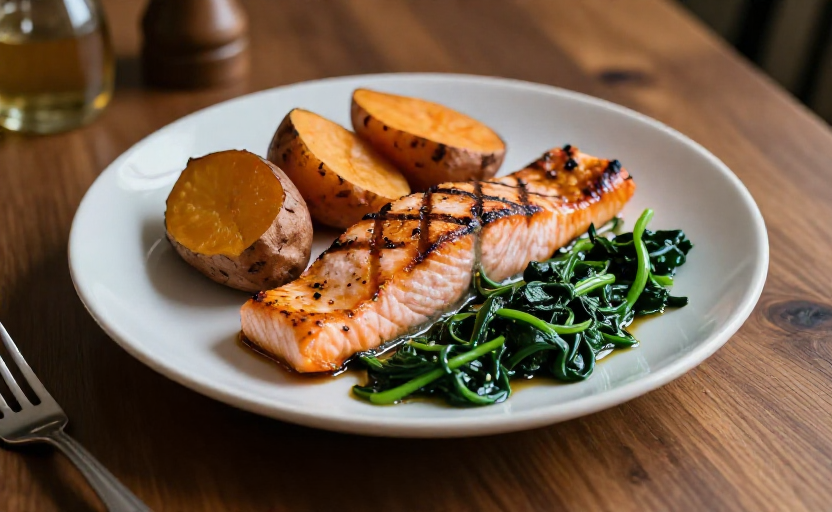
If you're looking for a practical template, here's a research-informed dinner that supports sleep and reduces anxiety:
- Protein source: Grilled salmon or baked tofu (tryptophan + omega-3s)
- Complex carbohydrate: Quinoa or roasted sweet potato (fiber, magnesium, B vitamins)
- Vegetable: Steamed spinach or sautéed kale (magnesium, folate)
- Healthy fat: A drizzle of olive oil or a handful of walnuts (omega-3s)
- Optional seasoning: A pinch of tart cherry juice concentrate or a few cherries for natural melatonin
This combination provides the amino acids, minerals, and slow-release energy your brain needs to transition into rest mode. Eating two to three hours before bed gives your body enough time to digest before you lie down.
The bigger picture
While dinner choices can help reduce sleep anxiety, they work best as part of a broader sleep hygiene routine: consistent bedtimes, limited screen exposure before bed, and stress management practices like deep breathing or gentle stretching. If sleep anxiety persists, consider speaking with a healthcare provider or a registered dietitian who can help tailor recommendations to your needs.
What you eat for dinner is one of the few variables you can control at the end of a long day. Focus on whole foods that support the nervous system, and your body may just reward you with a calmer, more restful night.