Eating alone can sometimes feel like a chore, a moment of quiet, or even a lonely pause in the day. It’s in these solitary meals and snacks that our food choices can have a profound, direct impact on our emotional state. Without the distraction of company, we’re more attuned to how a meal makes us feel—both in body and mind. Nutritionists point out that this is a powerful opportunity. By choosing foods that support brain chemistry and steady energy, you can turn a solo meal into a genuine act of self-care, building a foundation for a calmer, more resilient mood.
The connection between your plate and your feelings isn't just poetic; it's biochemical. The nutrients we consume provide the raw materials for neurotransmitters like serotonin and dopamine, which regulate mood, and they influence inflammation and blood sugar levels, both of which can dramatically affect how we feel. When you're alone, you have the space to be intentional about this connection, crafting meals that nourish your nervous system as much as your body.
How does food actually influence mood?
Think of your brain as a complex, delicate ecosystem. Its function depends on a steady supply of specific nutrients to produce signaling chemicals and maintain energy. When you eat a diet high in refined sugars and processed foods, it can lead to rapid spikes and crashes in blood sugar. This rollercoaster often manifests as irritability, anxiety, and fatigue—feelings that can be amplified in solitude.
Conversely, a balanced intake of complex carbohydrates, healthy fats, proteins, and a rainbow of plants supports stable energy, reduces systemic inflammation linked to low mood, and provides the building blocks for a calm and focused mind. It’s less about a single "magic" food and more about consistent, supportive dietary patterns that give your brain what it needs to thrive.
Foods to reach for when dining solo
When you're preparing a meal for one, focus on whole, nutrient-dense ingredients. These are some of the key categories nutritionists highlight for mood support.
Complex Carbohydrates: Foods like oats, quinoa, sweet potatoes, and whole-grain bread provide a slow, steady release of glucose. This steady fuel helps maintain energy levels and also aids in the transport of tryptophan to the brain, where it's used to produce serotonin, a key neurotransmitter for feelings of well-being and calm.
A bowl of oatmeal topped with berries isn't just breakfast; it's a sustained source of energy and a precursor to calming brain chemicals.
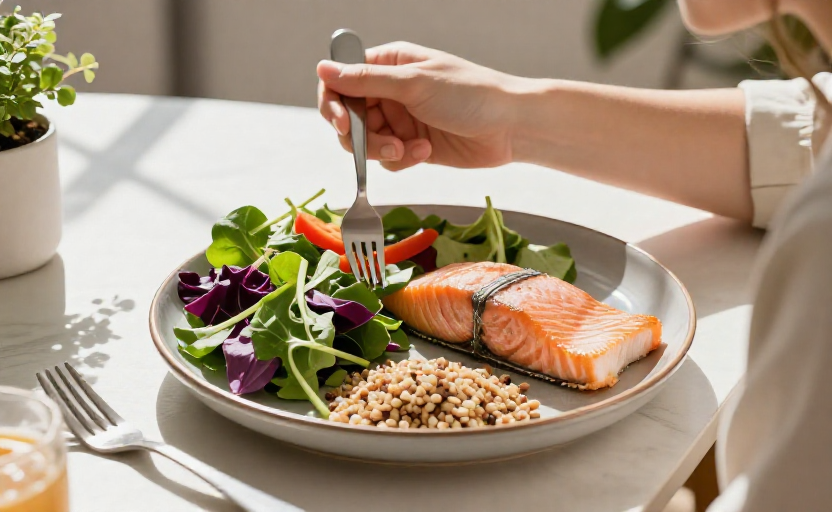
Omega-3 Rich Foods: Fatty fish like salmon, mackerel, and sardines are renowned for their high levels of EPA and DHA, fats that are crucial for brain structure and function. Studies suggest they can help reduce inflammation in the brain, which is associated with mood disorders. For plant-based options, ground flaxseeds, chia seeds, and walnuts are excellent sources of ALA, another type of omega-3.
Leafy Greens and Colorful Vegetables: Spinach, kale, Swiss chard, and other dark leafy greens are packed with folate, a B-vitamin essential for the synthesis of dopamine and serotonin. A deficiency in folate has been linked to low mood. Brightly colored vegetables like bell peppers and carrots add antioxidants that combat oxidative stress, which can affect brain health.
Fermented Foods: The gut-brain axis is a well-established communication pathway. A healthy gut microbiome, supported by probiotic-rich foods like yogurt, kefir, sauerkraut, and kimchi, can positively influence brain function and emotional regulation. Including these foods can support a more balanced internal environment.
Dark Chocolate: In moderation, dark chocolate (aim for 70% cocoa or higher) can be a wonderful solo treat. It contains flavonoids that may improve blood flow to the brain and magnesium, which can help with relaxation. The simple act of savoring a small piece slowly can also be a mindful, mood-boosting ritual.
Foods and habits to be mindful of
Just as some foods build you up, others can subtly undermine your mood, especially when consumed in isolation.
- Excessive Caffeine: While a cup of coffee can provide a lift, too much can trigger jitters, anxiety, and disrupt sleep, creating a cycle that worsens mood.
- Heavy Processed Foods and Sugars: That quick snack of chips or cookies often leads to a blood sugar crash, leaving you feeling sluggish and low.
- Skipping Meals: When alone, it's easy to forgo a proper meal. This can lead to low blood sugar, irritability, and poor decision-making about the next thing you eat.
The context matters, too. Eating straight from the container while standing in the kitchen feels very different from plating your food, sitting at a table, and eating without screens. The latter is a form of respectful self-care that enhances the nutritional benefits of the meal.
Building a mood-supportive solo meal
You don't need to be a chef. The goal is simple, satisfying combinations. Here’s a framework to follow:
- Start with a Base: A complex carb like quinoa, brown rice, or a whole-wheat tortilla.
- Add a Protein: For satiety and amino acids. Think grilled salmon, chickpeas, lentils, tofu, or a couple of eggs.
- Pile on the Plants: As many vegetables as you like, raw or cooked. Spinach, roasted broccoli, a side salad.
- Include a Healthy Fat: A drizzle of olive oil, half an avocado, or a sprinkle of seeds or nuts.
- Flavor Mindfully: Use herbs, spices, lemon juice, or a bit of grated dark chocolate for dessert.
This isn't a rigid prescription, but a flexible template for creating a meal that will nourish your body and stabilize your mood for hours.
Ultimately, eating for a better mood when you're alone is about shifting your perspective. It transforms a solitary necessity into a proactive, compassionate practice. By choosing foods that provide steady energy, reduce inflammation, and support your brain's natural chemistry, you build resilience from the inside out. It’s a quiet, powerful way to honor your well-being, one mindful meal at a time.