
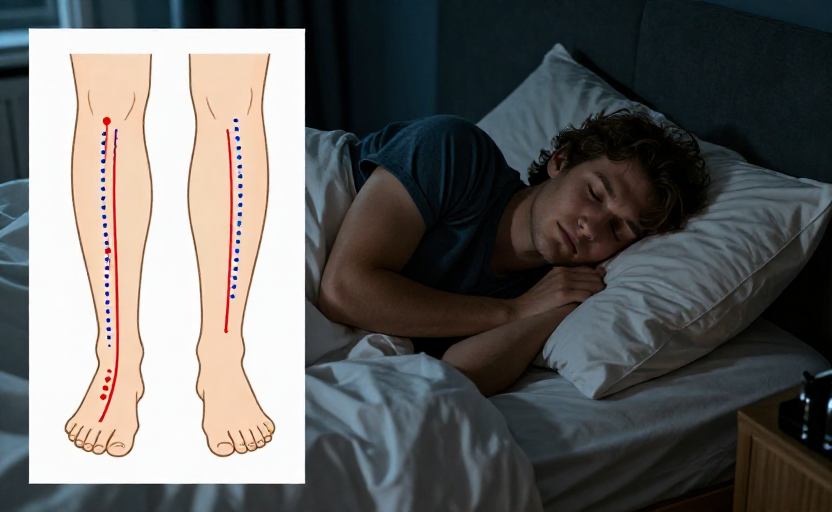
You've probably heard about restless legs syndrome (RLS). But there's a related condition that's less talked about, yet can seriously disrupt your sleep: periodic limb movement disorder (PLMD). While RLS is a sensation you feel while awake, PLMD is something that happens while you're asleep — you're not consciously aware of it, but your legs (and sometimes arms) twitch or jerk repeatedly throughout the night. Your bed partner might notice before you do, or your doctor catches it on a sleep study.
The hallmark of PLMD is repetitive, involuntary leg movements during non-REM sleep, typically every 20–40 seconds. These movements can fragment your sleep, leaving you exhausted during the day. The good news: sleep specialists have a clear, step-by-step playbook for managing it. Here’s what they actually recommend — no fluff, just what works.
First, confirm the diagnosis with a sleep study
Because PLMD happens exclusively during sleep, you can’t simply describe it to a doctor and get a conclusive answer. The gold standard is an overnight polysomnogram (sleep study). This measures your brain waves, eye movements, heart rate, breathing, and — crucially — leg movements throughout the night. A diagnosis usually requires at least 15 periodic limb movements per hour of sleep in adults, and those movements should correlate with arousal or awakening.
If your bed partner mentions rhythmic toe flexing or leg jerking, or if you consistently wake with unexplained daytime fatigue, bring it up with your primary care provider or a board-certified sleep specialist. Don’t assume it’s just “bad sleep.”
Check for underlying causes first
Before jumping into treatments, sleep specialists almost always screen for conditions that mimic or trigger PLMD. Iron deficiency is the most common culprit. Low serum ferritin (below 50–75 ng/mL) is strongly linked to limb movements during sleep. A simple blood test can rule this out. Correcting iron levels through diet or supplements (always under medical guidance) can resolve PLMD entirely in some people.
“Ferritin is the storage form of iron,” explains one sleep medicine physician we spoke with. “We see a lot of patients whose PLMD disappears once we get their ferritin above 75.”
Other conditions to rule out: kidney disease (dialysis patients often develop PLMD), peripheral neuropathy, diabetes, and certain medications — especially antidepressants like SSRIs and SNRIs, which can worsen or trigger periodic limb movements.
Non-medication strategies sleep specialists actually use
Surprisingly, not everyone with PLMD needs a prescription. Many specialists start with lifestyle adjustments, especially when symptoms are mild to moderate.
- Cut evening caffeine and alcohol. Both can increase leg movement frequency during sleep. No coffee, green tea, or chocolate after mid-afternoon. Alcohol reduces inhibitory control in the brain and can paradoxically worsen movements in the second half of the night.
- Exercise earlier in the day. Moderate aerobic exercise (walking, cycling, swimming) has been shown to reduce periodic limb movements in several small studies. Intense late-night workouts can have the opposite effect — aim to finish exercise at least 3–4 hours before bedtime.
- Establish a cooling-off period in bed. Overheating during sleep is linked to more limb movements. Keep the bedroom on the cooler side (65–68°F), use breathable sheets, and don’t pile on heavy blankets.
- Stretching and massage before bed. While evidence is less strong, many patients report that gentle calf stretches and foot massage lower the intensity of movements. It’s low-risk and worth trying.
Medication options when lifestyle changes aren't enough
When non-medication strategies fail and sleep quality remains poor, sleep specialists turn to medication. This is where things get nuanced, because PLMD is often treated similarly to RLS, but the approach has evolved.
First-line: Gabapentin or pregabalin
These anti-epileptic medications (not related to benzodiazepines) are now considered first-line treatment for moderate-to-severe PLMD. They reduce the number of limb movements and improve sleep quality. They do not have the same risk of “augmentation” (the paradoxical worsening of symptoms over time) that older RLS/PLMD medications had. Doses are typically low to start and adjusted slowly.
Second-line: Dopamine agonists (used more cautiously)
Medications like pramipexole (Mirapex) and ropinirole (Requip) were previously the go-to. They work impressively at first. The problem: over weeks or months, they can cause augmentation — symptoms worsen, spread to other parts of the day, or become more intense. Augmentation can be very difficult to treat. As a result, many sleep specialists avoid dopamine agonists unless gabapentinoids fail, and even then they use the lowest effective dose and monitor closely.
Other options
- Benzodiazepines (like clonazepam): Rarely used long-term because of tolerance and dependence issues. Sometimes prescribed short-term or in very low doses for severe cases, but they don't actually stop the leg movements — they just suppress arousal from them, so you sleep through them.
- Opioids: Only considered in severe, treatment-resistant cases under strict specialist supervision — never a first-line choice.
When PLMD co-occurs with other sleep disorders
PLMD often overlaps with restless legs syndrome, insomnia, and even obstructive sleep apnea. If you have sleep apnea and PLMD, treating the apnea with CPAP or oral appliance therapy comes first. Many patients find that once their oxygen levels stabilize, leg movements decrease. If PLMD persists after three months of good CPAP adherence, then additional treatment can be considered.
Managing PLMD is rarely a one-size-fits-all journey. What works for your cousin might not work for you. The most effective path is to work with a sleep specialist who looks at the full picture: sleep study data, iron levels, medications you’re taking, and daily habits. Small adjustments — like moving your five-o'clock coffee to noon — can sometimes make an unexpectedly large difference.