Your menstrual cycle is more than just a monthly calendar event. It's a complex, dynamic process that can influence your energy, mood, sleep, and physical well-being in ways that are unique to you. Yet, many of us navigate these changes on autopilot, treating symptoms like cramps, fatigue, or irritability as isolated, unpredictable annoyances. What if you could see the patterns? A menstrual symptom log is a simple, powerful tool that helps you do just that—transforming random experiences into a coherent, personal health story.
By consistently tracking your symptoms alongside your cycle, you move from simply enduring changes to understanding them. This knowledge isn't just about prediction; it's about empowerment. It can help you communicate more effectively with healthcare providers, identify potential underlying conditions, and make more informed choices about your daily life, from planning social activities to managing your workload.
Why keep a menstrual symptom log?
Think of your body as constantly giving you feedback. A symptom log is your way of listening and taking notes. The primary benefit is pattern recognition. You might discover that your crushing fatigue reliably hits three days before your period starts, or that your headaches coincide with ovulation. This allows you to anticipate and manage symptoms, rather than be blindsided by them.
This record also becomes invaluable data for any healthcare conversation. Instead of saying "I sometimes have bad cramps," you can say, "For the last three cycles, I've experienced severe pelvic pain that begins two days before my flow and lasts for 48 hours, rated a 7 out of 10." This specificity can lead to more accurate diagnoses and personalized management strategies.
Furthermore, logging can help you identify what's normal for you, which makes it easier to spot when something is truly off. Noticing a sudden, dramatic change in your typical pattern can be a prompt to seek medical advice.
Tracking turns subjective feelings into objective data, giving you clarity and a sense of control over your own body.
What should you track in your log?
A good log captures both the physical and emotional landscape of your cycle. The goal is to create a holistic picture. You don't need to track everything every day—focus on what you're experiencing.
Physical symptoms
Note the obvious and the subtle. Start with bleeding: track the start and end date of your period, and note flow intensity (light, medium, heavy, spotting). Pay attention to pelvic and abdominal sensations, like cramping, bloating, or breast tenderness. Also log other bodily changes: headaches, changes in bowel habits, appetite shifts, sleep quality, energy levels, and skin condition.
Emotional and mental symptoms
Your cycle can significantly impact your mind. Track your mood—are you feeling irritable, anxious, sad, or unusually happy and creative? Note changes in your focus, motivation, or libido. Many people find their stress resilience fluctuates, so jot down if you feel more overwhelmed or calm than usual.
Life context
For the full picture, include relevant life factors. Record your sleep duration and quality, your exercise routine, significant stressors, and even social activities. This helps you see if external factors are amplifying or alleviating your cycle-related symptoms.
How to track: methods from simple to detailed
Choose a method that fits your lifestyle. The best log is the one you'll actually use consistently.
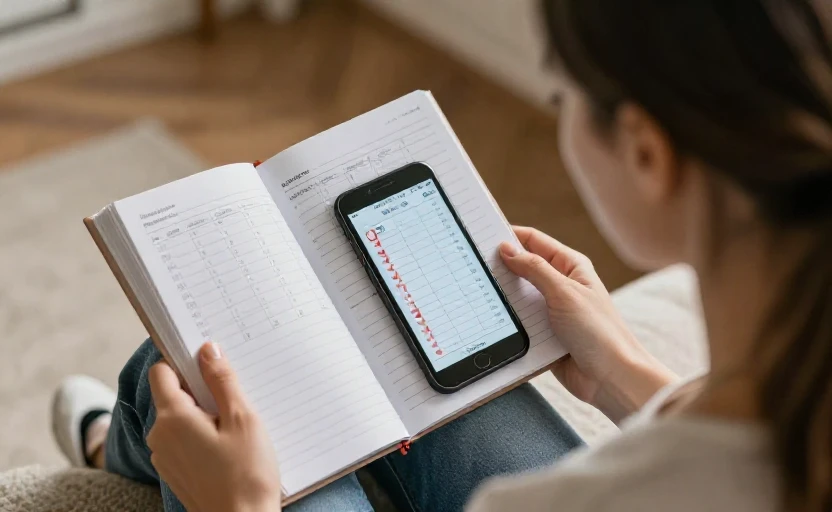
The notebook method: A dedicated paper journal or planner is a classic, screen-free option. Simply create a column for the date, cycle day, and then sections for symptoms, notes, and mood. You can use symbols or a simple rating scale (e.g., mild/medium/severe).
Digital notes app: Use a basic notes app on your phone for quick, searchable entries. The convenience of always having it with you can improve consistency.
Dedicated cycle tracking apps: Numerous apps are designed specifically for this purpose. They often provide a structured format with tap-to-log symptoms, mood icons, and custom tags. Many will generate charts and predictions based on your historical data, visualizing your patterns over time.
- Pros: Highly organized, often includes educational resources, can export data for doctor visits.
- Cons: Requires trusting an app with personal health data; check their privacy policy.
Start simple. For your first cycle, just focus on logging your period dates and your 1-2 most noticeable symptoms. You can always add more detail as it becomes a habit.
Interpreting your log: what to look for
After two to three months of tracking, you'll have data to review. Look for patterns in timing, intensity, and clusters of symptoms.
Phases of your cycle: Align your symptoms with the four main phases:
- Menstruation (Days 1-5): Symptoms often include cramping, fatigue, low back pain.
- Follicular Phase (Post-period to ovulation): Energy and mood often improve.
- Ovulation (Mid-cycle): Some feel a boost, others notice mittelschmerz (one-sided pain) or changes in cervical fluid.
- Luteal Phase (Post-ovulation to period): This is when PMS symptoms like bloating, mood swings, and anxiety typically appear if they are going to.
Symptom clusters: Do headaches, irritability, and bloating always arrive together? Seeing symptoms as a connected group, rather than individual issues, can point to specific hormonal shifts.
Deviations from your norm: A cycle that is suddenly much longer, shorter, or more painful than your established pattern is worth noting and potentially discussing with a doctor.
When your log suggests a deeper conversation
While tracking is primarily for self-awareness, it can also highlight symptoms that warrant professional medical advice. Use your log to identify:
- Pain that is severe and disrupts your daily life.
- Extreme mood changes that feel unmanageable.
- Very heavy bleeding (soaking through a pad or tampon every 1-2 hours).
- Cycles that are consistently shorter than 21 days or longer than 35 days.
- Any symptom that feels new, frightening, or significantly different from your baseline.
Bring your log to your appointment. This concrete evidence is far more useful than a general recollection and can be a crucial starting point for investigating conditions like PMDD (Premenstrual Dysphoric Disorder), endometriosis, or thyroid issues.
Ultimately, a menstrual symptom log is a practice of paying attention. It’s a quiet, consistent dialogue with your body that fosters understanding and agency. In a world that often dismisses cycle-related experiences, this simple act of recording is a powerful affirmation: your experience is real, it matters, and it holds clues to your overall well-being.