When you live with diabetes, every meal is a chance to either protect your vision or put it at risk. Diabetic retinopathy, a complication where high blood sugar damages the tiny blood vessels in the retina, does not happen overnight. It creeps in over years, fueled by daily habits—especially the ones you repeat every morning.
I have spoken with endocrinologists and retina specialists about what they see in clinic, and they are surprisingly unanimous about the number one breakfast offender. It is not eggs, bacon, or even a lack of fruit. It is the stealthy sugar spike caused by what is arguably the most common breakfast table staple.
Why Your Morning Meal Matters for Your Retina
Your eyes have some of the highest metabolic demands in your body. The retina, the light-sensitive tissue at the back of your eye, relies on a steady, modest supply of glucose. When you eat a breakfast that sends your blood sugar skyrocketing, you force those already-fragile retinal capillaries to handle a surge of glucose. Over time, that mechanical and chemical stress weakens vessel walls, leading to leakage, swelling, and eventually, vision loss.
The damage is not just about the spike itself, but the chaos it brings: inflammation, oxidative stress, and a cascade of signals that cause abnormal blood vessel growth. Every breakfast that spikes your glucose is adding one more log to that fire.
The Number One Mistake: A Sugar-Loaded Bowl of Cereal
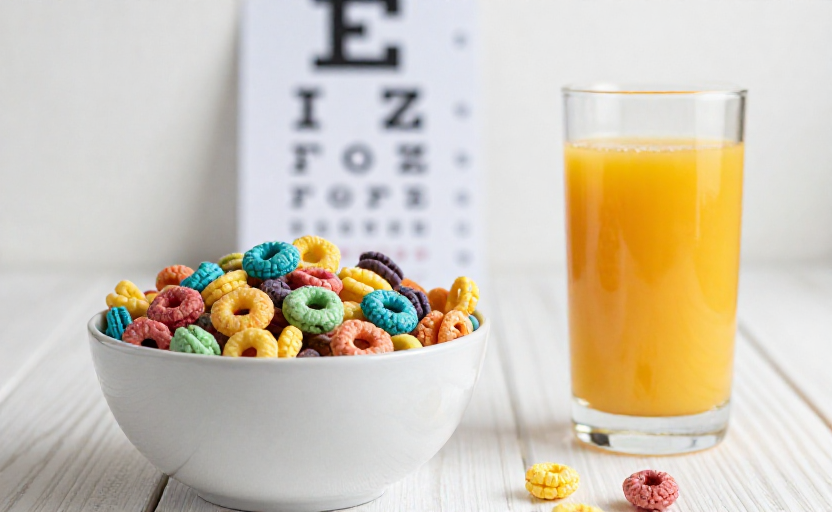
Here is the scenario I hear about most often: you pour a bowl of brightly colored flakes, clusters, or puffed grains, add milk, and eat it in under five minutes. What you have just done is delivered a rapid dose of refined carbohydrates with little to no fiber, protein, or healthy fat to slow down absorption.
Doctors call this a "pure glycemic load with zero buffer." The sugar hits your bloodstream fast, your pancreas scrambles to release insulin, and within 30 to 45 minutes, your blood glucose is peaking. For someone who already has diabetic retinopathy, that daily glucose rollercoaster accelerates damage to the retinal microvasculature.
"I tell my patients: If your breakfast has more sugar than a doughnut but you think it is healthy because it says 'whole grain' or 'vitamin-enriched,' you are likely doing more harm than good," shares a retina specialist I interviewed for this article.
Why This Mistake Is So Widespread
Cereal is sneaky. It is quick, easy, and often marketed as heart-healthy or part of a balanced breakfast. But most commercial cereals—even the ones with a checkmark from health organizations—are heavily refined. The fiber content is negligible, and the added sugar can rival that of a candy bar.
The problem is compounded when you eat it without protein. A bowl of sugary cereal is essentially a liquid sugar meal masked as a solid. It lacks the fat and protein needed to blunt the glycemic response. The result is a morning glucose spike that lingers for hours, placing sustained stress on ocular blood vessels.
What the Experts Suggest Instead
This does not mean you have to give up breakfast convenience. The goal is to build a plate that avoids the spike-and-crash cycle. Based on the advice I have gathered, here are the key shifts to make:
- Swap the cereal for eggs. Two eggs cooked any way you like provide protein and fat that stabilize blood sugar for hours. Pair them with a handful of spinach or a few slices of avocado for added nutrients that support retinal health (lutein and healthy fats).
- If you crave something warm and grain-like, choose steel-cut oats or buckwheat. These have a much lower glycemic index than instant oatmeal or boxed cereal. Add a scoop of protein powder, a tablespoon of ground flaxseed, or some nuts to further slow digestion.
- Try a savory breakfast bowl. Leftover roasted vegetables, a poached egg, and a small portion of quinoa or black beans create a high-satiety, low-spike meal that is surprisingly fast to prepare.
- For the truly rushed morning, prepare a batch of egg-and-veggie muffins on Sunday, or blend a smoothie using full-fat Greek yogurt, a handful of berries, spinach, and a tablespoon of almond butter (skip the fruit juice and honey).
One Habit to Add to Your Routine
Beyond changing what you eat, consider when you eat. Many experts now recommend finishing your last meal of the day earlier—allowing at least 12 hours overnight without calories—to reduce systemic inflammation and improve morning insulin sensitivity. This practice, sometimes called time-restricted eating, may help quiet the inflammatory processes that drive retinopathy progression.
The Bottom Line
Your breakfast sets your metabolic tone for the entire day. If you are living with diabetic retinopathy, the worst thing you can do is start your morning with a high-sugar, low-protein meal that sends your glucose on a wild ride. The protective choice is simpler than you might think: skip the boxed cereal and build a breakfast that keeps your blood sugar steady. Your eyes—and your energy—will thank you.