
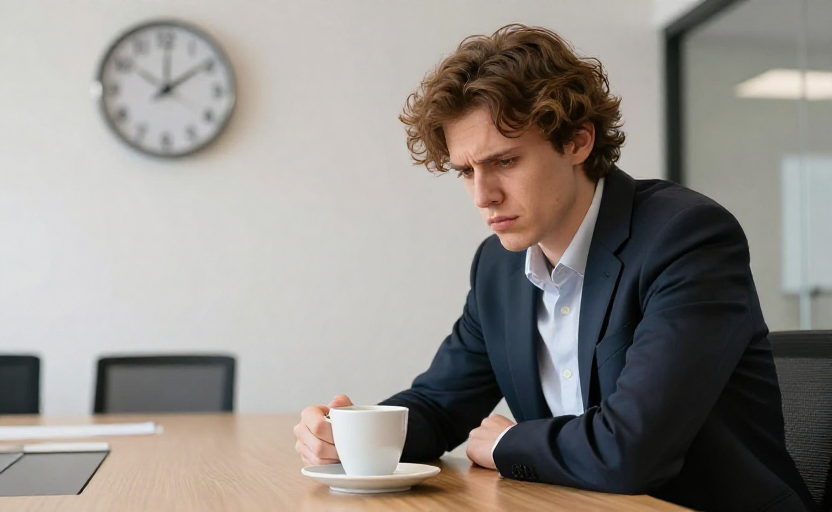
You’ve prepared your talking points, reviewed the agenda, and maybe even practiced your opening line in front of the mirror. But as you reach for a last-minute boost before that big meeting, you might be reaching for something that could actually work against you. According to experts, one common beverage can quietly amplify social anxiety just when you need calm the most.
We’re talking about coffee. Or more broadly, any high-caffeine drink. While caffeine is famous for sharpening focus and banishing drowsiness, it’s a double-edged sword for anyone prone to anxiety, especially social anxiety. Here’s what the research and clinicians say about why that pre-meeting latte might be making things harder.
How caffeine mimics and worsens anxiety symptoms
Caffeine triggers your central nervous system, releasing adrenaline and cortisol—your body’s stress hormones. That jolt can feel like a surge of energy, but it also produces physical sensations that are nearly identical to the symptoms of anxiety: a racing heart, sweaty palms, shaky hands, and a sense of restlessness.
For someone already feeling nervous about a presentation or a high-stakes conversation, the body can interpret these caffeine-induced physical signals as confirmation that something is wrong. In other words, your heart starts pounding not because there is a threat, but because you drank a double espresso. Your brain, however, may not know the difference, and the social anxiety can spiral as you start to believe your nervousness is “out of control.”
As clinical psychologists have noted, caffeine does not create anxiety out of nowhere in most people, but it is a powerful trigger for those with an underlying vulnerability to anxiety disorders. This is especially true for social anxiety, where self-consciousness about physical symptoms—blushing, trembling, sweating—can become a self-fulfilling prophecy.
Why timing matters before a meeting
The half-life of caffeine in the body is roughly three to five hours, but its peak effects happen within 30 to 60 minutes of consumption. That means if you drink coffee right before a meeting, you are entering the room at the exact moment your sympathetic nervous system is ramping up the most.
Experts recommend avoiding caffeine entirely in the hours leading up to a high-anxiety event. Even moderate amounts—around 200 mg, which is roughly one 12-ounce coffee—can be enough to elevate anxiety levels in susceptible individuals. For those with generalized anxiety or panic disorder, the effect can be even more pronounced.
Caffeine can mimic the physical feelings of panic, making it harder to distinguish between a real threat and a perceived one.
If you are someone who experiences that flutter of nerves before speaking in front of others, consider switching to a low-caffeine or caffeine-free alternative. Herbal teas like chamomile or peppermint, or simply a glass of water, will not interfere with your nervous system and may help keep you grounded.
What about other sources of caffeine
It is not only coffee that can cause this effect. Energy drinks, black tea, green tea, and even some sodas contain enough caffeine to trigger physical arousal. Even dark chocolate has noticeable amounts. If you are trying to keep social anxiety in check, scan your diet for hidden caffeine throughout the morning.
For individuals who rely on their morning coffee for routine, a gradual reduction may be more sustainable than going cold turkey. Mixing half-caff or gradually shortening brew time can help lower your intake without triggering withdrawal headaches that themselves can feel like anxiety.
Better strategies to stay calm before a meeting
Instead of reaching for a stimulant, you can turn to scientifically backed techniques that reduce social anxiety rather than amplify it. Deep breathing exercises—specifically slow, diaphragmatic breathing—activate the vagus nerve and lower heart rate. Practicing just two minutes of box breathing (inhale four seconds, hold four seconds, exhale four seconds, hold four seconds) before you walk in can reset your nervous system.
Grounding techniques also help. Feeling your feet on the floor, noticing the texture of a pen in your hand, or quietly naming three things you can see in the room all pull the brain out of anxious anticipation and back into the present moment. These strategies work with your body’s biology, not against it, and do not carry the risk of triggering a physical anxiety mimic.
If you do choose to have caffeine, keep the dose small and drink it well in advance—at least two to three hours before the meeting. And always pair it with food to slow absorption. But for many people, the simplest and most effective choice before a high-stakes meeting is to skip the coffee entirely. Your mind and body will thank you.