You layer on serums, you never skip sunscreen, and you've probably spent more time than you'd like to admit researching peptides. Yet there might be a hidden, daily routine working against all that effort. It isn't a skincare mistake you make in the evening—it's something many of us do dozens of times a day without a second thought.
The habit is chronic, low-grade stress—specifically, the constant activation of your body's stress response through poor sleep, a racing schedule, or even unconscious tension held in your jaw and shoulders. While stress is often discussed in terms of mental health, its biochemical impact on your skin's structure, particularly its ability to produce and utilize peptides, is profound and often overlooked.
How Stress Hijacks the Peptide Pathway
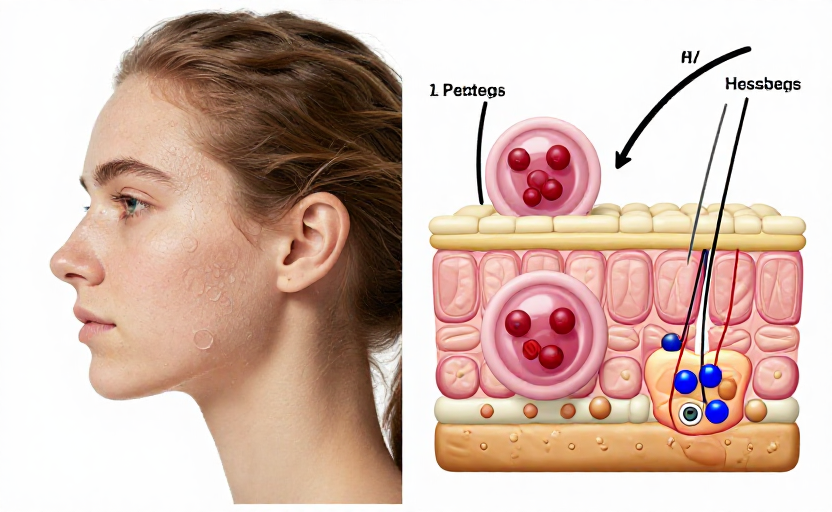
Peptides are short chains of amino acids that serve as signaling molecules. Think of them as the messengers your cells use to communicate. In healthy skin, they send instructions to produce collagen, elastin, and other structural proteins. They also manage inflammation and repair damage. This entire system depends on a calm, stable internal environment.
When you are under stress, your body releases cortisol. In small bursts, cortisol is protective. But when it stays elevated for days, weeks, or months, it triggers a cascade of events that directly sabotage peptide activity:
- Cortisol blocks receptor sites. High cortisol levels can essentially jam the locks on your cells, preventing peptide messengers from docking and delivering their repair instructions.
- Enzymes degrade existing peptides. Your body produces enzymes called matrix metalloproteinases (MMPs) to break down old, damaged tissue. Cortisol upregulates these enzymes, causing them to indiscriminately dismantle the very peptides and collagen that give skin its firmness.
- It starves the factory. Peptide and collagen production is energy-intensive. Chronic stress diverts resources toward survival functions (fueling muscles, sharpening senses) and away from long-term maintenance like skin repair.
The one-liner to remember: Stress doesn't just make you feel tired—it turns off the cellular phone line your skin needs to fix itself.
The Daily Habits That Keep Cortisol High
This isn't about a major life crisis. It's about the drip-drip-drip of daily routines that keep your nervous system on edge.
Consider these common scenarios. Which ones sound familiar?
- Skimping on sleep. Even one night of poor sleep elevates morning cortisol. Over months of six hours or fewer, your body forgets how to shut off the stress response.
- Morning coffee on an empty stomach. Caffeine amps up cortisol production. When consumed without food, the spike is sharper and lasts longer.
- Constant phone scrolling. Doomscrolling, work emails at 10 p.m., and social media comparisons keep your brain in a low-grade threat-detection mode.
- Skipping meals or crash dieting. Your body perceives caloric restriction as a stressor. It releases cortisol to mobilize stored energy, which further degrades peptide signaling.
- Holding tension. A clenched jaw, hunched shoulders, or a tight neck all signal to your nervous system that you are under attack.
The Physical Proof on Your Skin
Over time, this disruption leaves visible marks. The first noticeable change is usually in texture—skin feels less plump and bouncy in the morning. Then fine lines that previously vanished after moisturizing start to stick around. Under-eye hollows may deepen not because of genetics alone, but because the skin's structural support is being quietly dismantled.
Many people assume they need a different cream or a higher dose of retinol. But if the root cause is a stressed-out internal chemistry, no topical product can compensate for the ongoing sabotage happening at the cellular level. You can apply the most advanced peptide serum on the market, but if your cortisol levels are high, those peptides have nowhere to go—and your cells aren't listening for the message anyway.
How to Protect Your Peptides (Without a Single Product)
The most effective intervention isn't found on a skincare shelf. It's found in how you manage your nervous system. The good news is that you don't need to eliminate stress entirely—you just need to give your body consistent breaks from the cortisol response.
- Prioritize sleep as a skincare step. Aim for at least seven hours. Even 30 minutes more can lower morning cortisol. Blackout curtains and a cool room help trigger the proper nighttime drop in stress hormones.
- Eat protein early in the day. A balanced breakfast with protein (eggs, yogurt, or a protein shake) buffers the cortisol spike that naturally occurs upon waking—and it provides the amino acids your body needs to build those peptides in the first place.
- Practice mini resets. Three times a day, take 90 seconds to breathe slowly (inhale for four counts, exhale for six). This is long enough to shift your nervous system from sympathetic (fight-or-flight) to parasympathetic (rest-and-digest) mode.
- Limit caffeine after mid-morning. Switch to green tea or herbal tea by noon. Green tea also contains L-theanine, an amino acid that promotes calm without drowsiness.
- Move your body—gently. Intense HIIT classes can temporarily spike cortisol. While they have other benefits, a daily 20-minute walk or gentle yoga session is more consistent at lowering baseline stress levels.
The Bottom Line
You cannot out-skincare a stressed-out biology. Peptides are the messengers of repair, and they need a quiet, steady environment to do their work. The high-paced, sleep-deprived, constantly-connected lifestyle that many of us live is the single most effective daily habit for disrupting that process. If your skin has been resistant to treatments that used to work, look beyond the mirror and at your daily rhythm. The most transformative anti-aging step might be the one that helps you rest.