
We spend a lot of time, money, and mental energy trying to protect our collagen. We slather on serums, book expensive treatments, and drink powders that promise to keep skin plump and firm. But there is a very common, almost daily habit that might be quietly undoing all that effort. It is not about what you are applying to your face—it is about how you are treating your skin when you don't have a mirror in front of you.
The culprit is a surprisingly simple but repeated mechanical action: the way you sleep at night.
The Nighttime Habit That Presses on Your Collagen
Every night, for hours on end, you likely press your face into a pillow. Whether you sleep on your side or your stomach, the pressure and friction from your pillowcase compress and distort the skin on your cheek, chin, and forehead. This repetitive compression creates creases that, over time, can become permanent. But the deeper issue is what happens to the structural proteins beneath the surface.
Collagen and elastin are the scaffolding that gives skin its bounce. When you compress that scaffolding night after night, you are essentially kinking the fibers. Over years, this chronic mechanical stress leads to a breakdown of collagen in those specific zones. The result is often called "sleep lines"—wrinkles that don't disappear when you wake up, because the underlying support has worn thin.
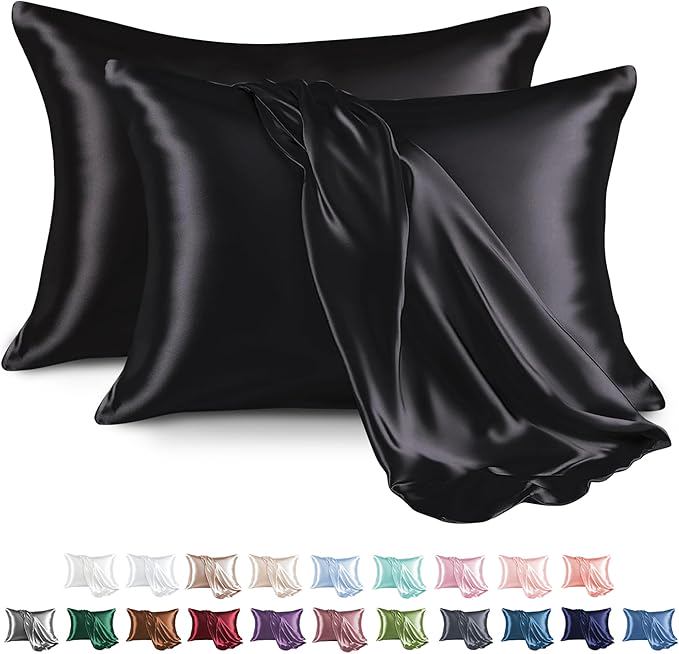
A simple shift: Switching to a silk or satin pillowcase reduces friction, which means less pulling on the skin's surface. But the real structural protection comes from changing your sleep position.
Why Back Sleeping Is the Gold Standard
Dermatologists have a name for this phenomenon: compression wrinkles. Unlike expression lines caused by smiling or frowning, sleep lines are rooted in external pressure. The only position that largely eliminates this pressure is sleeping on your back.
When you lie face-up, gravity doesn't push your cheeks, eyes, or chin into a surface. There is no distortion, no folding of the skin, and no uneven tugging on the collagen matrix. The skin rests in a more neutral position all night, allowing the natural repair processes to work without the added stress of mechanical deformation.
For most people, this is a difficult habit to change. Side sleeping is comfortable, and for many, it is the only way to fall asleep. If you are a dedicated side sleeper, you are not alone—but the cumulative effect on your collagen supply is real.
Practical Ways to Encourage Back Sleeping
If flipping onto your back feels impossible, there are a few strategies that can help retrain your body over time:
- Use a body pillow. Placing a firm pillow under your knees or hugging one to your chest can help stabilize your torso and make back sleeping feel more secure.
- Create a gentle barrier. Some people find that placing rolled-up towels or small pillows on either side of their body prevents them from rolling onto their side during the night.
- Start with a nap. Practicing back sleeping during a short nap is easier than committing to a full night. Once your muscles and joints adapt, the position often feels more natural.
The Material Matters: Pillowcase and Pillow Choice
While sleep position is the primary factor, your pillowcase material plays a supporting role. Silk and high-quality satin create a slick surface that reduces friction and allows the skin to glide rather than drag. Cotton, especially high-thread-count cotton, still creates enough drag to pull at the skin as you shift during the night.
Your pillow itself matters too. A pillow that is too high or too firm creates more acute angles for your neck and face, which can increase the pressure on your chin and cheek. A thinner, more supportive pillow reduces the fold in your skin. For back sleepers, a cervical pillow designed to support the natural curve of the neck is ideal.
Other Underappreciated Habits That Stress Collagen
Sleep is the big one most people overlook, but other daily actions can also add up. Repetitive facial expressions like squinting or furrowing your brow create dynamic wrinkles, but these are different from the static compression lines caused by sleep. The key distinction is that you can consciously change your sleep position, while facial expressions are often subconscious.
There is also the hidden effect of dehydration on collagen. When your body is dehydrated, the skin cells are less plump, and the collagen fibers become more brittle. This makes them more susceptible to damage from the mechanical forces you apply during sleep. While you can't control how much water your skin holds at night, staying adequately hydrated throughout the day supports the structural integrity of your collagen network.
Lastly, how you apply your skincare products in the evening can either help or hinder. Vigorous rubbing or aggressive patting just before bed adds another layer of mechanical stress to the skin. Gentle, upward motions with the pads of your fingers are less likely to disrupt the collagen fibers than rough, circular scrubbing.
The Bottom Line on Collagen Preservation
You do not need to buy an expensive device or a complicated new serum to protect your collagen supply. The most impactful change you can make is often free and requires a shift in habit, not a new product. Sleeping on your back, switching to a silk pillowcase, and being mindful of how you handle your skin at night can all contribute to preserving the dense, supportive collagen network that keeps skin looking youthful.
Collagen loss is a natural part of aging, but the rate at which it breaks down can be influenced by mechanical factors. By eliminating the nightly compression that accelerates that breakdown, you give your skin a fighting chance to maintain its firmness and resilience.