Your skin doesn’t just age because of time. A lot of what we call aging—fine lines, laxity, a lack of bounce—comes from a steady decline in collagen production. By the time you hit your mid-thirties, your body is making roughly one percent less collagen every year. That drop shows up first in the face. But you can slow that clock with what you put on your plate, especially first thing in the morning.
Dermatologists who focus on cosmetic and aging skin often point to one breakfast in particular when asked what they eat for firmness. It isn't about exotic powders or restrictive meal plans. It's a strategic combination of whole foods that supply the raw ingredients your fibroblasts—the cells that make collagen—actually need to function. Here is exactly what that breakfast looks like, and why each component matters.
Why breakfast sets the tone for skin repair
Overnight, your body works on repair. Collagen synthesis happens while you sleep, but it needs fuel to continue through the day. Skipping breakfast or eating a sugar-heavy meal means your cells start off without the amino acids and cofactors they rely on. A collagen-supporting breakfast gives your system proline, glycine, and lysine—the three amino acids that form the collagen molecule—along with the vitamin C and copper required to link those amino acids together into stable fibers.
One study in Nutrients found that collagen synthesis markers were significantly higher in people who consumed a protein-rich breakfast compared with those who started the day with refined carbohydrates. The difference came down to having the right building blocks available when your body is naturally primed for repair after a night's fast.
The plate: what a dermatologist actually eats
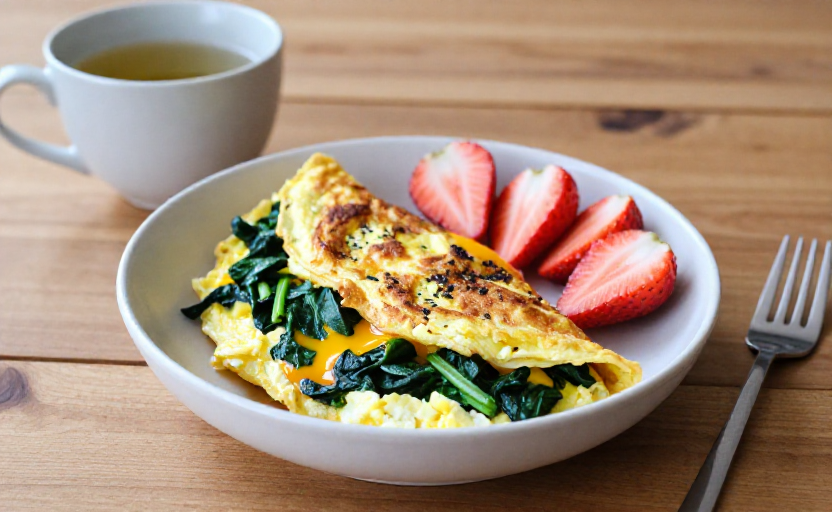
Board-certified dermatologists who speak publicly on skin longevity tend to describe a similar morning meal: a three-egg omelet with a handful of spinach and a side of berries, plus a cup of green tea or black coffee. None of these ingredients are exotic, but the logic behind the combination is precise.
Eggs supply the amino acid backbone
Egg whites are rich in proline and glycine. The yolk provides lysine plus vitamin D and zinc. Cooking eggs with the yolk intact preserves these nutrients. If you only eat egg whites, you lose the lysine and zinc that help activate collagen production. The omelet format also allows you to incorporate vegetables without adding empty calories.
Spinach adds copper and vitamin C
Spinach is one of the few vegetables that contains significant copper, a trace mineral that acts as a cofactor for lysyl oxidase, an enzyme that cross-links collagen fibers. Without copper, even if you have plenty of amino acids, the collagen structure is weak. Spinach also provides a modest amount of vitamin C. The heat from cooking degrades some of that vitamin C, which is why the third component is critical.
Berries deliver concentrated vitamin C
Vitamin C is non-negotiable for collagen. Fibroblasts cannot hydroxylate proline and lysine without it, meaning the collagen molecule literally cannot form. Berries—strawberries, blueberries, raspberries—are among the highest-fruit sources of vitamin C relative to sugar content. A half-cup of strawberries provides roughly 50 milligrams of vitamin C, which is more than half the recommended daily intake. Eaten raw at the end of the meal, they deliver that vitamin C intact.
Green tea provides polyphenol protection
A cup of green tea with breakfast adds catechins, particularly epigallocatechin gallate (EGCG). Green tea polyphenols inhibit matrix metalloproteinases, enzymes that break down existing collagen. Drinking the tea alongside a collagen-building meal means you are both constructing new fibers and protecting the ones you already have.
What about collagen powders?
Many people wonder whether they need a scoop of collagen peptide powder in their coffee to see results. The short answer is that it helps, but it is not superior to whole-food protein. Collagen powders deliver hydrolyzed collagen, which contains the same amino acids found in egg whites and meat. Research published in Journal of Cosmetic Dermatology showed that women who took 2.5 to 10 grams of collagen peptides daily for eight weeks experienced improvements in skin elasticity and hydration.
However, those studies used supplemental doses on top of a normal diet. If you already eat a protein-rich breakfast, you may not need the powder. The powder is a convenience, not a necessity. If you choose to use it, stir it into tea or yogurt rather than coffee, because very hot liquid can weaken the peptide bonds.
“The most effective collagen breakfast is the one you can actually eat consistently. Three eggs and a handful of berries, four mornings a week, will do more for your skin than a $50 powder you use twice.” — adapted from common dermatologist counseling language
What to skip for better skin firmness
A collagen-boosting breakfast is also about what you leave out. High-glycemic cereals, sugary pastries, and fruit juice without fiber cause a spike in insulin and insulin-like growth factor 1. Over time, elevated insulin can accelerate glycation—a process where sugar molecules attach to collagen fibers and make them stiff and brittle. Glycated collagen loses its elasticity and is slower to repair.
Dairy is a gray area. Full-fat dairy from pasture-raised cows contains vitamin A and K2, both of which support skin structure. But some people find dairy inflammatory, which can undo skin benefits. The safest approach is to rely on eggs, vegetables, and fruit as the core of the meal, then add a serving of fermented dairy like plain yogurt or kefir only if it does not cause breakouts or bloating.
Building your own version of the breakfast
Not everyone eats eggs or handles spinach well. The principle remains the same: pair a complete protein source with a green vegetable or herb, and finish with a raw fruit high in vitamin C. Here are three variations that stick to the same formula.
- Smoked salmon and avocado on sourdough — Salmon provides proline and glycine plus omega-3s that reduce inflammation. Lemon juice squeezed over the avocado supplies vitamin C. The sourdough is fermented, which lowers its glycemic impact.
- Greek yogurt with hemp seeds and kiwi — Yogurt is rich in lysine. Hemp seeds contain copper and zinc. One kiwi delivers more vitamin C than an orange. This meal is prebiotic-friendly and easy to digest.
- Chickpea scramble with red pepper — Chickpeas provide lysine and copper. Sautéed red pepper is high in vitamin C when cooked lightly. Turmeric added during cooking reduces inflammatory cytokines that degrade collagen.
The consistency factor matters most
No single breakfast erases a decade of sun damage or restores collagen overnight. But the foods described here support a metabolic environment where collagen synthesis can proceed at its best possible rate for your age and genetics. Over weeks and months, those incremental improvements in fibroblast activity translate into clinically measurable changes in skin density and firmness. The dermatologist recommendation is not about quick results. It is about giving your body the raw materials it needs every single morning, so it can do the repair work it already knows how to do.