If you have spent any time scrolling through wellness content online, you have almost certainly run into some very confident claims about sleep. You need eight hours exactly. Melatonin is harmless. If you wake up in the night, something is wrong. These ideas sound reasonable, but many of them are not backed by the research. When it comes to sleep disorders—chronic conditions like insomnia, sleep apnea, restless legs syndrome, and circadian rhythm disorders—misinformation can actually keep people from getting the right help.
Let’s look at four of the most persistent sleep disorder myths and what the current evidence really shows.
Myth 1: Everyone needs exactly eight hours of sleep
You have seen the recommendation everywhere. Eight hours is often presented as a universal rule, and if you sleep less, you are told you are running a “sleep debt.” But the reality is more nuanced. The National Sleep Foundation and other research bodies recommend seven to nine hours for most adults, not a strict eight. Individual variability matters. Some people function well on seven hours; others genuinely need nine to feel rested. The problem with rigid eight-hour messaging is that it can cause unnecessary worry in people who happen to sleep 6.5 or 7.5 hours a night.
A 2017 study in the journal Sleep found that sleep duration is influenced by genetics, age, and lifestyle factors—meaning your “optimal” number may look different from a friend’s.
If you are concerned about your sleep patterns, the key metric is not the number on the clock. It is how you feel during the day. Do you wake up feeling refreshed? Can you maintain focus without nodding off? Are you irritable or drowsy by mid-afternoon? Those indicators matter far more than chasing an arbitrary hour count. For people with insomnia, obsessive tracking of sleep duration can actually worsen anxiety about sleep, creating a vicious cycle.
Myth 2: Melatonin is just a natural, harmless sleep aid
Melatonin is classified as a dietary supplement in the United States, which means it is not regulated by the FDA with the same rigor as prescription medications. That alone should give people pause. But the bigger issue is that many people treat melatonin like a mild sleep vitamin—taking it nightly without understanding how it works.
Melatonin is a hormone your brain produces naturally to signal that it is time to sleep. Taking an external dose is useful primarily for circadian rhythm issues: jet lag, shift work disorder, or delayed sleep phase syndrome. For chronic insomnia, the evidence is less convincing. A meta-analysis in JAMA Network Open found that melatonin reduced the time it took to fall asleep by only about four to seven minutes compared to placebo—a marginal benefit for most people.
There are also safety considerations. Long-term effects of nightly melatonin supplementation are not well studied, especially in children. Doses commonly sold over the counter—5 mg or 10 mg—can be far higher than what the body naturally produces (about 0.3 mg). Taking high doses regularly can disrupt your body’s own production and, in some cases, cause headaches, dizziness, or grogginess the next day. Before reaching for the melatonin bottle, it is worth asking your healthcare provider whether your situation actually calls for it.
Myth 3: If you wake up in the middle of the night, your sleep is broken
Waking up once or twice during the night is completely normal, yet many people catastrophize it as a sign of “broken sleep” or insomnia. Historical research actually shows that segmented sleep was common before the Industrial Revolution. People used to have a “first sleep,” wake for an hour or two, and then have a “second sleep.”
Modern sleep architecture includes several cycles of light, deep, and REM sleep—each lasting about 90 minutes. Brief awakenings between cycles are part of the natural pattern, especially as the night progresses. The problem arises when you wake up and cannot fall back asleep, leading to frustration and anxiety. That anxiety then makes sleep even harder to reclaim.
- What to do: If you wake up and feel alert, avoid looking at the clock. Get out of bed and do something quiet and dimly lit for 15–20 minutes (reading a paper book works well). Return to bed only when you feel sleepy again. This technique is called “stimulus control” and is a core component of cognitive behavioral therapy for insomnia.
- When to be concerned: If you wake up gasping for air or with a choking sensation, that may point to sleep apnea—not normal waking. Similarly, waking multiple times every hour with no recall could signal a sleep disorder that requires a sleep study.
Myth 4: Alcohol helps you sleep better
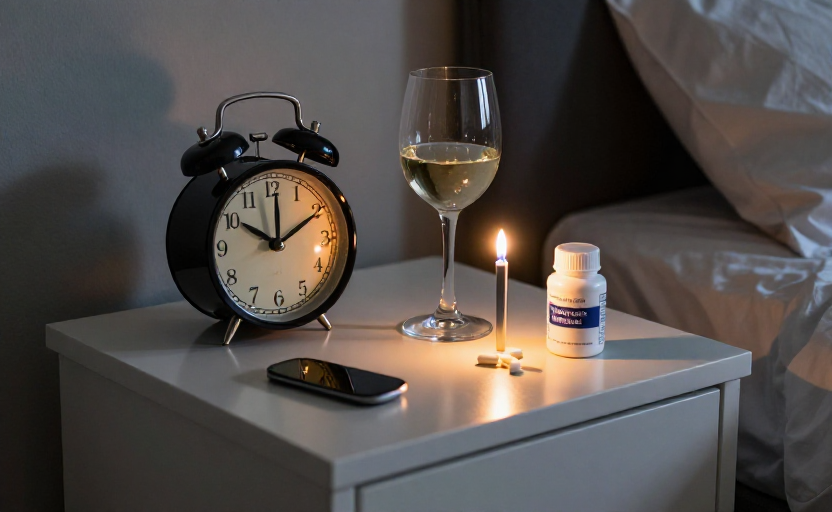
This myth has a strong anecdotal pull. A glass of wine or a nightcap can feel relaxing, and it does help some people fall asleep faster. But the research is clear: alcohol significantly disrupts sleep quality, especially in the second half of the night. Alcohol is a sedative, not a sleep inducer in the therapeutic sense.
A 2018 review in Alcoholism: Clinical and Experimental Research found that alcohol before bed reduces rapid eye movement (REM) sleep and increases sleep fragmentation—meaning you wake up more often, even if you do not remember it. The result is less restorative sleep overall.
For individuals with sleep apnea, alcohol can be particularly dangerous. It relaxes the muscles of the throat, worsening airway collapse and making apnea episodes more frequent and more severe. A person with undiagnosed sleep apnea who drinks before bed may experience dangerously low oxygen levels during the night.
If you are struggling with sleep, alcohol is almost certainly making the problem worse, not better. Limiting alcohol to at least three hours before bedtime (or skipping it entirely) is one of the simplest adjustments you can make for better sleep hygiene.
Moving past the myths: what actually helps?
Understanding these myths is a step toward better sleep health, but knowledge alone does not fix a sleep disorder. If you suspect you have a genuine sleep disorder—insomnia lasting more than three months, loud snoring with gasping, irresistible daytime sleepiness, or a strong urge to move your legs at night—the most effective path is a clinical evaluation. Primary care physicians can screen for common issues, and sleep specialists can order a polysomnogram (sleep study) if needed.
The evidence-based treatments for insomnia include cognitive behavioral therapy for insomnia (CBT-I), which has stronger long-term outcomes than sleep medications. For sleep apnea, continuous positive airway pressure (CPAP) therapy remains the gold standard. For restless legs syndrome, iron supplementation (if ferritin is low) and certain medications can provide relief. None of these treatments are quick fixes, but they are far more effective than chasing myths.
Good sleep is not about perfection. It is about consistency, awareness of your own patterns, and being willing to question the wellness dogma that pops up in your feed.