You’ve committed to a retinoid routine. You’re applying it consistently, dealing with the purging, and waiting for that glow. But what if something you’re drinking is quietly sabotaging your results? It’s a lesser-known aspect of retinoid use, but the truth is that certain beverages can interfere with how your skin responds to these powerful vitamin A derivatives.
Retinoids—whether over-the-counter retinol or prescription tretinoin—work by speeding up cell turnover and stimulating collagen. But they also make your skin temporarily more vulnerable to dehydration and irritation. It’s in this context that two common daily drinks can cause real trouble.
The Two Drinks That Can Sabotage Retinoid Results
While many foods and drinks can affect your skin, two in particular stand out because of their widespread consumption and direct biochemical friction with retinoid function. Here’s what they are and why they matter.
1. Alcohol (especially in the evening)
Alcohol is the biggest dietary antagonist to retinoid therapy. It affects your skin on multiple levels:
- Dehydration: Alcohol is a diuretic. It flushs water out of your system, leaving your skin—and your retinoid-treated barrier—dryer than usual. Retinoids already strip some moisture; alcohol deepens that deficit, increasing flaking, tightness, and irritation.
- Vitamin A metabolism interference: Retinoids work by binding to retinoic acid receptors in the skin. Alcohol consumption can lower retinol-binding protein levels in the liver, potentially reducing the amount of active retinoid that reaches your skin cells.
- Inflammation: Alcohol triggers systemic inflammation, which can negate the anti-inflammatory benefits you’re hoping for from retinoids over time. This can show up as persistent redness or slower healing.
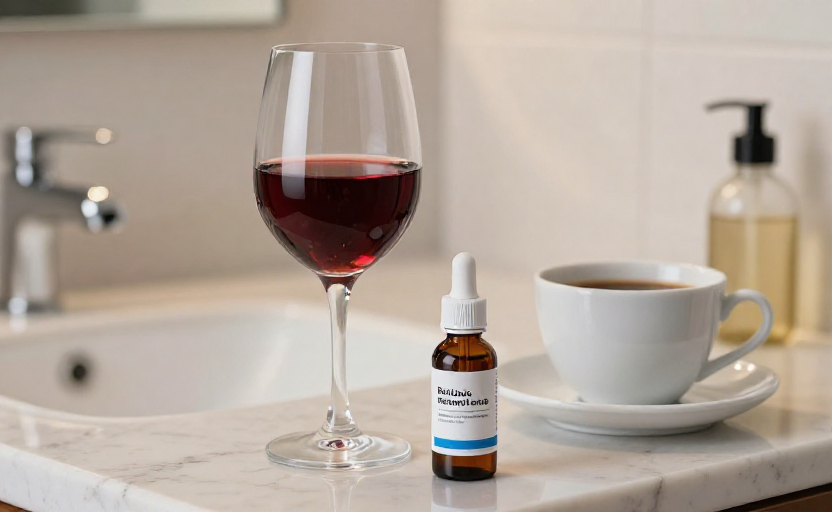
One glass of wine with dinner likely won’t ruin your progress, but regular or heavy drinking—especially close to when you apply your retinoid—can noticeably blunt your results.
2. Caffeinated coffee (when consumed excessively)
This one surprises many people. Coffee itself isn’t the enemy of retinoids directly the way alcohol is, but excessive caffeine intake works against retinoid success through two indirect but powerful mechanisms:
- Dehydration: Like alcohol, caffeine is a mild diuretic. If you drink multiple cups per day without matching it with water, your skin becomes chronically dehydrated. Dry skin is not receptive skin for retinoid absorption. Your barrier gets compromised faster, and irritation increases.
- Cortisol elevation: Caffeine raises cortisol (the stress hormone). Elevated cortisol breaks down collagen and weakens skin structure—the exact opposite of what you’re trying to achieve with retinoids. This can slow the visible anti-aging effects.
The key isn't giving up your morning coffee. It's awareness: too much caffeine can create a dry, stressed skin environment where retinoids struggle to deliver smooth results.
A practical perspective: If you drink coffee, match every cup with a glass of water. Avoid caffeine after 2 p.m. to protect your sleep and cortisol rhythm—good sleep amplifies retinoid benefits.
How to Hydrate (and Still Get Your Energy)
When you’re using a retinoid, hydration is non-negotiable. Replace or supplement those two drinks with these safer choices:
- Plain water – the gold standard. Aim for 8–10 glasses daily, especially in the half-hour before and after your morning coffee.
- Green or white tea – these contain L-theanine, which can smooth out caffeine’s jittery effects, and are rich in protective antioxidants that complement retinoid action.
- Electrolyte water – on days you exercise or feel particularly dry, a low-sugar electrolyte drink can help restore barrier function.
Timing Matters
When you drink matters almost as much as what you drink. Avoid alcohol within three hours of applying your retinoid at night, and try to keep your last coffee at least six hours before bedtime. This reduces the chance that internal dehydration or cortisol spikes will undercut your topical product.
Common Reader Questions About Retinoids and Beverages
Does decaf coffee still affect retinoid results?
Decaf has about 2–5 mg of caffeine per cup versus 95 mg in regular coffee. This is usually too low to cause significant dehydration or cortisol effects. A cup or two of decaf is generally fine when using retinoids.
Can I drink coffee in the morning if I apply retinol at night?
Yes, as long as you stay hydrated. The danger is cumulative: If you drink multiple coffees throughout the day without water, your skin will be dehydrated by evening, making the retinoid more irritating and less effective.
Is one glass of red wine per week okay?
Occasional moderate drinking—one drink a few times per week—rarely undermines retinoid results by itself. The real problems start at 3+ drinks per session or daily consumption.
What about energy drinks or pre-workout beverages?
Many contain both caffeine and other stimulants that compound the cortisol and dehydration issues. If you use a retinoid, limit these as much as possible.