
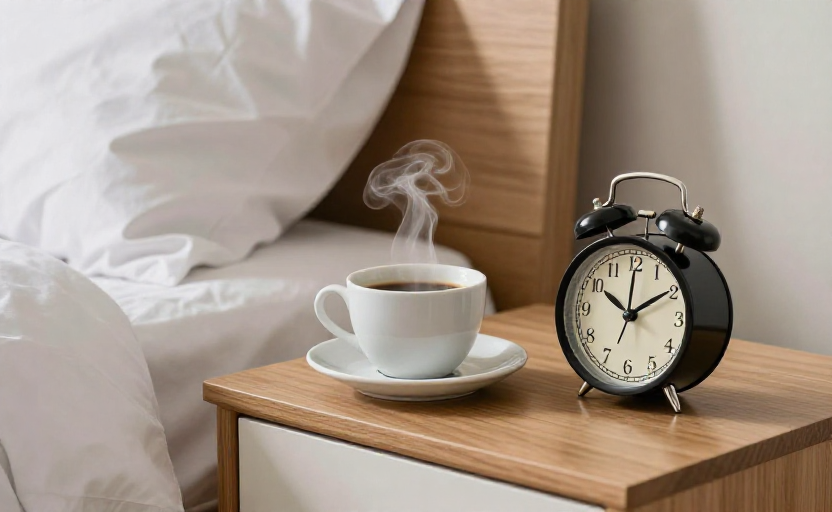
You lie in bed, exhausted, but your mind refuses to quiet down. Your heart might be beating a little faster, your thoughts racing from one worry to the next. Is it the double espresso you had after lunch, or is it the pressure from work that is keeping you wired? Untangling whether caffeine or stress is the culprit behind your poor sleep is not always straightforward, because both can create almost identical symptoms. However, identifying the root cause is the first step toward actually fixing the problem.
In my years of editing health content, I have seen how easy it is to blame one when the other is the real issue. The good news is that the two have distinct fingerprints once you know what to look for. Let’s walk through how to tell them apart, and what you can do about each.
The Overlap That Makes Things Confusing
Caffeine and stress both trigger the release of cortisol and adrenaline — your body’s primary stress hormones. This means that whether you have had too much coffee or you are under chronic pressure, you may experience a rapid heart rate, tense muscles, and that wide-awake feeling at midnight. Both can fragment your sleep, make it harder to fall asleep, and leave you feeling unrefreshed in the morning.
To complicate matters, caffeine actually mimics a stress response. So someone who is sensitive to caffeine might genuinely feel as though they are anxious or stressed, even if their life is relatively calm. Conversely, someone under significant stress may reach for more caffeine to cope, creating a vicious cycle.
Look at Your Sleep Onset Patterns
One of the clearest signals lies in when you struggle to sleep. Ask yourself: Do you get into bed feeling sleepy, only to jolt awake once your head hits the pillow? Or do you lie there for hours with your mind spinning before you even begin to feel drowsy?
Caffeine-related sleep disruption often shows up as difficulty falling asleep, especially if you consumed caffeine in the afternoon or evening. Caffeine has a half-life of about five to six hours, meaning that a 4:00 p.m. coffee can still have half its active caffeine in your system at 10:00 p.m. You might feel physically tired but find that sleep simply will not come, or that you wake up frequently during the night.
Stress-related sleep disruption, on the other hand, often causes a different pattern. You may fall asleep relatively easily because you are genuinely exhausted, only to wake up between 2:00 a.m. and 4:00 a.m. with your mind already racing about tomorrow’s deadlines, a difficult conversation, or a problem you cannot solve at that hour. This middle-of-the-night awakening is a hallmark of stress and anxiety.
A quick test: Try a one-week caffeine taper — reduce your intake gradually, not all at once. If your sleep improves significantly within a few days, caffeine was likely a major factor. If your sleep stays the same, stress is probably the stronger driver.
Track Your Daytime Symptoms
Your experience during the day can also give you clues. Caffeine and stress overlap here too, but the details differ.
If caffeine is the issue, you might notice that your anxiety or jitteriness peaks shortly after your morning coffee or mid-afternoon energy drink. You may feel a crash a few hours later, followed by a craving for more. Your heart may pound or race, and you might feel restless or irritable. These symptoms can be present even on weekends when your workload is lower.
If stress is the primary driver, your anxiety tends to be more constant or tied to specific triggers: a difficult email, a looming presentation, or family responsibilities. You might notice that your muscles are chronically tense, especially in your shoulders and neck, and that you feel emotionally drained rather than just physically tired. Stress-related anxiety is often accompanied by a sense of dread or worry about things that caffeine jitters typically do not produce.
One helpful approach is to keep a simple journal for three days. Write down what you ate and drank, your stress level on a scale of 1 to 10 every few hours, and how you slept. Patterns will emerge quickly.
Examine Your Sleep Quality and Fragmentation
Both stress and caffeine can make your sleep lighter and more fragmented, but the timing of the disruptions often differs. Caffeine can reduce the amount of deep sleep you get overall. Even if you sleep for eight hours, you might wake up feeling like you barely rested because your brain never fully entered the restorative stages.
Stress more commonly leads to vivid, anxious dreams or nightmares. If you are waking up frequently with a racing heart or a strong memory of a stressful dream, stress might be the primary culprit. These awakenings are often accompanied by sweating or a feeling of being hot, even if your bedroom is cool.
Consider Your Caffeine Sensitivity and Metabolism
Genetics play a huge role in how your body processes caffeine. Some people are “slow metabolizers,” meaning caffeine stays active in their system much longer. Others are “fast metabolizers” and can drink coffee at 6:00 p.m. with no sleep issues. If you know you are slow-metabolizing — or if you have never paid attention — it is worth doing a two-week caffeine elimination to see how it affects your sleep. Cut out coffee, tea, soda, energy drinks, and even chocolate. If your sleep improves dramatically, you have your answer.
When Both Are at Play: Breaking the Cycle
Many people face a situation where stress causes them to drink more caffeine, and then caffeine amplifies their stress response. This is the most common trap. In this case, singular experiments often help. Try cutting caffeine first, because it is the easier variable to control and measure. If your sleep improves but your daytime anxiety remains, you know stress is still present and you can address it with relaxation techniques, exercise, or professional support.
If you suspect stress is the main issue, focus on building a wind-down routine that signals safety to your nervous system. Dim lights an hour before bed, avoid screens, and try a gentle body scan or breathing exercise. Avoid replacing caffeine with alcohol, which also disrupts sleep architecture.
When to See a Professional
If you have experimented with adjusting both caffeine and stress management for a few weeks and still struggle with sleep, it is wise to talk to a doctor or a sleep specialist. Sleep disorders such as insomnia disorder, sleep apnea, or restless legs syndrome can mimic or compound the effects of caffeine and stress. A sleep study or a clinical evaluation can rule these out.