
You already know that starting your day with water is a good idea. But the connection between that first glass and your stress levels throughout the day is stronger than most people realize. Morning hydration isn't just about quenching thirst—it's a deliberate reset for your nervous system. Research in psychophysiology and neuroscience suggests that how you hydrate can directly influence your body's ability to handle pressure, from your first meeting to your evening wind-down.
Let's look at what the science actually says about adjusting your morning hydration routine to support long-term stress resilience. This isn't about chugging a gallon or following a rigid schedule. It's about small, strategic shifts that help your brain and body stay steady when the day gets loud.
Why your morning water matters for your stress response
Your body's stress regulation system—the hypothalamic-pituitary-adrenal (HPA) axis—is highly sensitive to fluid balance. Even mild dehydration (a 1-2% loss of body water) raises cortisol levels, according to a 2018 study in Psychoneuroendocrinology. When you wake up, you're already slightly dehydrated after six to eight hours without fluids. If you skip water, your cortisol baseline starts higher, making you more reactive to stressors that haven't even happened yet.
That means the first choice you make after waking—whether you drink water or reach for coffee—can set the tone for your entire day's stress level. The goal is not to eliminate coffee (most people won't), but to time your water intake so your nervous system gets a calm start before any stimulants hit.
The electrolyte-first approach for sustained calm
Plain water is fine for basic hydration, but for stress support, you need electrolytes—particularly sodium, potassium, and magnesium. These minerals help your cells actually use the water you drink, and they play direct roles in nerve signaling and muscle relaxation.
Magnesium, in particular, is a known stress buffer. It helps regulate the GABA system, which is your brain's natural brake pedal. Research from 2020 in Nutrients found that adequate magnesium intake was associated with lower perceived stress and better mood. But your body depletes magnesium overnight, so morning is a prime time to replenish.
A simple morning shift: Add a pinch of high-quality sea salt and a squeeze of lemon to your first glass of water. The salt provides sodium and trace minerals; the lemon adds potassium and vitamin C. This isn't a sports drink—it's a gentle, research-informed way to support your adrenal system before your day starts.
Three adjustments to your current routine
Instead of overhauling everything, try these three evidence-based tweaks that directly target your stress response:
- Drink water 15 to 30 minutes before caffeine. Caffeine is a diuretic, and when you drink it on an empty stomach with no water baseline, it can ramp up anxiety symptoms. A 2021 review in Frontiers in Psychiatry noted that caffeine can exacerbate cortisol spikes in dehydrated individuals. By hydrating first, you give your body a buffer, and the caffeine will feel smoother—less jittery, more focused.
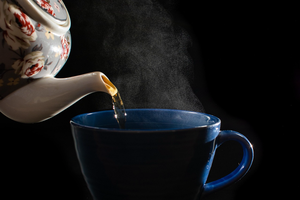
- Use warm water rather than ice-cold. Your digestive system and vagus nerve (the main nerve of the parasympathetic, or rest-and-digest, system) respond better to warm fluids. A 2019 study in the Journal of Neurogastroenterology and Motility found that warm water enhanced gastric motility and had a calming effect on the autonomic nervous system. Cold water can be a mild stressor, triggering a sympathetic (fight-or-flight) response. Warm water helps signal safety.
- Do not drink your water all at once. Sip slowly over 20 to 30 minutes. The kidneys can only process about half a liter per hour efficiently. Gulping a large glass floods your system, and your body's stress response can perceive rapid volume change as a mild shock. Slow sipping, combined with the warm temperature, signals to your brain that resources are abundant and there is no threat.
What the research says about timing and temperature
The temporal aspect of hydration is often overlooked, but your body has its own circadian rhythm for water regulation. Anti-diuretic hormone (ADH) peaks during sleep to prevent you from waking up to urinate. When you wake, ADH drops, and your kidneys start processing fluids again. This is the window when your tissues are most ready to absorb water.
If you wait two hours after waking to drink anything substantial, you miss that receptive window. Your blood volume remains lower, and your heart has to work slightly harder to maintain blood flow to the brain. That subtle cardiovascular effort can elevate baseline heart rate and contribute to a feeling of being rushed or frazzled, even if nothing is wrong.
Temperature matters more than you think. Cold water constricts blood vessels temporarily, which can be useful after exercise but not ideal for a calm start. Warm water, around 105–115°F (similar to the temperature of a comfortable bath), supports vasodilation and better circulation to the brain and extremities. Over weeks, this consistent morning habit can help lower resting heart rate variability (HRV), a physiological marker of stress resilience.
Building the habit without willpower
Knowing all this is one thing; actually doing it consistently is another. Your morning routine is already grooved, and adding a new step often feels like friction. But you can design your environment so the healthy choice is the easy choice:
- Put a glass or thermos on your nightstand the night before, filled with filtered water. If you're feeling ambitious, add the salt and lemon before bed. You'll see it the moment you open your eyes.
- Pair the hydration with something you already do: place the water bottle next to your phone charger or coffee maker. If you drink water while your coffee brews, that 15-minute gap takes care of itself.
- Use a small measuring cup so you drink approximately 8 to 12 ounces—enough to matter, not so much that you feel bloated. Consistency beats volume.
After a week, you'll probably notice that your morning coffee hits more smoothly and that you feel less reactive to small annoyances (like traffic or a slow inbox). That is not placebo—it's your nervous system receiving a balanced signal before the day's real challenges arrive.
When to adjust for individual needs
This routine is not one-size-fits-all. If you have high blood pressure or kidney concerns, the added salt (even from sea salt) may not be right for you. If you are pregnant or breastfeeding, your electrolyte needs shift. Always check with a healthcare professional if you have any condition that affects fluid balance or if you take medication that alters your blood pressure or kidney function.
What remains true for nearly everyone: starting your day with deliberate, slow, warm hydration—slightly enhanced with minerals—is a low-risk, high-upside addition to your stress-reduction toolkit. It works at the cellular level, not through willpower or expensive gadgets. And you can start tomorrow morning, no special equipment required.