Sun damage catches up with all of us eventually. The glow fades, and in its place comes something less welcome: sagging, crepey texture, and a loss of that firm, bouncy feel we associate with healthy skin. While retinol gets much of the spotlight for repair, there is another category of ingredients quietly doing the heavy lifting when it comes to restoring elasticity—peptides. This is not about miracle claims; it is about how these short-chain amino acids communicate with your skin cells to stimulate its natural scaffolding. Here is what you need to know if you are trying to reverse some of the visible effects of UV exposure.
Peptides are essentially fragments of protein. Your skin's structural proteins—collagen and elastin—are long, complex molecules. When you apply a peptide topically, it acts as a signaling molecule. It essentially tells fibroblasts (the cells that manufacture collagen and elastin) that there has been a breakdown and that it is time to get to work. For sun-damaged skin, where UV rays have fragmented collagen and inhibited elastin production, this signaling is exactly what is needed to kickstart repair. Unlike acids that exfoliate the surface or retinoids that speed cell turnover, peptides work through a deeper, scaffold-level restoration process.
Why sun damage destroys elasticity differently than aging
Intrinsic aging (the kind that happens from within) thins the skin gradually. Photoaging, caused by UV radiation, is more aggressive. The sun's rays generate free radicals that break down collagen fibers and cause abnormal elastin accumulation—a condition known as solar elastosis. Your skin's elastic network becomes disorganized and clumpy, losing its spring. This is why areas with high sun exposure, like the neck and chest, often show loose, leathery skin earlier than protected areas.
Peptides can help because they target the cellular signals damaged by UV. Two types are especially relevant here. Carrier peptides help deliver trace minerals like copper to wound-healing sites, which is crucial for rebuilding the extracellular matrix. Signal peptides, like palmitoyl pentapeptide-4 (Matrixyl), directly stimulate collagen production. Copper peptides also support angiogenesis (new blood vessel formation), which improves nutrient flow to damaged tissue.
Patience matters here. Peptide-based repair is not about an overnight surface glow but about gradual structural change over 8 to 12 weeks of consistent use.
What to look for on an ingredient label
If your goal is to rebuild elasticity specific to sun damage, not all peptide formulations are equal. The molecular weight matters. Peptides need to be small enough to penetrate the stratum corneum and reach the living layers of the skin. Brands that list generic "peptide complex" without specifying which peptides they use may not give you the right signaling for structural repair.
Look for these on the ingredient list:
- Copper tripeptide-1: One of the best-studied peptides for wound healing and collagen synthesis. Often found in serums for post-procedure recovery or deep repair.
- Palmitoyl tripeptide-1: Often paired with palmitoyl tetrapeptide-7. These signal collagen production and reduce inflammation from sun stress.
- Acetyl hexapeptide-8: More commonly associated with expression-line relaxation (like a topical Botox alternative), but recent research suggests it can support dermal repair when combined with other peptides.
There is also a practical tip: peptides work best in slightly acidic formulas (pH 4.0 to 6.5). If you combine them with strong acids like glycolic or lactic in the same step, you risk breaking the peptide bonds. Use peptides in a separate serum step after cleansing, before heavier moisturizers.
How to layer peptides into a sun-damage routine
Rebuilding elasticity requires a two-part strategy: protect the skin from further degradation and stimulate repair. Peptides cover the repair side, but they are ineffective if you are simultaneously causing more collagen breakdown. That means sunscreen is non-negotiable, but importantly, you need to pair peptides with the right supporting ingredients.
A practical sequence for the evening routine:
- Cleanse gently—avoid sulfates that strip the barrier.
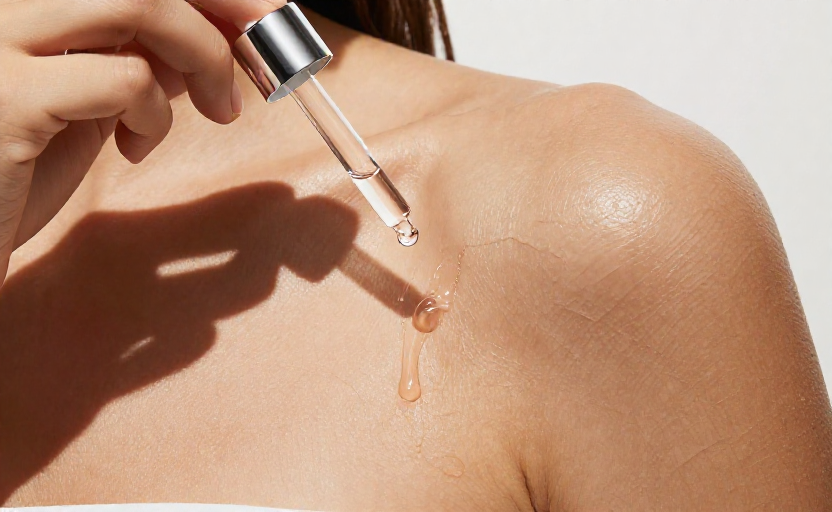
- Apply a peptide serum to damp skin for better penetration.
- Wait 60 seconds, then apply a niacinamide moisturizer. Niacinamide enhances peptide activity and further inhibits collagen glycation.
- Use a humidifier in dry climates; peptides need hydration to function optimally.
For morning, a vitamin C serum (L-ascorbic acid) before sunscreen helps protect existing collagen and enhances the environment for peptides to work at night. One caution: do not apply peptides directly after an AHA or BHA toner. The low pH and enzymatic activity can degrade peptide chains before they do their job.
Realistic expectations: what peptides can and cannot do
It is important to calibrate expectations. Peptides can thicken the dermis, improve firmness, and reduce the appearance of fine lines related to elastosis. They cannot reverse severe skin laxity that requires medical intervention like radiofrequency or surgical lifts. If you have deep jowls or significant hooding of the eyelids, no topical peptide will replace that lost volume. However, for the moderate crepey texture on the cheeks, decolletage, or forearms that many people develop after years of sun exposure, peptides are one of the most effective non-invasive options available.
Clinical studies on copper peptides show measurable increases in skin density and visible improvement in wrinkle depth after 12 weeks of twice-daily application. The results are less dramatic than retinoids initially, but they are also far less irritating—making peptides a better choice for someone whose skin barrier is already compromised by photodamage.
For anyone new to peptides, start with a single product, not a full system. Introduce it once a day for two weeks, then add a second application if no irritation occurs. Redness or tiny bumps usually indicate the concentration is too high for your skin's current tolerance, not that the ingredient itself is bad. Scale back to every other night until the skin adjusts.
The bottom line is this: peptides do not erase sun damage, but they do instruct your body to repair its own structural proteins. When combined with daily sun protection and realistic patience, they offer a gentler path to firmer, more elastic skin than many people realize is possible.