
Every parent wants to feed their baby well, but the difference between habits that nourish and habits that subtly undermine nutrition isn't always obvious. Small daily choices — from how you introduce new foods to the way you handle mealtime refusals — can shape your baby's relationship with food and their actual nutrient intake. Here's a clear look at what helps and what might be getting in the way.
What does a supportive daily feeding pattern look like?
A baby who eats well throughout the day isn't just getting calories; they're learning cues of hunger and fullness. The most supportive habit is offering food at roughly predictable intervals — not a rigid clock, but a rhythm that works for your baby's natural appetite. When meals are spaced too close together, a baby may not be hungry enough to try new foods. When they're too far apart, your baby may be overtired or overly hungry, which leads to fussy eating and quick snacking on only the most familiar items.
Keep in mind that breast milk or formula remains the primary source of nutrition in the first year. Solid foods complement milk feeds, not replace them at every meal. One helpful approach is to offer solids about an hour after a milk feed, when your baby is alert but not overly full. This small timing choice can make a big difference in how willing they are to explore new textures and flavors.
Rhythm matters more than rigidity. A baby who eats on a predictable but flexible schedule tends to eat more balanced meals and show less mealtime resistance.
Which feeding habits can hinder nutrition without you realizing it?
Some common habits seem harmless but can quietly work against your baby's nutritional development. One of the most frequent is relying too heavily on pouches or purees for too long. While convenience is real, babies need to practice chewing and handling textured foods by around 8–10 months. Extended puree-only feeding can delay oral motor skills and limit exposure to different food textures, which may lead to pickier eating later.
Another subtle hindrance is offering sweet snacks or drinks between meals. It's tempting to use a teething biscuit or a fruit pouch to keep a baby occupied, but these can spike blood sugar and reduce appetite for more nutrient-dense foods like vegetables, protein, or iron-fortified cereals. Even 100% fruit juice, while natural, can displace appetite for breast milk or formula and contribute to tooth decay. The American Academy of Pediatrics advises no juice before age 1.
What about pressure at the table?
Many parents worry when a baby refuses a food they've prepared, but pressuring — coaxing, bribing, or sneaking bites — often backfires. Babies are sensitive to mealtime atmosphere. When a parent shows frustration, a baby may associate the food with tension. The more calmly you offer a variety, the more likely your baby will eventually accept new foods. Research suggests that repeated exposure (sometimes 10–15 times) without pressure is one of the most effective ways to increase acceptance.
How do mealtime routines shape long-term eating habits?
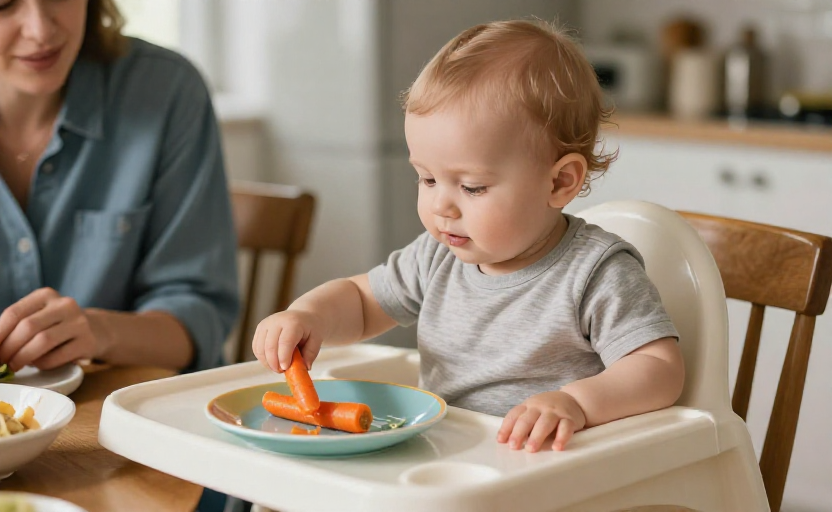
The structure around eating is just as important as what's on the plate. Babies who consistently eat at a highchair at the table — not in a car seat, stroller, or in front of a screen — tend to develop better self-regulation around food. Distracted eating can mean your baby eats more than they need or doesn't learn to recognize fullness cues. A calm, screen-free mealtime with you nearby is a powerful daily habit that builds healthy eating patterns for years.
Family meals also matter. Even before your baby can eat everything you do, sitting together at the table lets them watch you eat vegetables, chew, and enjoy food. That modeling is one of the most natural ways to teach your baby about varied eating. Babies who regularly see their parents eating vegetables are more likely to try and accept them.
Key nutrients to keep on your radar
Two nutrients deserve special attention in the first year: iron and zinc. Around 6 months, the iron stores a baby was born with begin to run low. Breast milk is low in iron, so introducing iron-rich foods like pureed meat, fortified infant cereal, or mashed beans is essential. Zinc supports growth and immunity and is found in similar foods. A daily habit of offering one iron-rich food at each meal can prevent deficiency that may affect development.
Vitamin D is another key player. Breastfed babies and those drinking less than 32 ounces of formula per day need a daily vitamin D supplement (400 IU per day, per AAP guidelines). This is one of the most overlooked daily feeding habits — but it's simple once it becomes part of your routine.
What about water?
Once your baby starts solids, small amounts of water — about 4–6 ounces per day split between meals — are fine. Start around 6 months using an open cup or sippy cup. Too much water can interfere with appetite for milk and lead to electrolyte imbalances, so there's no need to push it. Water is for practice and hydration, not calorie replacement.
What are some signs you may need to adjust your approach?
- Your baby consistently refuses all iron-rich foods after a week of trying different versions.
- They rarely seem hungry at mealtimes because of too many snacks or drinks in between.
- Meals feel like a daily battle — crying, turning away, or throwing food repeatedly.
- Your baby isn't showing interest in finger foods or chewing by 10–12 months.
If any of these resonate, a small adjustment — such as spacing out meals more, reducing distractions, or offering more variety without pressure — can often turn things around. If feeding difficulties persist, a pediatrician or pediatric dietitian can help tailor strategies for your baby's specific needs.