You check labels, you measure your rice, you feel confident about your carb count. Then your continuous glucose monitor or post-meal reading shows a number that makes no sense. If this sounds familiar, you may be making the most common carb counting mistake — underestimating the portions that hide in plain sight.
Carb counting works when you account for every gram. But certain foods and meal patterns trick even experienced counters. Here are three portions that quietly spike glucose, along with practical ways to bring them under control.
Why your portions might be misleading you
Carb counting relies on accuracy, but real life gets in the way. Eyeballing a serving, trusting package math, and forgetting about "free" foods all add grams you never logged. Over time, those invisible carbs add up to noticeable glucose swings.
The problem isn't that you can't count — it's that some portions are designed to be overlooked. Restaurant servings, convenience foods, and even so-called healthy snacks often contain two or three times the carbs you expect. Once you know where to look, you can adjust without obsessing over every bite.
Portion #1: The restaurant rice or pasta that's really 3 servings
When you order a side of rice at a restaurant, the menu likely lists it as one serving — around half a cup cooked, which contains about 15 grams of carbs. But what arrives is often a mound of rice that fills half the plate. That mound is closer to 1.5 cups cooked, delivering 45 grams of carbs or more before you add sauce or vegetables.
Pasta works the same way. A standard 2-ounce dry pasta serving (about 1 cup cooked) contains roughly 45 grams of carbs. Most restaurant pasta entrees start at 4 to 6 ounces dry weight, meaning you may be eating 90 to 135 grams of carbs in a single bowl.
Quick fix: Ask for a side box when you order. Immediately remove half the rice or pasta and set it aside before you start eating. That simple act cuts the invisible carbs in half.
Portion #2: The "healthy" smoothie that packs 60+ grams of carbs
A smoothie made at home with fruit, yogurt, and milk seems like a smart choice. But the portions often get away from you. One medium banana contains about 24 grams of carbs. A cup of orange juice adds 26 grams. A half-cup of Greek yogurt contributes another 6 to 8 grams. Before you add any extras like honey, nut butter, or protein powder, you're at roughly 56 to 60 grams of carbs in one glass.
Pre-made smoothie shop versions can be worse. They frequently use fruit juice concentrate, sweetened yogurt, and added sugar, pushing a 16-ounce smoothie past 80 grams of carbs. That's more than some entire meals.
Quick fix: Make smoothies yourself with the fruit as a flavoring, not the main ingredient. Use unsweetened almond milk, a handful of spinach, a small portion of berries (about 1/2 cup), and a scoop of plain protein powder. You'll get a 10 to 15 gram carb base instead of 60.
Portion #3: The bedtime snack that keeps your morning glucose high
Evening snacks have a sneaky way of disrupting fasting glucose. A small bowl of cereal with milk might seem modest — about 30 grams of carbs — but the timing works against you. Overnight, your body becomes less sensitive to insulin. Those evening carbs can keep your liver producing glucose longer than expected, resulting in a dawn effect that pushes your morning reading higher than it should be.
Nuts, cheese, and seeds are common go-tos, but their carb loads add up if you eat from a family-size bag. An ounce of almonds contains 6 grams of total carbs, but a handful from a mixed-nut canister can be double that. Dried fruit trail mix easily delivers 25 grams of carbs in a single handful.
Quick fix: Pre-portion your evening snack into a small bowl or bag before you sit down. Aim for a 15-gram carb limit for that snack, and pair it with protein or fat — like an ounce of cheese with a small apple, or a hard-boiled egg with a handful of almonds.
How to spot hidden portions in everyday foods
Hidden portions aren't limited to restaurants and smoothies. A few everyday items commonly carry more carbs than people assume:
- Granola and muesli: A serving size on the box is often 1/4 cup (about 15 grams of carbs), but most people pour twice that amount into a bowl.
- Beans and lentils: Half a cup of cooked beans contains 20 to 25 grams of carbs. A generous side dish can easily be 40 to 50 grams.
- Crackers and crispbreads: A single serving of many crackers is 4 to 6 pieces, yet people often eat twice that many without thinking.
- Sauces and dressings: Sweetened vinaigrettes, barbecue sauce, and teriyaki glaze can add 5 to 10 grams of hidden carbs per tablespoon.
Simple strategies for better carb accuracy
You don't need to become a full-time food weigher to avoid these surprises. A few small habits make a big difference:
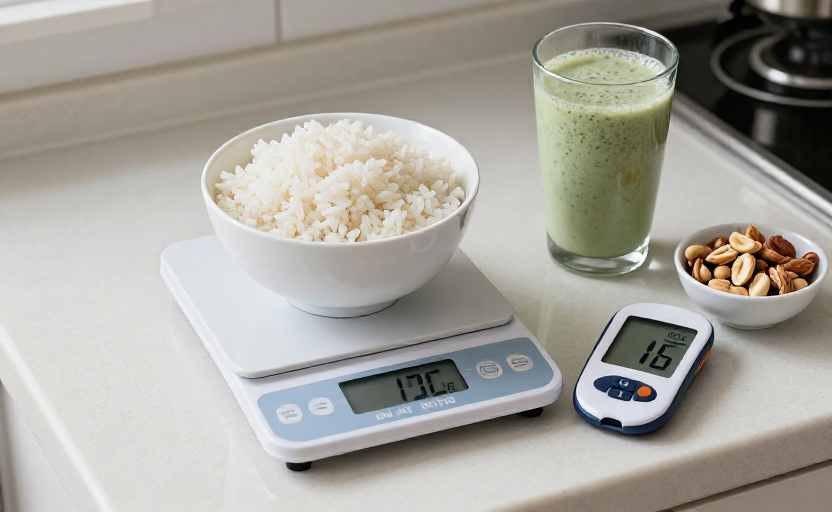
- Use measuring tools at home. A set of measuring cups and a food scale takes 30 seconds per meal and removes the guesswork.
- Read the "per serving" line twice. Check how many servings are in the package — a bag of chips may list 4 servings, but most people eat the whole bag.
- Account for liquid carbs. Juice, soda, sweetened coffee drinks, and alcohol all contribute carbs that many people mentally omit.
- Build a "buffer" into your count. If you eat out frequently or use packaged foods, add 10 to 20 percent to your carb estimate to account for hidden portions.
When portion awareness isn't enough
If you've corrected your portion awareness and glucose readings still run high, consider other factors. Stress, sleep quality, medication timing, and physical activity all influence how your body handles carbohydrates. A 10-minute walk after a meal, better sleep hygiene, or a conversation with your healthcare provider about medication adjustments may provide the help that portion adjustments alone cannot.
Carb counting is a tool, not a test of willpower. The mistake isn't that you lack self-control — it's that portion sizes have quietly expanded all around us. Once you see them clearly, you regain the power to manage your glucose without constant surprises.