
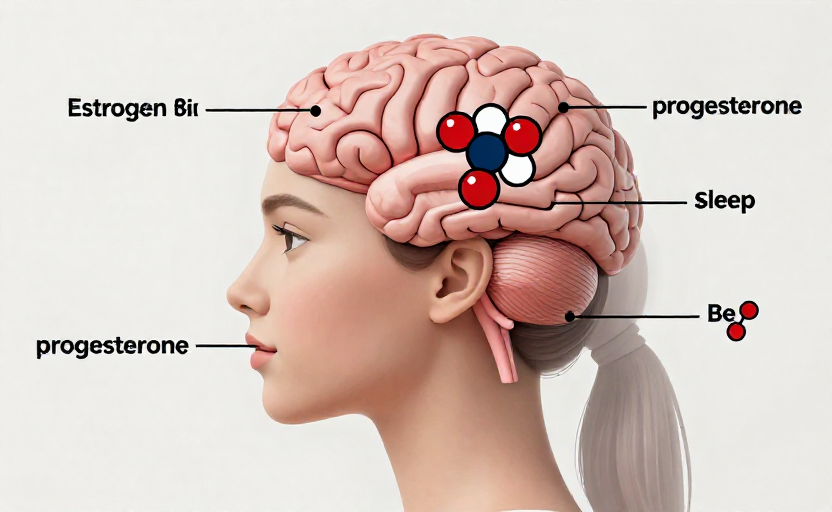
You’re lying in the dark, watching the clock tick past another hour. The room is cool, your pillow is comfortable, but sleep feels like a distant country. For many women navigating menopause, this scenario becomes a familiar, frustrating companion. The culprit isn't just stress or a busy mind—it's a fundamental biological shift. The hormonal changes of menopause don't just turn down the thermostat on your fertility; they actively rewire the systems that govern your sleep.
Understanding this connection is the first step toward reclaiming rest. It’s not a personal failing or a sign you’re doing something wrong. It’s your body responding to a significant transition. This explainer walks through the practical mechanics of how falling estrogen and progesterone levels directly disrupt the architecture of your sleep, and what that actually feels like night after night.
Why are hormones so powerful for sleep?
Think of estrogen and progesterone not as single-purpose reproductive chemicals, but as master regulators with keys to many rooms in your body’s house. They influence everything from brain chemistry and body temperature to your breathing and mood—all of which are essential for smooth sailing into and through the night.
Estrogen, for instance, helps regulate the neurotransmitters serotonin and acetylcholine, which are involved in sleep cycles and REM sleep. It also supports the body’s use of magnesium, a mineral that helps muscles relax. Progesterone has a natural sedative, calming effect and is a known respiratory stimulant, helping to keep your breathing steady. When these hormones begin their menopausal decline, the systems they support can start to falter.
The core sleep disruptors of menopause
The sleep disturbance isn’t one single problem, but a cascade of interconnected issues triggered by hormonal withdrawal.
Thermoregulation goes awry
This is often the most recognizable symptom. The hypothalamus, your body’s thermostat, is packed with estrogen receptors. As estrogen levels drop, this thermostat becomes exquisitely sensitive to tiny fluctuations in core body temperature. It can mistakenly perceive you as too hot and trigger a cooling response—a hot flash or night sweat—to correct it.
Waking up drenched isn't just uncomfortable; it's a full physiological event that pulls you out of deep sleep.
Even if you don’t fully wake, the surge of adrenaline and the physical act of cooling down can fragment sleep, preventing you from spending enough time in the restorative deep and REM stages.
The loss of progesterone’s calming effect
Progesterone promotes feelings of calm and drowsiness. Its decline can make it genuinely harder to wind down and fall asleep in the first place. You might feel more anxious or “wired” at bedtime. Furthermore, its role as a respiratory stimulant means lower levels may contribute to an increased risk of sleep-disordered breathing, like sleep apnea, which becomes more common after menopause.
Mood, pain, and the ripple effects
Sleep disruption and hormonal flux create a challenging cycle. Poor sleep worsens mood swings, anxiety, and irritability, which are also influenced by hormonal changes. Conversely, feeling anxious or low can make it harder to sleep. Additionally, estrogen has anti-inflammatory properties and helps keep joints lubricated. Lower levels can mean an increase in aches and pains—from joint stiffness to headaches—that can make finding a comfortable sleeping position difficult.
What does this disruption actually look like at night?
Clinically, it’s called “sleep fragmentation.” In real life, it feels like this:
- Long sleep latency: Lying awake for 30, 60, or 90 minutes trying to fall asleep.
- Frequent awakenings: Waking up multiple times a night, often due to a hot flash, the need to use the bathroom (another effect of hormonal changes on the bladder), or for no apparent reason.
- Early morning awakening: Waking up at 4 a.m. with a racing mind, unable to drift back off.
- Non-restorative sleep: The cruelest outcome: you log 7 or 8 hours in bed but wake up feeling unrefreshed, as if you barely slept at all.
This pattern leads to the classic daytime symptoms: fatigue, brain fog, difficulty concentrating, and a shorter fuse.
Is it “just” menopause, or could it be something else?
While hormonal change is the primary driver, it’s important to consider other common midlife sleep thieves that can coincide with menopause. Thyroid issues, which are more common in women, can profoundly affect energy and sleep. Restless Legs Syndrome can worsen with age. And as mentioned, the risk of sleep apnea increases after menopause. If your sleep issues are severe, involve loud snoring or gasping, or don’t improve with lifestyle adjustments, a conversation with your doctor or a sleep specialist is a wise step.
Where do we go from here?
Knowledge is power. Recognizing that your sleep struggles have a clear biological basis can remove self-blame and point you toward strategies that actually address the root causes. The goal isn’t to revert to your 30-year-old sleep patterns, but to build a new toolkit for this chapter. This often involves a multi-pronged approach: behavioral strategies like strict sleep hygiene and cognitive techniques to manage nighttime anxiety, environmental tweaks to manage temperature, and for some, discussing broader treatment options with a healthcare provider. The path to better sleep starts with understanding the why, and from there, you can begin to experiment with the how.




![Apple Watch Series 11 [GPS 42mm] Smartwatch with Rose Gold Aluminum Case with Light Blush Sport Band - S/M. Sleep Score, Fitness Tracker, Health Monitoring, Always-On Display, Water Resistant](https://www.glowtheorylab.com/uploads/ad202604/4109b832df3b994b.webp)