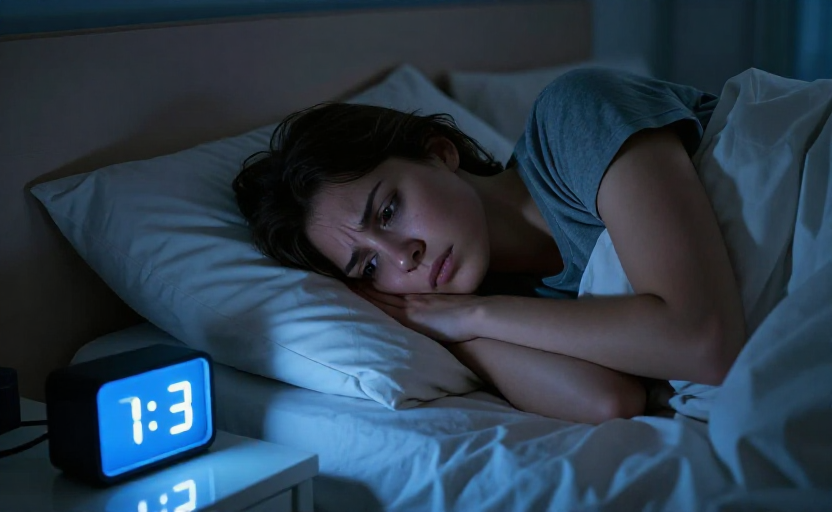
You know the feeling: your head hits the pillow, your body is tired, but your mind refuses to power down. Instead, it starts racing through tomorrow's to-do list, replaying an awkward conversation from three days ago, or fixating on a vague sense of dread. This is the hallmark of sleep anxiety — a loop where the very act of trying to fall asleep becomes a source of stress. It's not a formal medical diagnosis on its own, but for millions of people, it's a very real nightly battle that sits at the intersection of general anxiety and insomnia.
Sleep anxiety, sometimes called "bedtime dread" or "pre-sleep worry," can affect anyone, regardless of age. It often shows up as a persistent fear that you won't be able to fall asleep, or a feeling of tension and unease as bedtime approaches. Because sleep is essential for emotional regulation, this anxiety tends to create a feedback loop: the more you worry about sleeping, the harder it becomes to drift off, which then fuels more anxiety the next night. Understanding what drives this cycle is the first step toward breaking it.
What Exactly Does Sleep Anxiety Feel Like?
Sleep anxiety isn't just about having a restless night now and then. It's a pattern of physical and emotional symptoms that specifically revolve around bedtime. Physically, you might notice a tight chest, a pounding heart, shallow breathing, or muscle tension as soon as you lie down. Your internal thermostat might feel off, leaving you sweaty or shivering. These are your body's fight-or-flight mechanisms kicking in at exactly the wrong moment.
Emotionally, the symptoms are just as clear. You may find yourself dreading the evening hours, feeling irritable as the clock ticks closer to bedtime, or experiencing a sense of panic that you "won't be able to function" tomorrow if you don't sleep well. Many people describe a feeling of hyper-awareness — suddenly noticing every creak in the house, every beat of their heart, or the exact number of minutes ticking by on the clock. This mental vigilance is your brain's way of scanning for threats, but when the threat is sleep itself, it becomes a self-sustaining problem.
A quick note on the difference: Clinical insomnia is often defined as difficulty falling or staying asleep for at least three nights a week for three months. Sleep anxiety is a specific driver of that insomnia — it's the worry and fear associated with the sleep process itself. You can have sleep anxiety without full-blown insomnia, but they frequently travel together.
Common Triggers for Bedtime Racing Thoughts
Sleep anxiety doesn't come out of nowhere. It's usually fueled by specific triggers that prime the brain for worry the moment the day's distractions fade. One of the most common is an underlying generalized anxiety disorder (GAD). If you tend to worry excessively about a wide range of topics during the day, those worries will naturally sharpen during the quiet of the night when there are fewer things to occupy your mind.
Other frequent triggers include:
- Stressful life events: A big deadline, a relationship conflict, a recent move, or financial pressure can all turn the bed into a staging ground for rumination.
- Poor sleep hygiene: Inconsistent bedtimes, using your phone or laptop right before sleep, a noisy or bright bedroom, or consuming caffeine too late in the day can confuse your body's internal clock and raise cortisol levels.
- Trauma or PTSD: For those with a history of trauma, the vulnerability of lying down and closing your eyes can feel unsafe. Sleep itself can become associated with a loss of control.
- Health anxiety: Worrying about heart palpitations or other bodily sensations at night can create a feedback loop of checking and panicking.
It's also worth noting that our modern, always-on lifestyle plays a major role. The blue light from screens suppresses melatonin, while the constant influx of information keeps the brain in a state of low-grade alertness. If you are bringing the stress of the entire day — and the anticipation of tomorrow — into bed with you, sleep anxiety is a natural consequence.
Practical Coping Tools That Actually Help
Overcoming sleep anxiety usually requires a two-pronged approach: calming the nervous system in the moment, and addressing the underlying thought patterns that fuel the worry. Here are several evidence-based tools that sleep specialists often recommend.
1. The 90-Minute Unwind Rule
The brain doesn't have an on/off switch. It needs a transition period. Dr. Matthew Walker, a renowned sleep scientist, often emphasizes the importance of a "pre-sleep wind-down" of at least 60 to 90 minutes. During this time, put away all screens. Instead, do something calming and repetitive: fold laundry, listen to an audiobook, take a warm bath, or practice slow, gentle yoga stretches. The drop in body temperature after a warm bath is especially effective at signaling to the brain that it's time to sleep.
2. The "Worry Time" Exercise
Schedule a daily worry session. Set aside 15 minutes in the late afternoon or early evening — not right before bed — to sit down with a notebook. Write down every single thing that is on your mind: tasks, worries, feelings, memories. Once the time is up, close the notebook. When a worry pops up later at bedtime, you can remind yourself: "I already dealt with that during my worry time. It's recorded and I can address it tomorrow." This technique helps contain anxiety to a designated window instead of letting it invade your bed.
3. Cognitive Reframing for the Bedroom
Your thoughts about sleep can become distorted. A common one is catastrophizing: "If I don't fall asleep in the next 10 minutes, tomorrow is going to be a disaster." A more helpful thought might be: "Even if I only get light rest tonight, I can still manage my day. Lying here resting is still useful for my body." Challenging the irrational belief that a rough night will be utterly catastrophic can take away a lot of the performance anxiety around sleep.
4. Controlled Breathing and Progressive Muscle Relaxation
These are the emergency brakes for an anxious system. When you notice your heart racing in bed, try the 4-7-8 breath: inhale through your nose for a count of 4, hold for 7 seconds, and exhale slowly through your mouth for a count of 8. Repeat four times. This activates the vagus nerve and slows your heart rate. Similarly, progressive muscle relaxation — tensing and then releasing each muscle group from your toes to your scalp — can physically force the body out of a stress response.
When Sleep Anxiety Goes Beyond Self-Help
While these coping tools are effective for mild to moderate sleep anxiety, there are times when professional support is the right call. If you have experienced persistent trouble sleeping for more than a month, if your anxiety is accompanied by panic attacks, or if it is significantly impairing your daytime function (mood, concentration, energy), it is wise to consult a healthcare provider.
Cognitive behavioral therapy for insomnia (CBT-I) is the gold-standard treatment. It is a structured program that helps you identify and replace thoughts and behaviors that cause or worsen sleep problems with habits that promote sound sleep. A therapist can also help you address any underlying anxiety or mood disorders that are contributing to the bed-time dread. In some cases, a doctor might discuss short-term sleep aids or supplements, but these are best evaluated on an individual, personalized basis — never self-prescribed.
It also helps to remember that you are not alone in this. Sleep anxiety is incredibly common, especially in periods of high global or personal stress. The goal is not to achieve "perfect sleep" every night — that is an impossible standard. The goal is to make your bed a safe, neutral place where you can rest without fighting yourself.
Small, consistent changes to your evening routine and your mindset can gradually quiet that racing mind. You don't have to fix everything tonight. Just pick one small tool from this list, and try it for a week. That one small shift can be the beginning of breaking the cycle.