Age spots—those flat, brown, or gray patches that tend to appear on sun-exposed skin—are one of the more visible signs of cumulative damage. While topical brighteners and laser treatments get a lot of attention, the foods you eat play a foundational role in how well your skin defends and repairs itself. As a dietitian, I look at age spots not as a surface-level concern, but as a window into what's happening inside the body: oxidation and inflammation that, over time, show up right on your skin.
The goal isn't to erase spots overnight. Instead, it's about consistently supplying your skin cells with the antioxidants they need to neutralize free radicals, support collagen integrity, and slow the pigment-forming process. Here’s the practical, food-first approach to making that happen.
How Antioxidants Actually Affect Age Spots
Age spots, also called solar lentigines, form when melanin clumps together—often after years of UV exposure. The chain reaction starts with free radicals, unstable molecules that damage cell membranes and DNA. Antioxidants step in as neutralizers, donating electrons without becoming destabilized themselves.
Certain antioxidants target the melanin pathway directly. For example, vitamin C interrupts tyrosinase, an enzyme needed for melanin production. Vitamin E helps protect cell membranes from UV-induced lipid peroxidation. Carotenoids like beta-carotene and lycopene accumulate in the skin and absorb some UV light, acting like a mild internal sunscreen. When you eat these compounds regularly, they build up in skin tissue over weeks to months, creating a more resilient baseline.
A 2020 review in Nutrients noted that diets rich in polyphenols and carotenoids are associated with reduced pigmentation severity, though results vary by individual genetics and sun habits. The protective effect is cumulative—not a quick fix.
Foods That Deliver Targeted Pigment-Fighting Antioxidants
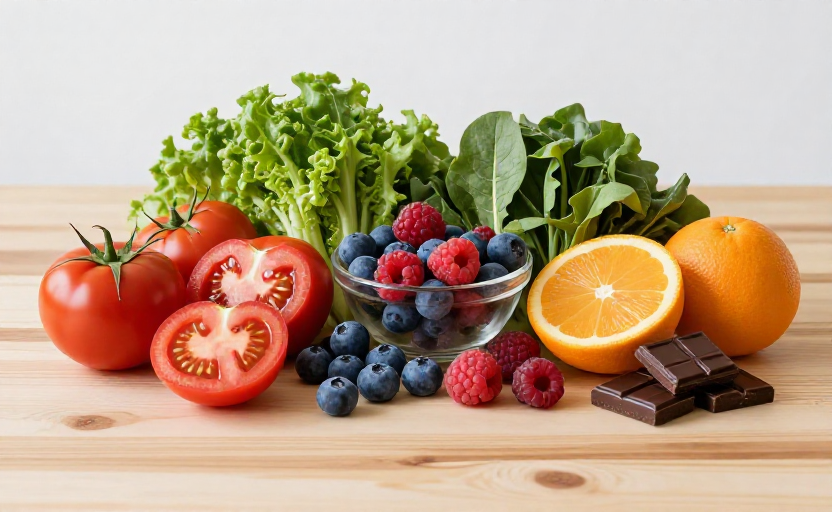
Rather than chasing a single “superfood,” the most effective strategy is to eat a diverse range of colorful plants. Each color signals a different class of antioxidant, and each class brings something unique to skin health.
Red and Pink Produce: Lycopene and Astaxanthin
Cooked tomatoes, watermelon, pink guava, and grapefruit provide lycopene, a fat-soluble carotenoid that concentrates in skin. One small study found that people who ate tomato paste daily for 10 weeks had better protection against UV-induced redness. Astaxanthin, found in wild salmon and shrimp, is a potent antioxidant that has been shown in some trials to reduce pigmentation when taken consistently.
Orange and Yellow Produce: Beta-Carotene, Zeaxanthin, and Vitamin C
Carrots, sweet potatoes, pumpkin, bell peppers, and citrus fruits offer beta-carotene (which converts to vitamin A, essential for skin cell turnover) and high amounts of vitamin C. These nutrients support the fading of existing spots by speeding up the shedding of pigmented cells and reducing new melanin formation.
Dark Leafy Greens: Lutein and Zeaxanthin
Spinach, kale, Swiss chard, and collard greens are dense sources of lutein and zeaxanthin—carotenoids best known for eye health but also shown to protect skin from oxidative stress. A 2017 study in Skin Pharmacology and Physiology reported that increased lutein intake was linked to higher skin hydration and reduced lipid peroxidation, which can indirectly improve the appearance of pigmentation.
Blue and Purple Produce: Anthocyanins and Ellagic Acid
Blueberries, blackberries, purple grapes, pomegranates, and plums contain anthocyanins, which protect skin capillaries and reduce inflammation. Ellagic acid, abundant in raspberries and strawberries, has been studied for its ability to inhibit tyrosinase activity in laboratory models. While human research is still emerging, these fruits provide broad antioxidant support without downside.
Green Tea and Cocoa: Catechins and Flavonols
Green tea is rich in epigallocatechin gallate (EGCG), a catechin that has shown protective effects against UV-induced melanogenesis in several human trials. One controlled study found that women who drank a green tea beverage with 300 mg EGCG daily for 12 weeks had a measurable reduction in melanin levels in sun-exposed skin. Dark cocoa (70% or higher) provides flavanols that increase blood flow to skin and improve nutrient delivery.
A simple rule of thumb: Aim to include at least three different colors of produce in every meal. That's a practical, achievable way to diversify your antioxidant intake without overcomplicating things.
Practical Strategies for Building a Skin-Supporting Diet
Knowing which foods help is one thing; actually incorporating them into an everyday routine is another. Here’s how I guide clients to make this sustainable.
- Start with breakfast: Add a handful of spinach to a smoothie with half a cup of berries. That gives you lutein, zeaxanthin, vitamin C, and anthocyanins before 9 a.m.
- Roast vegetables in batches: Sweet potatoes, bell peppers, and cherry tomatoes tossed in olive oil (which enhances carotenoid absorption) keep for days and can be added to lunches or dinners.
- Use green tea as a base: Brew a pitcher of green tea and keep it in the fridge. Drink a glass with lunch or use it as a base for iced tea with lemon.
- Snack strategically: Swap chips for a small handful of walnuts (rich in vitamin E) and a piece of dark chocolate. This combination provides both fat-soluble and water-soluble antioxidants.
- Include a cooked tomato product daily: Pasta sauce, tomato soup, or stewed tomatoes—cooking concentrates lycopene and makes it more bioavailable.
Lifestyle Factors That Amplify or Undermine Results
Diet alone won't reverse decades of sun damage if you keep adding to the problem. For antioxidants to work effectively, you need to reduce the oxidative load they're fighting against. Two factors matter most: sun management and smoking.
Daily broad-spectrum sunscreen (SPF 30 or higher) is non-negotiable if you want dietary antioxidants to have a visible effect on age spots. UV exposure generates free radicals faster than food-based antioxidants can neutralize them. Similarly, smoking depletes vitamin C levels in the skin by roughly 30 percent, according to dermatologic research, making it harder for any dietary strategy to show results.
Adequate sleep also matters—during deep sleep, the body produces melatonin, which acts as a direct antioxidant and supports skin repair. Aim for seven to eight hours per night to let your body’s own antioxidant systems do their work.
Realistic Expectations: How Long Until You See Changes?
Age spots develop over years and fade slowly. In clinical studies using dietary interventions, visible improvements in pigmentation usually take at least eight to twelve weeks of consistent intake. Even then, the changes tend to be subtle—a slight evening out of tone rather than complete disappearance. For deeper spots or those caused by significant sun damage, topical treatments or procedures may still be needed. But diet provides the foundation that makes those treatments more effective and lasting.
Think of antioxidant-rich foods as long-term investment in your skin's resilience. Each serving repairs a little damage from the day before. Over months, that daily repair adds up to skin that looks clearer, more even, and better equipped to withstand the environment around it.