If you’re navigating the waves of heat that often accompany menopause, you’re not alone. Hot flashes are one of the most common and disruptive symptoms, affecting a significant majority of women during this transition. While hormone therapy is a medical option, many look for complementary, everyday strategies to find relief. One of the most accessible places to start is right on your plate. Emerging research suggests that certain foods and drinks, rich in specific compounds, may help modulate the body’s temperature regulation and offer a sense of calm from the inside out.
It’s important to frame this not as a cure, but as a form of supportive nourishment. The goal is to build a dietary pattern that supports overall hormonal balance and vascular health, which can, in turn, influence the frequency and intensity of hot flashes. Think of it as adding tools to your toolkit—gentle, foundational practices that work alongside any medical guidance you receive.
How can food possibly affect hot flashes?
Hot flashes are believed to be linked to the hypothalamus, the body’s thermostat. As estrogen levels decline, this thermostat becomes more sensitive to slight changes in core temperature, triggering a cooling response (the hot flash) far too easily. Certain nutrients and plant compounds appear to interact with this system. Some have mild estrogen-like effects that may help fill the gap left by declining natural hormones. Others support blood vessel health, promote stable blood sugar, or possess calming properties that can dampen the nervous system’s overreaction. The following foods and drinks are worth considering for their potential to contribute to a cooler, more balanced state.
Foods and drinks to incorporate
Instead of a rigid list, consider these as ingredients for a more supportive daily menu. Variety and consistency matter more than any single superfood.
Soy-based foods
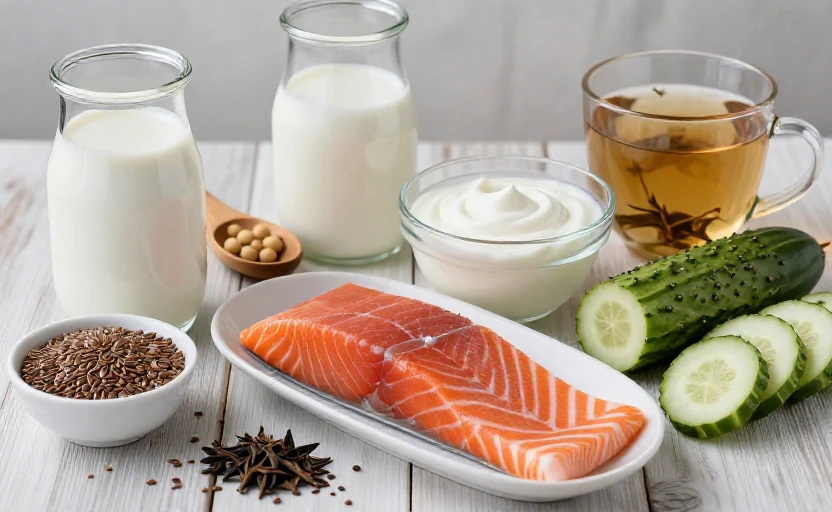
Foods like tofu, tempeh, edamame, and unsweetened soy milk contain isoflavones, a type of phytoestrogen. These plant compounds have a chemical structure similar to human estrogen and can bind weakly to estrogen receptors in the body. For some women, this mild estrogenic activity may help moderate hot flashes. The key is to consume whole or fermented soy foods regularly, not occasionally.
Integrate soy gradually. Try swapping cow’s milk for soy milk in your oatmeal or adding edamame to a salad.
Flaxseeds
These tiny seeds are a powerhouse of lignans, another type of phytoestrogen, and are also rich in omega-3 fatty acids and fiber. The lignans may help balance hormone activity, while the omega-3s support cardiovascular health and reduce inflammation, which is often heightened during menopause. Grind flaxseeds to unlock their nutrients, and sprinkle a tablespoon or two into smoothies, yogurt, or baked goods.
Fatty fish
Salmon, mackerel, sardines, and trout are excellent sources of omega-3 fatty acids EPA and DHA. These fats are crucial for reducing systemic inflammation and supporting the health of blood vessels. Since hot flashes involve sudden blood vessel dilation, maintaining vascular health is a logical supportive strategy. Aim for two servings per week.
Whole grains and legumes
Stable blood sugar is a silent ally in managing menopause symptoms. Blood sugar spikes and crashes can stress the body and potentially trigger hot flashes in some individuals. Fiber-rich whole grains like oats, quinoa, and barley, along with legumes like lentils and chickpeas, slow the absorption of sugar into the bloodstream. This helps maintain steady energy and may prevent symptom flares.
Yogurt and fermented foods
The gut microbiome plays a surprising role in hormone metabolism. A healthy gut can help process and eliminate used hormones more efficiently. Probiotic-rich foods like yogurt, kefir, kimchi, and sauerkraut support a diverse gut environment. Furthermore, yogurt provides calcium, which is vital for bone health as estrogen levels drop.
Water-rich fruits and vegetables
Staying well-hydrated is a simple yet often overlooked strategy. Dehydration can make you feel warmer and may lower your threshold for a hot flash. Cucumbers, celery, watermelon, strawberries, and leafy greens have high water content. They also provide antioxidants and vitamins that support overall cellular health during a time of hormonal change.
Herbal teas
Some herbal infusions are traditionally used for their cooling and calming properties. While scientific evidence varies, many women find them helpful as part of a relaxing ritual.
- Sage tea: Sage has a long folk history for reducing sweating and hot flashes. A cup in the afternoon or evening may be beneficial.
- Black cohosh tea: This herb is widely studied for menopause symptoms. It’s crucial to consult with a healthcare provider before use, as it can interact with medications.
- Peppermint tea: Menthol has a natural cooling effect. Sipping a cool peppermint tea can be refreshing.
What to approach with caution
Just as some foods may help, others are common triggers. These aren’t universal, but paying attention to your personal reactions can be insightful.
- Spicy foods: Capsaicin can directly stimulate the nervous system and trigger a sweating response.
- Caffeine: Found in coffee, strong tea, and soda, caffeine can stimulate adrenaline and dilate blood vessels, prompting a flash.
- Alcohol: Especially red wine, alcohol causes blood vessels to dilate, often leading to a feeling of warmth or a hot flash shortly after consumption.
- High-sugar foods: Rapid sugar spikes can destabilize your system and may be followed by a flush.
The best approach is one of mindful observation. Keep a simple log of your diet and symptoms for a week or two. You might discover your own unique triggers and allies.
Building a sustainable pattern
Focus on addition, not perfection. Start by incorporating one or two of these supportive foods each day. A breakfast of oatmeal with ground flaxseeds and soy milk, a lunch salad with chickpeas and cucumbers, and a dinner of salmon with quinoa creates a pattern rich in phytoestrogens, fiber, omega-3s, and hydration. Pair this with mindful hydration and attention to personal triggers, and you’ve built a foundational dietary approach that supports your body through the menopausal transition. Always discuss significant dietary changes with your doctor or a registered dietitian, especially if you have underlying health conditions.