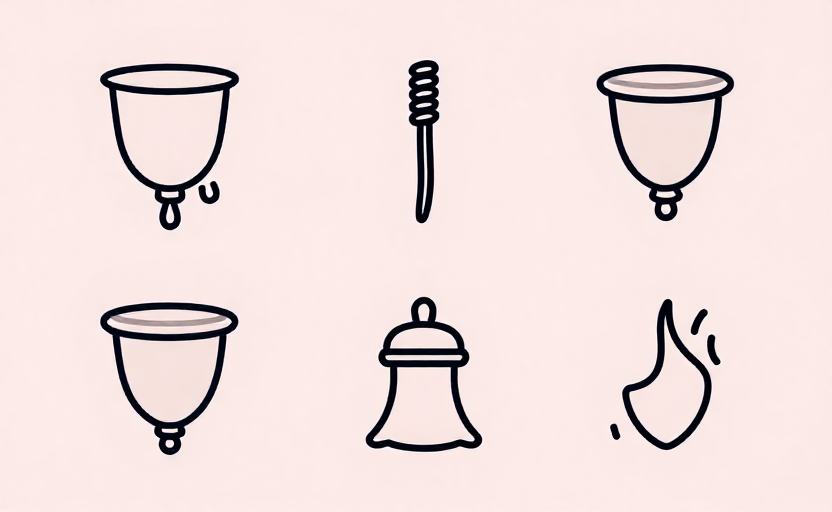
A menstrual cup that fits well should be almost invisible—no leaks, no discomfort, no second-guessing. But when the fit is off, your body usually sends clear signals. Here are six signs that your cup may not be the right size, shape, or placement for you.
1. You’re experiencing constant leaks
If your cup leaks soon after insertion or throughout the day, it often means the seal isn’t secure. A good fit creates a light suction against the vaginal walls. Leaks can happen if the cup is too small, too soft, or not fully opened after insertion. Try a firmer or larger cup, or check that the rim has completely popped open by running a finger around the base.
2. The cup feels uncomfortable or creates pressure
Feeling like the cup is pushing against your bladder, rectum, or cervix is a sign of a size or shape mismatch. A cup that's too long for your cervix height, or too wide, can cause a constant sensation of pressure. If you feel discomfort after a few hours, especially when walking or sitting, consider a shorter or more tapered cup designed for a lower cervix.
3. You have difficulty removing the cup
Struggling to break the seal or reach the base often means the cup is sitting too high. If you can barely touch the stem, the cup may be too short or your cervix may be high. On the other hand, if the stem protrudes and causes irritation, the cup may be too long. A cup that is easy to insert and remove without excessive tugging is usually the right size for your anatomy.
4. The cup shifts or moves during the day
A properly fitted cup stays in place regardless of your activity. If it slides down, tilts, or rotates, the seal may be weak or the cup may be too small. Kegel exercises can sometimes help with grip, but a cup that consistently moves likely needs a different size or firmer material.
5. You feel the stem poking or rubbing
If you can feel the stem after insertion, it may be too long for your vaginal canal. This can cause irritation or chafing against the labia. Many cups allow you to trim the stem, but if you’ve already trimmed it and still feel poking, the entire cup may be too long for your body. A shorter cup style might be a better match.
6. Urine flow feels blocked or you have trouble urinating
A cup that presses against the urethra can make it feel like you need to urinate constantly, or it can partially block the flow. This usually happens when the cup is too firm or positioned too far forward. Switching to a softer cup or adjusting the angle of insertion can often relieve this pressure.
Quick tip: If you suspect a fit issue, try measuring your cervix height (low, average, or high) on the first or second day of your period. This measurement is the single most helpful guide for choosing the right cup size and shape.
Finding the right fit may take one or two cycles of trial and error. Many brands offer two sizes based on age, flow, and childbirth history, but your individual anatomy matters more than any label. If these warning signs persist after trying different positions or cup styles, consider consulting a gynecologist or pelvic floor specialist for personalized guidance.