Watching a parent age brings a mix of emotions. You want them to stay independent in their own home, yet you worry about the small things you notice. Maybe they grip the kitchen counter a little tighter when walking to the table. Perhaps a new bruise appears on their arm and they can't recall how it happened. These moments can be easy to dismiss, but they often point to something real: a decline in balance that raises the risk of a dangerous fall.
Falls are a leading cause of injury among older adults, yet many older people are reluctant to admit they feel unsteady. Instead of saying something directly, they adapt in subtle ways. As a family member or caregiver, knowing what to watch for can help you step in before a fall leads to a hospital visit. Below are six quiet signals that your aging parent may be losing their sense of balance at home.
1. Using furniture as a support system
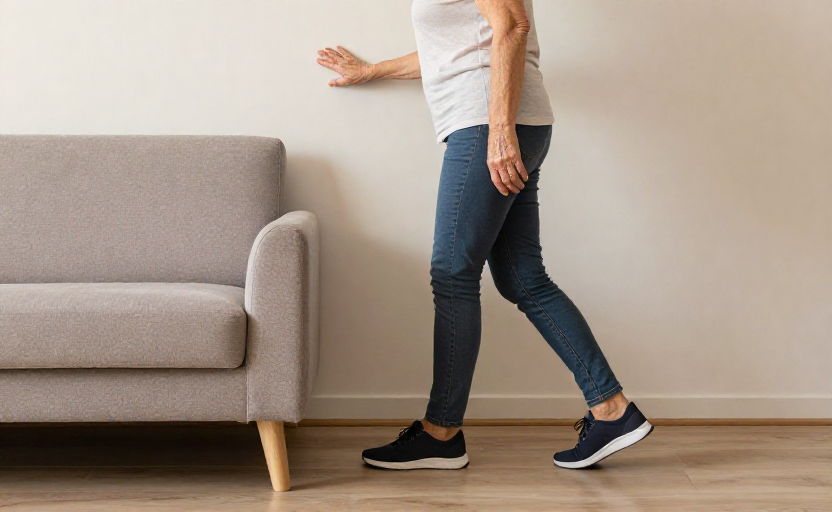
One of the earliest signs of balance trouble is a shift in how someone moves through a room. If you notice your mother placing her hand on the back of a sofa while walking past, or your father steadying himself against a wall before turning a corner, they are likely using furniture as a crutch. This behavior, sometimes called "furniture surfing," indicates that their standing balance is no longer reliable on its own. Over time, the reliance on unstable objects like rolling chairs or lightweight tables can actually increase fall risk.
2. A narrower stance or shuffling gait
Watch how your parent stands when they are doing something simple, like brushing their teeth or waiting for the kettle to boil. If their feet are planted much closer together than they used to be, or if they shuffle rather than lifting their feet, the body is trying to compensate for a perceived instability. Shuffling reduces the clearance between the foot and the floor, which makes tripping on area rugs, door thresholds, or even a pair of slippers far more likely. This is not just a habit; it is often a physical response to weakened leg muscles or inner-ear issues.
3. Difficulty turning around
Turning is one of the most challenging movements for a person with declining balance. You may observe your parent taking several small, hesitant steps rather than pivoting smoothly when they want to change direction. They might also reach for a nearby surface while turning. If you have ever noticed them pausing before walking into a narrow hallway or through a doorway, that hesitation is a sign that their spatial awareness and equilibrium are not keeping up with their intentions.
4. A tendency to hold onto railings and walls
It is natural for anyone to use a handrail on a steep staircase, but watch for a newer behavior: gripping the railing even on a few shallow steps, or running a hand along the wall when walking through a corridor. This kind of contact is not just a casual touch. It is a way to send sensory feedback to the brain about position and movement, essentially using the wall as a stability aid. If your parent is doing this inside their own familiar home, where the layout has not changed, it is a strong indicator that their internal balance system is working harder than it used to.
5. Changes in footwear choices
Subconsciously, people who feel unsteady may begin selecting shoes based on grip and support rather than style. If your mother has switched from her usual loafers to a pair of non-slip sneakers, or your father is wearing his laced boots around the house instead of slippers, take note. They may have realized, without saying it aloud, that their regular shoes feel too slippery or unstable on the floor. This practical adaptation can be helpful, but it also signals that they are aware of a fall risk they have not yet discussed with you.
6. Unusual fatigue after short walks
Maintaining balance is an active process that requires constant micro-adjustments from the muscles of the legs, core, and even the eyes. When balance is compromised, these muscles work overtime. If your parent seems unusually tired after a short trip to the mailbox or a quick walk across the grocery store, the exhaustion may not be from physical exertion alone. It may come from the constant effort required to stay upright. Complaints of being tired more often, or choosing to sit down far sooner than usual, can be a surrogate sign of imbalance.
What you can do. If you recognize one or more of these signs, start with a compassionate conversation. Avoid framing it as a critique. Instead, say something like, "I noticed you seem to be holding onto the wall when you walk to the kitchen. I want to make sure the house is as safe as possible for you." Simple home modifications — removing loose rugs, improving lighting, adding grab bars in the bathroom, and encouraging strength or balance exercises — can make a meaningful difference. A visit to the doctor for a fall-risk assessment can also identify underlying causes such as vision changes, medication side effects, or inner-ear disorders. The goal is not to take away your parent's independence, but to help them keep it for as long as safely possible.