
When sleep feels elusive and your mood is on a rollercoaster, the idea of a bedtime snack might seem like a simple comfort. But for women navigating menopause, that small choice before bed can be a surprisingly powerful tool. The right foods can gently support your body’s natural wind-down processes, helping to ease the transition into rest and create a more stable emotional baseline for the next day.
It’s not about a heavy meal or a sugary treat that might spike your energy. Instead, it’s about selecting snacks that provide specific nutrients known to influence sleep hormones like melatonin and serotonin, and blood sugar levels that can affect mood. Think of it as a quiet, nourishing signal to your nervous system that it’s time to shift gears.
Why what you eat before bed matters
During perimenopause and menopause, hormonal fluctuations can directly disrupt sleep architecture and emotional regulation. Declining estrogen affects the body’s thermostat, leading to night sweats, and also influences the production of serotonin—a key neurotransmitter for both mood and the sleep-regulating hormone melatonin. When this system is off-kilter, sleep becomes fragmented and irritability or low mood can follow.
A carefully chosen snack can address these challenges in a few ways. First, it can provide the building blocks for melatonin. Second, it can help prevent a nighttime dip in blood sugar, which can trigger wakefulness or anxious feelings. And third, the act of having a small, calming ritual can itself be a cue for relaxation.
The goal isn’t to eat for sedation, but to provide gentle nutritional support for your body’s own sleep chemistry.
Snacks that support rest and balance
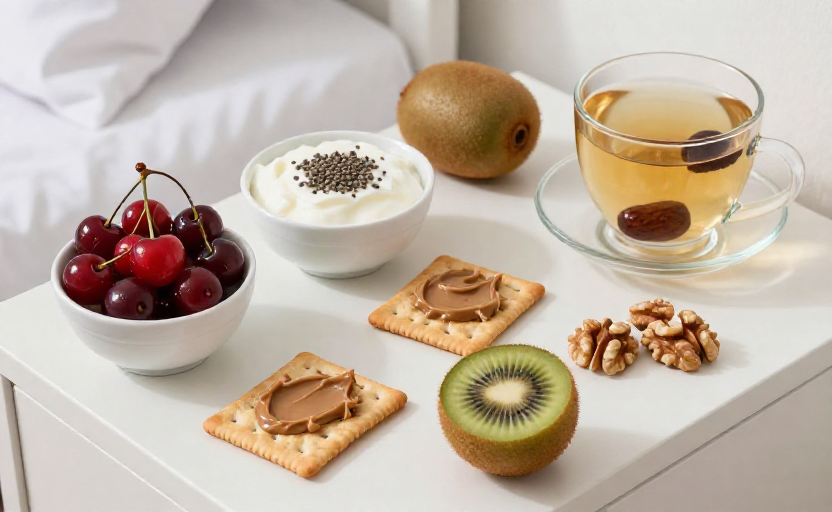
Here are six snack ideas that combine key nutrients to help stabilize mood and pave the way for better sleep. Portions should be small—think a few bites to satisfy, not a full meal.
A small bowl of tart cherries
Tart cherries, like the Montmorency variety, are one of the few natural food sources of melatonin. Studies have suggested that consuming tart cherry juice can increase melatonin levels and improve sleep quality and duration. Eating a small bowl of the whole fruit or drinking a half-cup of the juice about an hour before bed delivers this compound directly, alongside anti-inflammatory antioxidants that may support overall well-being.
Plain yogurt with a sprinkle of seeds
Dairy products like yogurt contain tryptophan, an amino acid that is a precursor to serotonin and melatonin. Pairing it with a tablespoon of pumpkin or chia seeds adds magnesium—a mineral that plays a crucial role in muscle relaxation and nervous system calm, and whose levels can be affected by hormonal changes. The protein and fat in this combo also help maintain steady blood sugar through the night.
A few whole-grain crackers with almond butter
Complex carbohydrates from whole grains can facilitate the transport of tryptophan to the brain. Almonds are a source of both melatonin and magnesium. Together, they make a satisfying, crunchy snack that provides a slow-release energy source and sleep-supportive nutrients. Choose crackers with minimal added sugar and natural almond butter without hydrogenated oils.
A kiwi
This fuzzy green fruit is a sleep superstar. Research indicates that eating two kiwis one hour before bedtime may help you fall asleep faster and sleep more soundly. Kiwis are rich in serotonin, antioxidants like vitamin C, and folate. Their natural sweetness can also curb a sugar craving that might otherwise lead to less helpful choices.
A small handful of walnuts
Walnuts not only contain tryptophan but are also a direct source of melatonin. They provide healthy fats and protein to promote satiety. The act of slowly eating a few walnuts can be a mindful, calming practice. Because they are calorie-dense, a small handful (about ¼ cup) is the perfect portion.
Herbal tea with a date
While not a solid snack, this combination is a wonderful ritual. A cup of caffeine-free herbal tea like chamomile or passionflower has traditionally been used to soothe the mind. Paired with a single medjool date, you get natural sweetness, fiber, and minerals like potassium and magnesium. The warmth of the tea can be deeply relaxing, helping to signal the end of the day.
Creating a supportive bedtime routine
The snack itself is just one piece of the puzzle. To maximize its benefits, weave it into a broader wind-down routine. Try to eat your snack about 60 to 90 minutes before you plan to sleep. This gives your body time to begin digestion without being actively engaged in it as you try to drift off.
Combine your snack with other calming activities: dim the lights, put away screens, and perhaps do some gentle stretching or reading. This multisignal approach tells your brain and body, in no uncertain terms, that it’s time to rest.
Listen to your body’s cues. If you’re not hungry, don’t feel pressured to eat. The focus is on providing support, not adding a new rule. It’s also wise to avoid large, spicy, or high-fat meals too close to bedtime, as they can cause discomfort or indigestion that interrupts sleep.
Finding what works for you is a personal journey. These snacks are a starting point—a way to use gentle nutrition to care for your changing body and mind, one peaceful night at a time.