
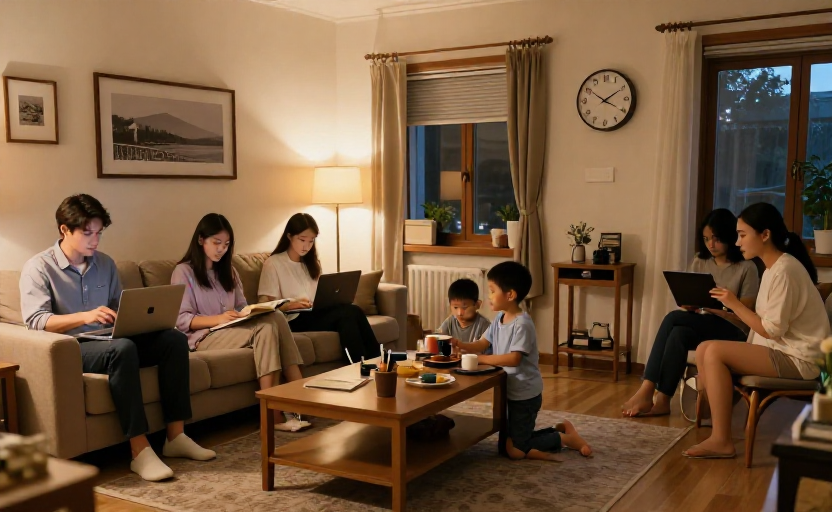
Multigenerational living has become common and it often works beautifully—grandparents, parents, and children sharing space, meals, and support. But when three generations live under one roof, sleep can become the first thing to suffer. Different schedules, noise levels, lighting needs, and caregiving demands can quietly erode everyone's rest. Recognizing the early signs is key to making changes before exhaustion sets in.
You hear footsteps, doors, and appliances late at night
When one person is an early riser and another is a night owl, the household never really settles. A teenager studying late bumps into a grandparent getting up for water. Someone starts the washing machine at 10 p.m., and someone else is woken by the hum. Over time, these interruptions fragment sleep. Instead of deep, continuous rest, family members wake several times a night. If you notice your sleep feels lighter or you often hear household noises after bedtime, your multigenerational setup may be the cause.
Bedtimes and wake times are wildly different
Young children often go to bed by 8 p.m., while teens may not wind down until midnight. Older adults may wake at 5 a.m., while younger adults need to sleep until 7 a.m. These natural differences create overlapping noise, bathroom traffic, and light changes. If someone in your home is routinely woken by others coming to bed or getting up early, the schedule mismatch is a clear sign your household's sleep is being disrupted. Even small differences can add up to significant sleep loss over weeks and months.
Shared walls and thin doors amplify every sound
Multigenerational homes often have shared bedrooms or rooms converted into sleeping spaces. Couples may move into the living room, or a grandparent stays in a room next to the kitchen. If you can hear conversations, TV shows, or snoring through walls, sleep quality drops. Sound travels more when homes are crowded. A sign to watch for: you start wearing earplugs regularly, or you feel tense at night because you anticipate being woken. That hypervigilance itself is a form of sleep disruption.
Caregiving duties interrupt sleep for multiple people
When elderly parents or young children need help at night—bathroom assistance, medication, soothing a nightmare—the person providing care may wake up several times. But the disruption doesn't stop there. The person being helped also has their sleep broken. And if the caregiver is irritable or exhausted the next day, it affects the whole household's mood and functioning. If anyone in your home is routinely waking another person (or being woken) for care, everyone's sleep is on the line.
Morning grogginess has become the new normal
The most telling sign is how people feel the next day. If multiple adults in the home are relying on coffee to function, nodding off during the day, or feeling short-tempered, the sleep disruption is real. Children may be more hyperactive or struggle in school. Older adults may feel confused or unsteady. Chronic poor sleep affects memory, immune function, and fall risk. If your household's daytime mood or energy is consistently low, your living arrangement may be the hidden contributor.
What you can do to protect everyone's rest
Try setting a household quiet time—a period when noise is minimized, screens off, and lights dimmed. Use white noise machines or fans in hallways to buffer sound. Create separate sleep zones: even a curtain or room divider helps. Encourage family members to wear headphones at night. Have a conversation about schedules and compromises. It may take trial and error, but small changes can restore sleep without losing the benefits of living together.