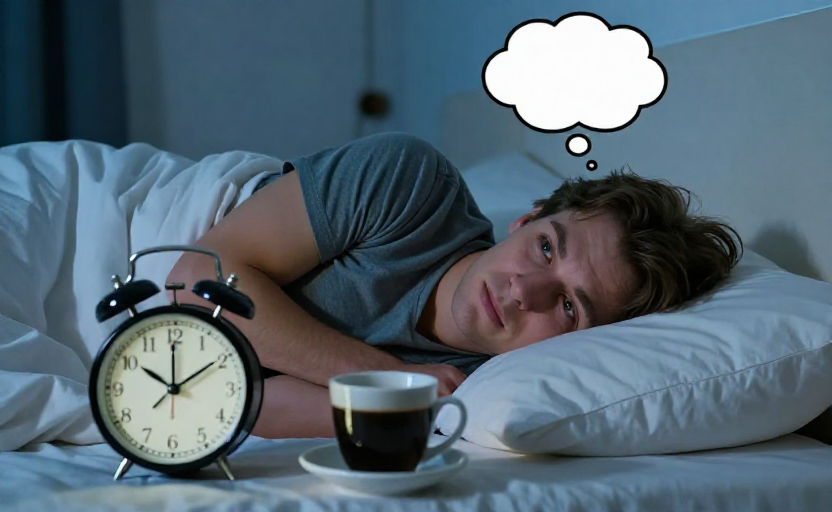
You climb into bed at a reasonable hour, close your eyes for a solid eight hours, and yet the alarm clock still feels like an insult. You aren't alone. Many people who log a full night in bed wake up feeling groggy, irritable, and desperately in need of more rest. The common assumption is that time in bed equals time asleep, but the equation is more nuanced. The missing variable is often sleep latency, the time it takes you to actually fall asleep.
Sleep latency is a fundamental metric of sleep health. It measures the transition from full wakefulness to sleep. For most healthy adults, falling asleep within 10 to 20 minutes is a sign of a well-regulated sleep drive. When it takes longer—or happens far too quickly—it can signal underlying issues that sabotage the quality of your rest. Even if you are in bed for eight hours, if you spend 45 minutes tossing and turning before drifting off, you have effectively lost nearly an hour of recovery time. Here are five reasons your sleep latency might be the culprit behind your lingering fatigue.
1. Your pre-sleep routine is hyper-arousing your brain
The modern evening is a minefield of stimulation. Scrolling through social media, watching an action-packed series, or answering work emails in the hour before bed tells your brain to stay alert. Blue light from screens suppresses melatonin production, but the real issue is cognitive arousal. Your brain processes information, makes decisions, and triggers emotional responses—all of which actively prevent the natural drop in brainwave activity required for sleep onset.
How it affects latency
When you lie down after a high-stimulation activity, your mind continues to race. You might replay conversations or anticipate tomorrow's tasks. This internal chatter keeps your nervous system in a sympathetic (fight-or-flight) state rather than shifting to the parasympathetic (rest-and-digest) state. The result is a prolonged sleep latency. You are in bed, but your brain is still working the night shift.
A simple adjustment: create a buffer zone of 30 to 60 minutes devoted to calming activities like reading a physical book, gentle stretching, or listening to quiet music without lyrics.
2. Caffeine and alcohol are still active in your system
Caffeine's half-life is roughly five to six hours, meaning that a 3 p.m. coffee can still leave a significant amount of the stimulant circulating at bedtime. Even if you feel tired, caffeine molecules block adenosine receptors—the chemical that builds sleep pressure throughout the day. This interference directly increases sleep latency because your brain does not receive the signal that it is time to rest.
Alcohol tells a different story. It is a sedative, so it might help you fall asleep faster initially. However, as your body metabolizes alcohol, it produces a rebound effect. Sleep becomes fragmented, and you are more likely to wake up during the second half of the night. While your head hit the pillow quickly, your sleep architecture is disordered, and you wake up feeling unrefreshed despite a full block of time in bed.
3. Your circadian rhythm is misaligned with your schedule
Your body operates on an internal clock that dictates when you feel alert and when you feel drowsy. This rhythm is driven by light exposure, meal timing, and consistent sleep-wake times. When you go to bed at 10 p.m. on weekdays but stay up until 2 a.m. on weekends, you create a condition called social jetlag. Your body does not know when to initiate sleep, so it delays the release of melatonin.
This mismatch often manifests as prolonged sleep latency on Sunday nights or Monday mornings. You are physically in bed, but your biological clock is still set to a later hour. The solution is not more time in bed; it is a consistent anchor time for waking up every day, including weekends. A stable wake time helps cement your circadian rhythm and reduces the time it takes to fall asleep at night.
4. Anxiety and racing thoughts delay the transition
Clinical sleep latency is often prolonged in individuals with anxiety or chronic stress. The bed becomes a place where unresolved worries surface because there are fewer distractions. This psychological arousal keeps the brain in a high-alert state. Even if you feel physically exhausted, your mind will not let you cross the threshold into sleep.
This is distinct from insomnia, though they often overlap. Someone with high sleep latency due to anxiety might eventually fall asleep but spend the first hour in a state of frustrated wakefulness. The quality of sleep after a long latency period is often shallower because the nervous system remains partially vigilant. Techniques like journaling before bed, where you write down your worries and to-do lists, can offload that mental burden and significantly shorten the time it takes to drift off.
5. Underlying sleep disorders are stealing your rest
It might sound counterintuitive, but falling asleep too quickly (in under five minutes) can also be a problem. A very short sleep latency can indicate severe sleep deprivation or a condition like narcolepsy. On the other hand, consistently long sleep latency—taking more than 30 minutes to fall asleep most nights—can point to delayed sleep phase syndrome or restless legs syndrome. Both conditions disrupt the smooth transition into sleep.
Restless legs syndrome creates an uncomfortable urge to move your legs when at rest, making it nearly impossible to settle into sleep. Sleep apnea, while often associated with loud snoring and gasping, can also manifest as prolonged sleep latency because the brain subconsciously resists the transition to sleep due to fear of airway collapse. If you have addressed lifestyle factors and still struggle with sleep latency, a sleep study may be necessary to rule out these medical conditions.
Understanding your sleep latency gives you a clearer picture of your sleep efficiency—the percentage of time in bed that you actually spend asleep. Aiming for 85 percent or higher is a practical target for most people. If you are in bed for eight hours but only sleeping for six and a half due to a long latency period, your body is missing out on critical recovery cycles. Small tweaks to your evening environment, timing of stimulants, and stress management can restore that lost time and help you wake up feeling like yourself again.