
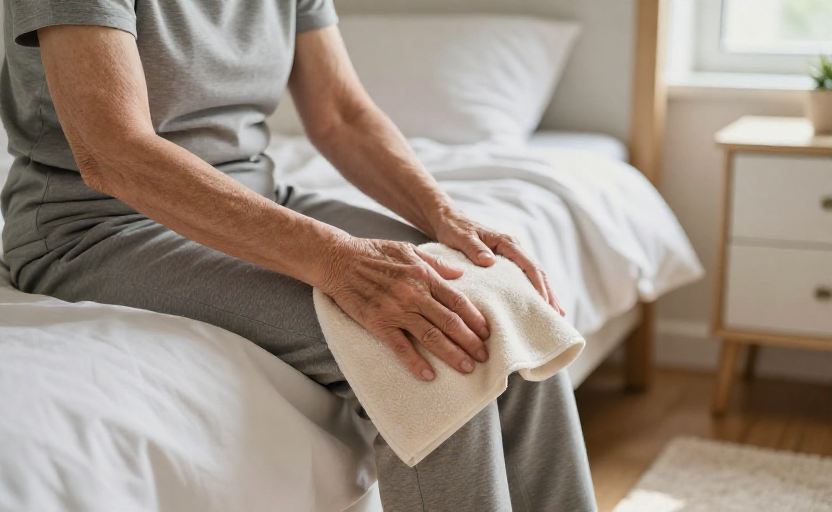
Waking up with stiff joints and sore muscles can make the start of any day feel like a struggle, especially for older adults. That morning tightness often discourages movement, but the irony is that gentle activity is exactly what helps loosen the body. By incorporating a few simple habits into the first hour of the day, seniors can significantly reduce stiffness, improve circulation, and regain a sense of ease in their daily routine.
Here are five morning habits that can help elderly individuals move more freely and start the day with less pain and more confidence.
1. Start with Gentle In-Bed Stretches
Before even sitting up, spend a few minutes stretching while still lying down. This allows the muscles and joints to warm up gradually without the full force of gravity. Simple movements such as pointing and flexing the feet, gently rotating the ankles, and bringing the knees toward the chest one at a time can wake up the body safely.
Try this: Lying on your back, slowly hug one knee toward your chest and hold for 15–20 seconds, then switch legs. Follow with a gentle full-body stretch by reaching your arms overhead and pointing your toes away from you. These small movements signal the nervous system that it’s time to transition from rest to activity.
2. Hydrate Before You Move
After a full night of sleep, the body is naturally dehydrated. Dehydration can worsen joint stiffness because the cartilage and synovial fluid (which cushions the joints) rely on adequate water to function well. Drinking a full glass of water first thing in the morning helps lubricate the joints and supports muscle function.
A warm glass of water with lemon can be especially soothing, but plain water works just as well. Aim to drink at least 8–12 ounces before reaching for coffee or tea. This simple act primes the body for movement and can reduce the feeling of creakiness.
3. Perform a Seated Warm-Up Routine
Once out of bed, avoid standing up straight and immediately walking. Instead, sit on the edge of the bed or a sturdy chair for a two- to three-minute seated warm-up. This is particularly important for seniors with balance concerns or significant morning stiffness.
Seated exercises that target the spine, hips, and shoulders can make a noticeable difference. Try these movements in sequence:
- Slowly roll the shoulders forward and backward in circles (5 times each direction).
- Turn the head gently side to side, as if saying “no,” keeping the motion small and pain-free.
- While seated, extend one leg out straight, hold for a few seconds, then lower. Repeat with the other leg. This activates the hip flexors and quadriceps.
- Gentle trunk twists: keep the hips still and rotate the upper body to one side, hold briefly, then return to center and repeat on the other side.
This routine helps distribute synovial fluid within the joints and increases blood flow to the muscles, making the first steps of the day feel lighter.
4. Take a Short, Slow Walk Indoors
After the warm-up, the next step is to get the whole body moving. A slow five-minute walk inside the home—from the bedroom to the kitchen and back—can be enough to reinforce the benefits of the earlier stretches. The key is to maintain a steady but comfortable pace, focusing on heel-to-toe rolling motion with each step.
If walking is difficult due to balance issues, use a walker or hold onto a counter for support. Some seniors find it helpful to walk in place for a minute before attempting a longer path. The goal is not distance but consistent, low-impact motion that gradually increases the heart rate and loosens the lower body.
5. Apply Gentle Heat to Aching Joints
For stubborn stiffness that doesn’t fully resolve with movement, a quick application of heat can be a game-changer. A warm shower or bath in the morning helps relax muscle tension and soothe arthritic joints. If a full shower isn’t possible, a heated gel pack or a warm towel placed on the knees, lower back, or shoulders for 10–15 minutes can provide targeted relief.
Heat therapy works by increasing blood flow to the area, which reduces the sensation of stiffness and makes it easier to move through a full range of motion. This is especially helpful before doing any more demanding activities, such as climbing stairs or preparing breakfast.
A consistent morning routine doesn’t have to be long or complicated—even 10 to 15 minutes of intentional movement and hydration can transform how the rest of the day feels.
For seniors and their caregivers, the most important factor is consistency. These habits work best when practiced daily, allowing the body to gradually adapt and respond with greater flexibility and less discomfort over time.
If any movement causes sharp or lasting pain, it’s best to stop and consult a healthcare provider or physical therapist. Every individual’s body is different, and what works for one person may need to be modified for another. The goal is always to support mobility safely, not to push through pain.