Feeling more tired than usual in your first trimester? It’s a common experience, and while much of that fatigue is simply your body doing the monumental work of building a new life, ensuring you get enough iron can be a key piece of the energy puzzle. Iron is a foundational nutrient during pregnancy, crucial for making the extra blood both you and your baby need. Prioritizing iron-rich foods early on helps build your reserves, supports healthy fetal development, and can help ward off the sluggishness of iron-deficiency anemia.
Focusing on your plate is a gentle, proactive way to care for yourself. The goal isn’t perfection, but consistent, mindful choices that add up. Here, we’ll explore some of the most effective food sources of iron to weave into your first-trimester meals, along with simple tips to help your body absorb this vital mineral.
Why is iron so important in the first trimester?
Your blood volume begins to increase almost immediately, a process that accelerates as your pregnancy progresses. Iron is the core component of hemoglobin, the protein in red blood cells that carries oxygen. Without sufficient iron, your body can’t produce enough healthy red blood cells to supply you and your growing baby with oxygen, leading to fatigue, weakness, and shortness of breath—symptoms that can easily be mistaken for typical first-trimester tiredness.
Building strong iron stores early sets a solid foundation for the second and third trimesters when demands are highest. It also supports the development of your baby’s own blood supply and is critical for brain development.
Think of your first trimester as a time to lay in reserves. Starting with a mindful approach to iron can make a significant difference in how you feel in the months ahead.
Top food sources to focus on
Dietary iron comes in two forms: heme and non-heme. Heme iron, found in animal products, is more easily absorbed by your body. Non-heme iron, from plant sources, is still excellent but requires a little strategic pairing to maximize absorption. A balanced approach that includes both is often most effective.
1. Lean red meat
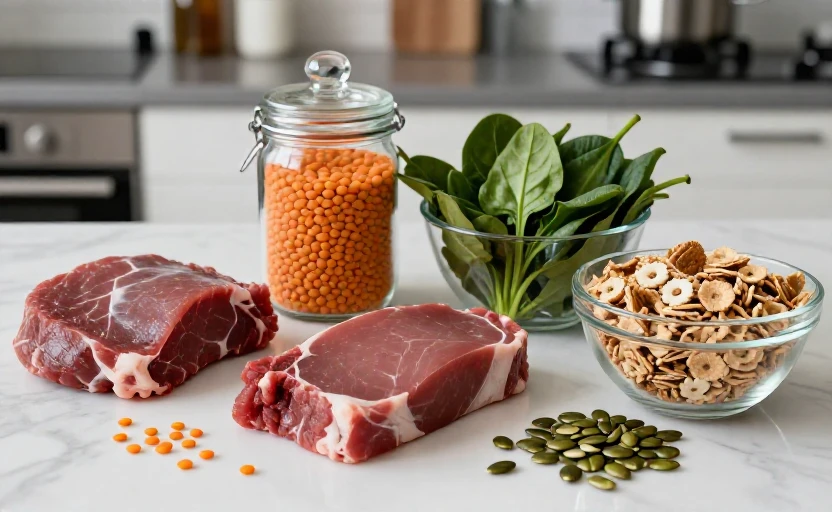
Beef, lamb, and venison are among the richest sources of highly absorbable heme iron. A modest serving of lean cuts like sirloin or tenderloin can provide a substantial portion of your daily needs. If the thought of a large steak is unappealing (a common first-trimester challenge), consider incorporating smaller amounts into dishes like stir-fries, chili, or Bolognese sauce, where the flavor and texture can be more manageable.
2. Lentils and beans
A powerhouse for plant-based nutrition, lentils are packed with non-heme iron, protein, and fiber. They’re incredibly versatile—blend them into soups, toss them in salads, or use them as a base for veggie burgers. Chickpeas, kidney beans, and black beans are also excellent choices. Soaking and cooking them well can make them easier to digest, which is helpful if you’re experiencing any gastrointestinal sensitivity.
3. Dark leafy greens
Spinach, kale, Swiss chard, and collard greens are nutrient-dense additions to your diet. While the iron in spinach is non-heme, these greens are also rich in vitamin C (when eaten raw or lightly cooked) and folate, another essential first-trimester nutrient. Try adding a handful of baby spinach to a smoothie, sautéing kale with garlic as a side, or using sturdy greens as a salad base.
4. Fortified cereals and whole grains
Many breakfast cereals are fortified with 100% of the daily value for iron, making them a very easy and often well-tolerated first-trimester option. Check the nutrition label. Whole grains like quinoa, amaranth, and fortified oatmeal also contribute non-heme iron and provide steady energy. Pair your bowl with a glass of orange juice or some berries to boost iron uptake.
5. Pumpkin seeds
These small but mighty seeds are a convenient snack packed with iron, magnesium, and zinc. They’re easy to keep on hand for when nausea strikes and you need a quick, bland bite. Sprinkle them on yogurt, oatmeal, or salads for a satisfying crunch and a nutrient boost.
How to help your body absorb iron
What you eat alongside iron-rich foods matters just as much. Vitamin C dramatically enhances the absorption of non-heme iron. Try these simple pairings:
- Add bell peppers or tomatoes to a lentil salad.
- Enjoy a citrus fruit or some strawberries with your fortified cereal.
- Squeeze lemon juice over cooked greens or a bean dish.
Conversely, try to avoid consuming calcium-rich foods (like large glasses of milk or calcium supplements) or drinking tea and coffee at the same meal as your main iron sources, as they can temporarily inhibit absorption. It’s fine to have them, just space them out by an hour or so.
Listening to your body is paramount. If you’re struggling with severe nausea or food aversions, do what you can and speak with your healthcare provider. They can check your iron levels with a simple blood test and offer guidance tailored to your individual needs, which may include a supplement. But wherever you start, know that each iron-rich choice you make is a positive step in nourishing yourself and your baby.