
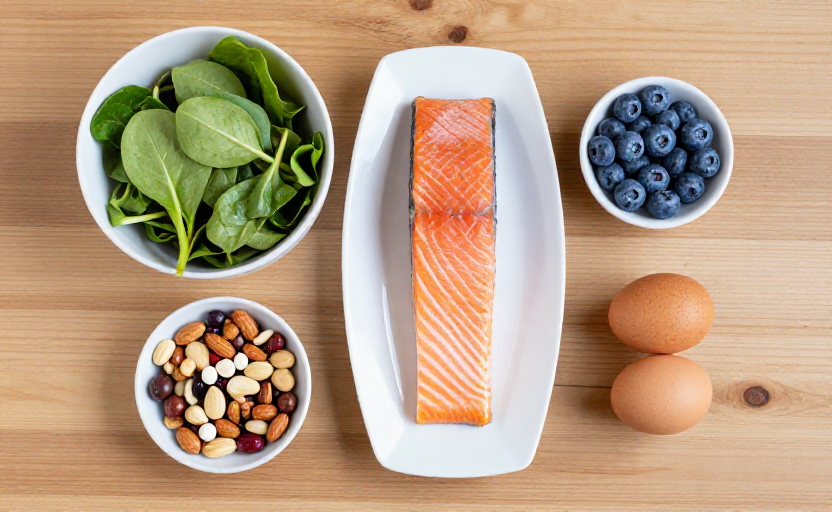
We often think of posture as a mechanical problem — a matter of sitting up straight, adjusting your screen height, or strengthening your core. But what you eat plays a surprisingly direct role in how your spine holds up under the daily grind of desk work, commutes, and scrolling. The connective tissues, muscles, and bones that keep you aligned rely on a steady supply of specific nutrients. Here are five expert-backed foods that support the structural integrity of your back, helping you maintain better posture from the inside out.
1. Leafy greens for bone density and nerve function
Your spine is a column of bone, and like any bone, it needs consistent support to stay strong and properly aligned. Dark leafy greens like kale, spinach, and Swiss chard are rich in calcium, magnesium, and vitamin K — a trio that works together to maintain bone mineral density. Magnesium also helps muscles relax, which can prevent the chronic tightness in your shoulders and hips that pulls your posture out of whack.
Think of these greens as the foundation layer. Without enough magnesium, your muscles can stay slightly contracted, subtly pulling your shoulders forward or your hips into a tilt. A daily serving — in a salad, smoothie, or sauté — gives your skeletal framework the raw materials it needs to stay upright without effort.
2. Fatty fish to fight inflammation in the joints and discs
Between each vertebra sits a small, cushioning disc. When those discs become inflamed or dehydrated, they lose height and flexibility, which can lead to a forward slump or uneven weight distribution through the spine. Fatty fish such as salmon, mackerel, and sardines are packed with omega-3 fatty acids, specifically EPA and DHA, which are known to reduce systemic inflammation.
Chronic low-grade inflammation can stiffen the joints in your neck and lower back, making it harder to maintain a neutral spine throughout the day. Including two servings of fatty fish per week helps keep those discs plump and your spinal joints mobile. If fish isn't your thing, a high-quality algae-based omega-3 supplement can offer similar benefits.
3. Nuts and seeds for muscle repair and postural endurance
Your postural muscles — the deep stabilizers along your spine, your glutes, and your shoulder blades — work isometrically for hours at a time. That kind of endurance demands good fuel. Nuts and seeds, particularly almonds, walnuts, pumpkin seeds, and flaxseeds, provide vitamin E, zinc, and healthy fats that support muscle tissue repair and reduce oxidative stress from prolonged sitting.
Pumpkin seeds are also an excellent source of magnesium and phosphorus, both critical for energy metabolism in muscle cells. A small handful as a midday snack can give your postural muscles the sustained energy they need to keep you sitting tall, rather than collapsing into your chair by 3 PM.
4. Berries for collagen stability and connective tissue health
Your ligaments and tendons are the passive support system for your posture — they hold your bones in the correct position when your muscles fatigue. Berries like blueberries, strawberries, and blackberries are loaded with vitamin C, which is essential for collagen synthesis. Collagen is the primary structural protein in ligaments, tendons, and spinal discs.
When collagen production dips, your connective tissues can become lax, allowing your body to settle into poor alignment. Regular intake of berries helps keep those tissues resilient and responsive. Toss them into oatmeal, yogurt, or eat them plain — the goal is consistent vitamin C to support the scaffolding that holds your posture in place.
5. Eggs for vitamin D and muscle contraction control
Vitamin D is famously crucial for calcium absorption, but it also plays a direct role in muscle function. Weak or poorly coordinated postural muscles are a common reason people struggle to maintain good alignment, even when they try. Eggs, especially the yolks, are one of the few natural food sources of vitamin D.
Adequate vitamin D levels help your muscles contract and relax efficiently, which is key for the tiny, constant adjustments your spine makes throughout the day to keep you balanced. Pair your eggs with a little sunlight or a D3 supplement if levels are low. One or two eggs per day can contribute meaningfully to your neuromuscular coordination and, by extension, your posture.
The bigger picture: posture is more than a snack
These foods are not a quick fix. No single meal will straighten your spine, and nutrition alone cannot correct structural imbalances caused by years of slouching. But think of this approach as building a reserve. When you consistently give your bones, discs, and postural muscles the nutrients they need, you create a biological environment where good posture comes more naturally. Combine these dietary choices with regular movement breaks, ergonomic setup, and strength training for the best results.
"You can't eat your way to perfect posture, but you can certainly eat your way to a body that is more capable of holding it."