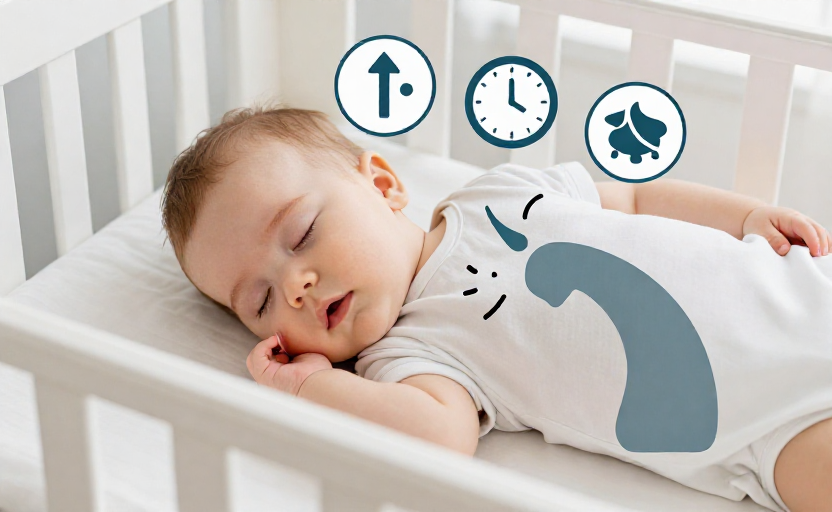
When your baby fights sleep, squirms after feeds, or wakes up screaming, it's easy to assume it's just a phase or a normal sleep regression. But for many parents, the real culprit is hiding in plain sight: infant reflux. Unlike the obvious spit-up that everyone talks about, silent reflux—where stomach contents come up partway and then go back down—can be much harder to spot. Here are four subtle signs that your baby's sleep troubles might actually be linked to reflux.
1. They can only sleep soundly when held upright
If your baby will sleep peacefully in your arms or in a carrier, but the moment you lay them flat in the crib they're wide awake and crying, that's a major clue. Gravity helps keep stomach acid where it belongs. When a baby with reflux is laid flat, the acid can wash up into the lower esophagus, causing a burning sensation that jolts them awake. This isn't just a preference for being held—it's a physical reaction to discomfort. You might notice that even in your arms, they need to be at a steeper angle than a typical baby to stay asleep.
2. Frequent waking within 20–30 minutes of being put down
Most babies enter deep sleep after about 20 minutes. For a baby with reflux, that's often the moment the stomach contents shift and trigger pain. If your baby consistently wakes up crying less than half an hour after being put down—not from a startle reflex or hunger, but from what seems like sudden distress—reflux could be the reason. The timing is key: a full stomach pressing against a weak lower esophageal sphincter is a recipe for discomfort.
3. Arching their back or thrashing during sleep
Reflux can cause a sensation that older children might call heartburn, but babies can't tell you about it. Instead, they arch their back, twist their body, or thrash their head from side to side while asleep or drowsy. This is often mistaken for a sleep disorder or simply "restless sleep." But look closely: if the arching happens especially after a feed, or when they're lying down, it may be their way of stretching their esophagus open to relieve the pressure of acid rising. Some babies even make a sour grimace or smack their lips during these episodes.
4. Congestion, coughing, or hiccupping without a cold
Reflux doesn't just affect the esophagus—it can irritate the upper airway. When stomach contents come up high enough, they can trigger the larynx and trachea. This can sound like a wet cough, cause constant stuffiness (especially at night), or cause hiccups that seem to come out of nowhere, minutes or even an hour after a feed. If your baby has no fever, no runny nose from illness, and yet sounds congested when lying down, reflux could be the root cause.
Important caveat: Reflux is common in infants, and most grow out of it by their first birthday. However, if your baby isn't gaining weight, refuses to eat, or seems to be in severe pain, consult a pediatrician. These subtle signs are meant to help you have a more informed conversation with your doctor, not to replace professional advice.
Recognizing these patterns can help you find the right solutions—like keeping your baby upright for 20–30 minutes after feeding, trying a slower flow nipple, or adjusting your diet if you're breastfeeding. In many cases, simple positional changes and feeding adjustments bring noticeable sleep improvement within a few days.