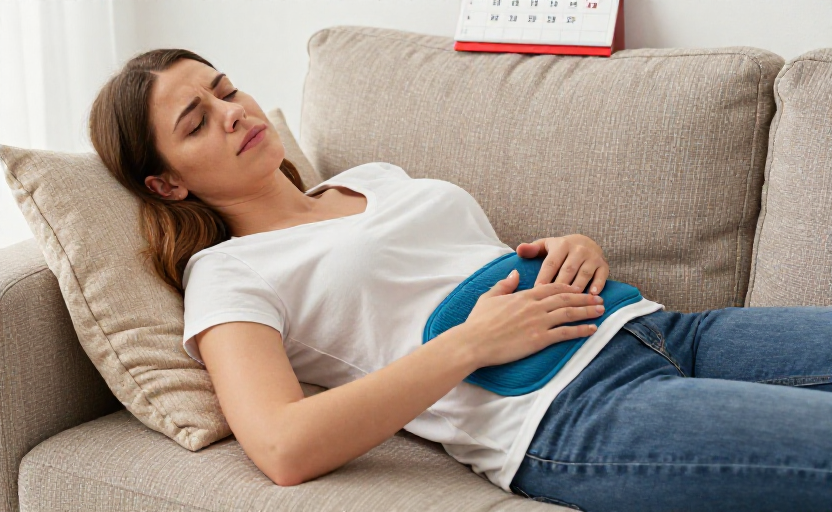
If you started hormonal birth control hoping for lighter, less painful periods, you are not alone. Many people choose the pill for exactly that reason. But for some, the opposite happens. Period pain can worsen, or new types of cramping can appear. Because the link between the pill and pelvic pain is not always obvious, these symptoms are easy to dismiss as normal menstrual trouble. Here are four subtle signs that your birth control pill may actually be contributing to the problem.
1. Cramps that start before your period week
Most menstrual cramps arrive a day or two before bleeding begins, then peak on the first day. If you notice cramping during the placebo week—or even in the days right before the placebo pills—that may be a clue. Prostaglandins, the chemicals that trigger uterine contractions, are usually highest on day one of a natural cycle. But some birth control formulations can shift this timing or increase sensitivity to these compounds. When cramps show up outside the usual rhythm, the pill could be playing a role.
2. Pain that feels sharper or more localized
Typical period cramps feel like a dull, squeezing ache in the lower belly or lower back. If the discomfort changes into sharp, stabbing, or one-sided pain, it may signal something different. Some birth control pills can influence ovarian cyst activity. While most cysts are harmless, they can cause sudden, localized pain. This type of pain can easily be mistaken for a bad cramp. If the character of your monthly pain has shifted since starting the pill, it is worth noting.
3. Nausea or digestive distress along with the cramps
Prostaglandins do not just affect the uterus—they can also affect the digestive tract. For many women, mild nausea or loose stools are part of a normal period. But if you are on the pill and find that nausea, vomiting, or significant bloating now accompany your cramps, the combination could be a sign that your body is reacting to the hormones themselves. Certain progestins used in birth control pills can increase prostaglandin production in some individuals, making these digestive symptoms worse than they were before.
4. No improvement after three months on the same pill
It can take two to three cycles for your body to adjust to a new birth control pill. But if you have been on the same formulation for three full packs and your period pain is just as bad—or worse—than before you started, the pill may not be a good match. Some people have a strong inflammatory response to synthetic hormones. In these cases, the pill can actually increase uterine cramping rather than reduce it. You should not assume that more time will eventually fix the problem.
A note on next steps: Do not stop your pill abruptly. If any of these signs sound familiar, talk to a healthcare provider about your symptoms. A different pill formulation, a different method of contraception, or a check for underlying conditions like endometriosis may be appropriate. Pain is not something you have to accept as part of the deal.