
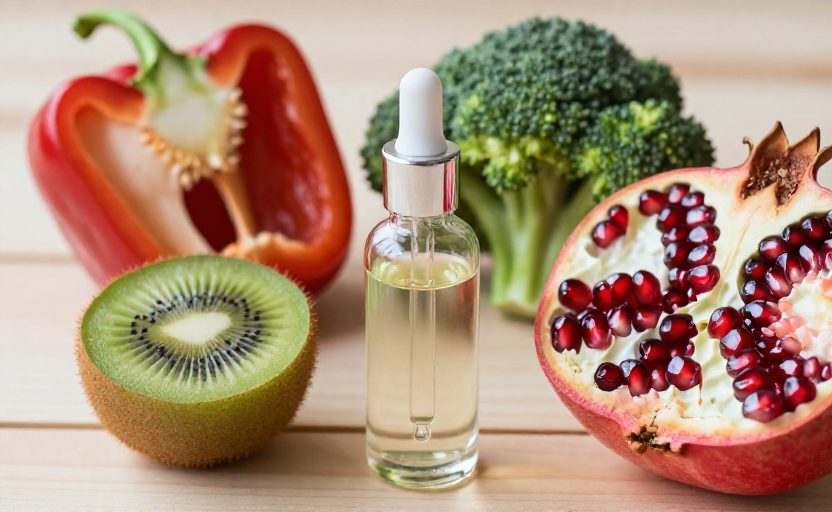
You apply your antioxidant serum every morning. You follow the directions, you use the right amount, and you wait before layering moisturizer. But the active ingredients in that bottle—vitamin C, ferulic acid, maybe a bit of vitamin E—do not work in a vacuum. They are part of a much larger conversation your body is having with your environment every day. The most effective way to amplify what that serum is doing for your skin is often not a more expensive bottle of serum. It is the food on your plate.
Antioxidant serums work by neutralizing free radicals—unstable molecules that result from UV exposure, pollution, and normal metabolic processes. When your skin cells have a steady stream of dietary antioxidants in your bloodstream, they are better equipped to use the topical antioxidants you apply. Think of it as a two-way street: topical application provides a concentrated defense at the skin’s surface, while dietary intake strengthens the entire ship, cell by cell. Here are four specific fruits and vegetables that work exceptionally well alongside your serum.
1. Red bell peppers
Red bell peppers are a quiet powerhouse. While oranges get most of the credit for vitamin C, a single medium red bell pepper contains about 190 milligrams of vitamin C—roughly double the amount found in an orange. This matters because vitamin C is the most common active ingredient in antioxidant serums. When you eat foods rich in vitamin C, you increase the pool of this antioxidant circulating in your dermal layers.
Your skin can only use so much of a topically applied substance at once. Some of it absorbs, some of it oxidizes on the surface. But the vitamin C you get from a bell pepper is bioavailable, meaning your body delivers it exactly where it is needed via your bloodstream. This includes the deeper layers of the skin that topical applications cannot easily reach. Red bell peppers are also rich in carotenoids like beta-carotene and lycopene, which provide additional photoprotection—meaning they help prepare your skin to better handle the daily UV stress that your serum is also fighting.
To get the most out of them, eat red bell peppers raw or very lightly sautéed. Vitamin C is fragile and degrades with high heat. Slicing them into a salad or eating them with hummus preserves most of the nutrient content.
2. Kiwi
Kiwis are another concentrated source of vitamin C, delivering around 70 to 95 milligrams per fruit depending on size. But there is a secondary reason kiwi works so well with an antioxidant serum: its high content of polyphenols and flavonoids that help recycle vitamin C. This is a subtle but important point. When your serum’s vitamin C neutralizes a free radical, it becomes oxidized itself and is no longer active. Dietary flavonoids—especially those found in kiwi, such as quercetin and kaempferol—help regenerate that oxidized vitamin C back into its active form, extending its usefulness both in your body and potentially at the skin level.
Additionally, kiwi is a good source of vitamin E, which pairs naturally with vitamin C to improve stability and effectiveness. This partnership—sometimes called the C+E combo—is a standard formulation in many serums because vitamin E helps stabilize vitamin C and enhances its protective abilities. Eating kiwi essentially reinforces this pairing internally. One kiwi a day is enough to contribute meaningfully. The fuzzy skin is edible (and full of fiber), but if your digestive system prefers it peeled, that is fine—most of the vitamin C is in the flesh.
3. Broccoli
Broccoli is rarely the first vegetable people think of for skin care, but its phytochemical profile makes it a strong ally for anyone using an antioxidant serum. Broccoli is rich in sulforaphane, a compound that activates the body’s own internal antioxidant defense system. This is not a direct antioxidant like vitamin C. Instead, sulforaphane triggers the Nrf2 pathway, which is essentially the master switch for your body’s natural production of detoxifying and antioxidant enzymes.
This endogenous response is powerful because it lasts longer than a single dose of a direct antioxidant. Your body produces these protective enzymes for hours after eating broccoli, creating a sustained anti-inflammatory and protective environment in your skin. This means your serum does not have to work as hard—the background damage from environmental stressors is lower, so the topical antioxidants have fewer fires to put out. Broccoli also contains lutein and zeaxanthin, carotenoids that accumulate in the skin and improve its ability to resist UV-induced damage.
Steam broccoli lightly (about three to four minutes) to preserve sulforaphane content. Overcooking can deactivate the enzyme myrosinase, which is necessary for sulforaphane formation. Add a small sprinkle of mustard powder to cooked broccoli if you want to restore some of that enzyme activity.
4. Pomegranate
Pomegranate has a reputation as a superfood for a reason, but its specific value alongside an antioxidant serum comes from its unique polyphenol profile. Pomegranates contain punicalagins and ellagic acid, compounds that have been shown to inhibit the degradation of collagen and protect fibroblasts—the cells responsible for producing collagen. Since one of the main goals of any antioxidant serum is to support collagen health and prevent photoaging, pomegranate provides complementary ingredients that target the same biological process through a different route.
Pomegranates also have a high antioxidant capacity (ORAC value), which means they contribute significantly to your total plasma antioxidant levels. Higher circulating antioxidants help reduce the overall oxidative stress load on your skin. Less oxidative stress means less inflammation, fewer inflamed breakouts, and a more even skin tone—all things your serum is working toward. The ellagic acid in pomegranate specifically may help inhibit the activity of tyrosinase, the enzyme responsible for melanin production, which can enhance the brightening effects of a vitamin C serum.
Fresh pomegranate seeds (arils) are best. The juice is also effective but often has added sugar, which can promote glycation—a process that damages collagen and counteracts the benefits of antioxidants. Stick to the whole fruit or unsweetened juice if you prefer liquid.
A practical note on timing: There is no need to sync your meals precisely with your serum application. Consistent daily consumption of these foods over weeks and months will steadily improve your skin’s baseline resilience. Your serum still works on its own—these foods simply make it work better. Think of them as a support system, not a replacement.