Morning anxiety and panic attacks can make the start of each day feel overwhelming. While therapy, breath work, and movement all play a role in managing these symptoms, what you eat — especially early in the day — can either steady your nervous system or send it into overdrive. Here are four foods that nutrition experts recommend for supporting a calmer morning and reducing the likelihood of panic attacks.
Fatty fish for stable brain chemistry
Salmon, mackerel, and sardines are rich in omega-3 fatty acids, specifically EPA and DHA. These fats are essential for brain health and have been shown to support mood regulation. Research links higher omega-3 intake with lower rates of anxiety, partly because these compounds help reduce inflammation and support the function of neurotransmitters like serotonin and dopamine. Eating a serving of fatty fish two to three times a week can help stabilize your mood over time, making morning panic less likely.
Dark leafy greens to manage cortisol
Spinach, kale, and Swiss chard are loaded with magnesium, a mineral that plays a direct role in calming the nervous system. Magnesium helps regulate the body's stress-response system by keeping cortisol levels in check. When magnesium stores run low, the body tends to produce more cortisol, which can amplify feelings of panic. Adding a handful of spinach to a morning smoothie or sautéing kale with eggs gives you a gentle buffer against that wired, jittery feeling.
Fermented foods for the gut-brain connection
Yogurt, kefir, kimchi, and sauerkraut contain probiotics that support a healthy gut microbiome. The gut and brain communicate constantly via the vagus nerve, and a balanced gut can help reduce the intensity of anxiety responses. Studies suggest that eating fermented foods regularly may lower social anxiety and help the body handle stress more gracefully. Starting the day with plain yogurt and berries or adding a few forkfuls of sauerkraut to a breakfast bowl can make a meaningful difference.
When intention meets inflammation, the body's stress response often follows. Soft, gentle foods can shift that pattern.
Dark chocolate for a steady mood lift
A small square of dark chocolate (at least 70% cacao) can be more than a treat — it's a source of polyphenols and flavonoids that reduce stress hormones and improve blood flow to the brain. Dark chocolate also contains magnesium and small amounts of theobromine, a compound that provides a gentle, sustained energy lift without the crash associated with caffeine. For people prone to panic attacks, replacing the morning cup of coffee with a piece of dark chocolate and a cup of herbal tea can calm the system rather than rev it up.
How to build a panic-friendly morning plate
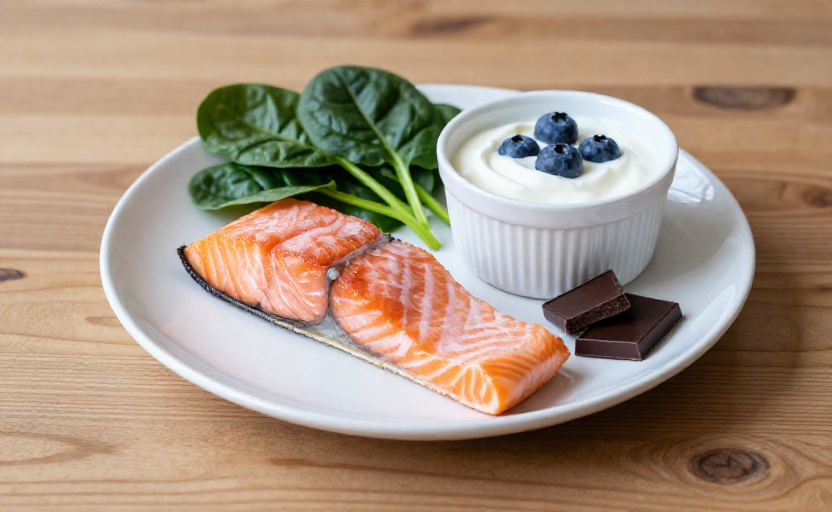
The goal is not perfection but pattern. Pairing a serving of protein with healthy fat and fiber can keep blood sugar stable throughout the morning. Blood sugar dips can trigger adrenaline release, which feels like panic. A sample plate might be scrambled eggs with spinach, a dollop of plain yogurt with blueberries, and a few nuts. Small adjustments like this remove the physiological triggers that often masquerade as anxiety.
Remember that food alone does not replace medical care for panic disorder or clinical anxiety. But when used alongside therapy, sleep hygiene, and stress management, these four foods can give you a biochemical edge — and a gentler start to the day.