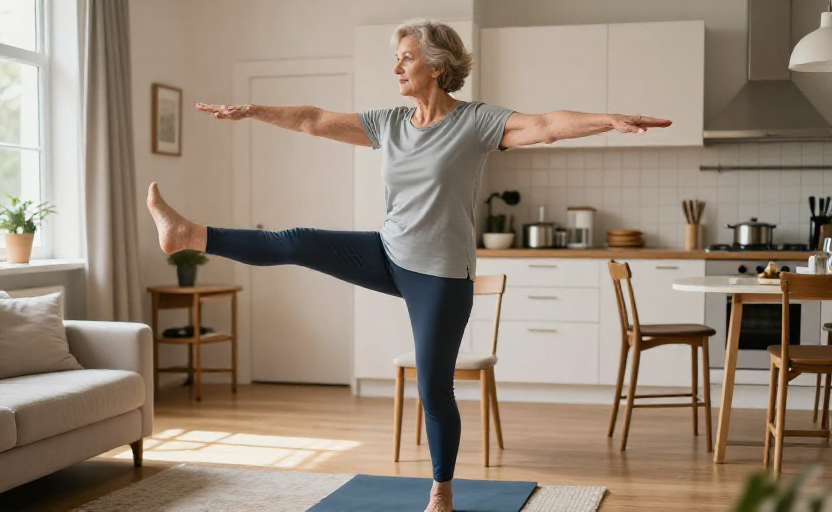
Maintaining good balance is something many of us take for granted—until it becomes a challenge. For older adults, a loss of balance isn't just about feeling unsteady; it's a major risk factor for falls, which can lead to serious injuries and a loss of independence. The good news is that balance can be improved at any age with consistent, targeted practice. You don't need a gym or fancy equipment. These four expert-backed exercises are designed to be done safely at home, helping seniors build strength, stability, and confidence.
Why Balance Matters More as We Age
Balance is a complex skill that relies on input from your eyes, inner ears, and the sensory receptors in your muscles and joints. As we get older, these systems can become less efficient. Muscle strength, particularly in the legs and core, also naturally declines. This combination makes falls more likely. However, research consistently shows that specific balance and strength exercises can reverse this trend. By dedicating just a few minutes a day to these movements, seniors can significantly reduce their fall risk and maintain their ability to do the things they love.
The 4 Essential At-Home Balance Exercises
Before attempting any new exercise, ensure you have a sturdy chair or a countertop nearby to hold onto if needed. Always prioritize safety. Start slowly and focus on proper form. If you feel dizzy or experience pain, stop and consult with a healthcare professional.
1. The Single-Leg Stand
This classic exercise challenges your body's ability to stabilize itself over a smaller base of support. It directly strengthens the ankles and improves proprioception—your body's awareness of its position in space.
- How to do it: Stand behind a sturdy chair, holding the back for support. Slowly lift one foot a few inches off the floor, keeping your standing leg straight but not locked. Begin by holding this position for 5–10 seconds. Gradually work your way up to 30 seconds or more.
- Progression: Once you feel steady, try releasing one hand from the chair, then the other. For a bigger challenge, try closing your eyes for a few seconds while holding the position.
- Expert tip: Focus your gaze on a fixed point on the wall in front of you. This visual anchor helps your brain process balance signals more effectively.
2. Heel-to-Toe Walk (Tandem Walk)
Think of this as a sobriety test for your balance. This exercise mimics the narrow base of support required for walking on uneven ground or navigating through a cluttered space. It improves coordination and dynamic balance.
- How to do it: Find a clear, open pathway. Place your right foot directly in front of your left foot, so the heel of your right foot touches the toes of your left foot. Take a step forward with your left foot, placing it directly in front of your right foot. Continue walking in this straight line for 10–20 steps.
- Safety first: Walk alongside a wall or counter so you can quickly place a hand on it for balance if you start to wobble. Have a family member or friend nearby to spot you at first.
3. The Chair Stand (Sit-to-Stand)
This functional exercise strengthens the glutes, quadriceps, and core—the primary muscles used to get out of a chair. It directly translates to easier mobility in daily life and is a powerful indicator of overall leg strength and fall risk.
- How to do it: Sit in a sturdy, armless chair with your back straight and feet flat on the floor, hip-width apart. Cross your arms over your chest. Lean forward slightly and push through your heels to stand up, using no hand support if possible.
- Key tip: Pause for a second at the top before slowly lowering yourself back down to the starting position. Aim for 8–12 repetitions. If this is too difficult, start by using your hand for a push-off and gradually wean yourself off.
4. The Clock Reach
This exercise challenges your balance by moving your center of gravity over your feet while maintaining a stable base. It strengthens the hips and core while improving your ability to perform reaching movements (like grabbing a cup from a high shelf) without losing your footing.
- How to do it: Stand with your feet hip-width apart and hold onto a counter or chair for support. Imagine you are standing in the center of a clock face. Point your right foot directly forward toward 12 o'clock. Now, lift your right foot and reach it out to 1 o'clock, then back to center. Repeat, reaching toward 2 o'clock, then 3 o'clock. Keep your left leg strong and your hips level. Switch legs and repeat the pattern on the other side.
- Modification: If lifting your foot feels too challenging, you can simply practice leaning your body weight toward each clock position while keeping both feet on the ground.
Consistency is more important than intensity. Performing these exercises just three to four times a week can yield noticeable improvements in stability and confidence within a few weeks. Remember, the goal is not just to avoid falls, but to move through life with greater freedom and security.
A note on safety: Always consult your primary care provider or a physical therapist before starting a new exercise program, especially if you have a history of falls, dizziness, or chronic health conditions. If you feel sharp pain, stop immediately. Slow and steady wins the race when it comes to building better balance.