You might think you're just being careful, prepared, or polite. But some everyday routines—things you do without a second thought—can actually feed social anxiety, making those jittery feelings stronger over time. The habits feel harmless, even responsible, yet they quietly reinforce the very fears you're trying to manage. Here are four common ones worth rethinking.
1. Replaying conversations in your head
After a social interaction, do you find yourself mentally replaying every line you said, analyzing your tone, and second-guessing your responses? This habit, sometimes called the "post-event rumination," is a classic fuel for social anxiety. Instead of letting the moment go, your brain holds onto it and searches for proof that you said something awkward or wrong.
Over time, this rewiring trains your mind to expect criticism—even when none exists. You're essentially rehearsing anxiety. The fix isn't to stop thinking altogether, but to gently redirect your attention when you catch the replay starting. A simple cue like "That's done, I'm safe now" can break the loop.
2. Over-preparing for casual conversations
Planning what you'll say before a meeting, a phone call, or even a coffee catch-up feels smart. But when you script your side of a casual chat, you're signaling to your brain that the situation is dangerous and requires a performance. Spontaneity becomes terrifying because anything unplanned feels like a failure.
Social anxiety thrives on rigid scripts. When the conversation deviates from your mental notes, panic can spike. Try entering low-stakes interactions with just one or two general topics in mind—not a word-for-word plan. Let yourself be surprised by where the dialogue goes. That uncertainty is where real connection lives, and facing it builds genuine confidence.
3. Using your phone as a shield
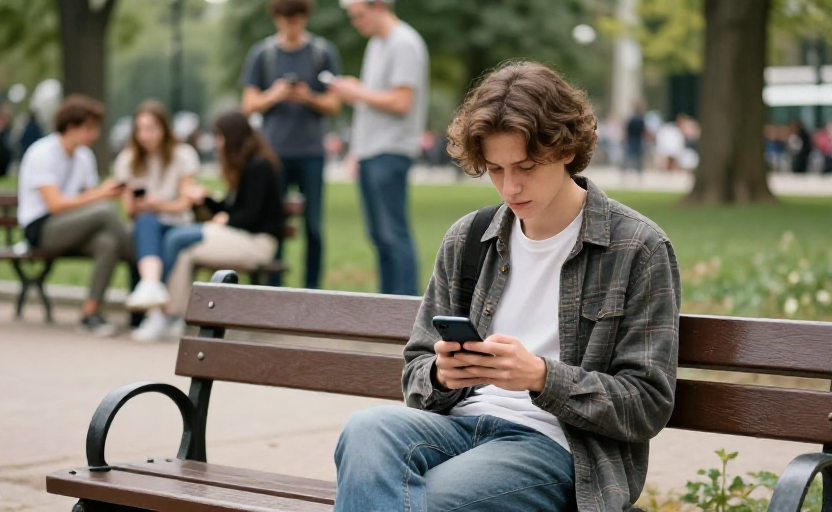
Scrolling through your phone while standing alone at a party, waiting for a friend, or riding public transit feels like a safety move. It gives you something to look at, a reason not to make eye contact, and a buffer against awkward silences. But every time you use your phone to avoid the discomfort of being present, you're telling your brain that the social world is too threatening to face without a distraction.
This habit robs you of small but powerful wins—like exchanging a smile with a stranger or noticing your surroundings. Over time, the phone becomes a crutch that keeps your social muscles weak. Next time you feel the urge to check Instagram in a public space, try a 30-second experiment: put the phone in your pocket, take a slow breath, and just look around. Notice how the world doesn't collapse.
4. Apologizing for everything
Saying "sorry" for small things—bumping into a chair, clearing your throat, taking up space—might feel polite, but it's often a subtle way of managing how others perceive you. Chronic apologizing keeps you in a low-status position and reinforces the belief that your presence is an imposition.
Social anxiety loves this dynamic. It keeps you small and safe from judgment, but it also prevents you from experiencing the truth: that most people don't notice or care about the tiny things you're apologizing for. Try replacing "sorry" with "thank you" when it fits. Instead of "Sorry I'm late," say "Thanks for waiting." It shifts your mindset from apology to gratitude, and that small change can slowly rewire how you see yourself in social settings.
Recognizing these habits is the first step. The goal isn't to eliminate them overnight—it's to notice them without judgment and experiment with tiny changes. Social anxiety doesn't vanish, but it can shrink when you stop feeding it the same old routines.