Peptide serums have earned a loyal spot in many skincare routines, promising to support collagen and improve skin firmness. You apply it every morning and night, expecting to see a gradual lift. But weeks—or even months—later, you catch your reflection and wonder: is anything actually happening?
It is a frustrating feeling, especially when you have invested time and money into a product that was supposed to deliver visible results. The truth is that peptide serums can be finicky. Their effectiveness depends on formulation, storage, consistency, and whether they are actually compatible with your skin's current needs. Before you toss your bottle in frustration, look for these three specific warning signs that your peptide serum may not be working for firmness.
Sign 1: Your skin texture hasn't improved after 8–12 weeks
Peptides work by signaling skin cells to produce more collagen and elastin. This process is inherently slow—it takes time for new structural proteins to build up in the dermis. However, a general benchmark for noticeable improvement in skin texture and firmness is around eight to twelve weeks of consistent, twice-daily use.
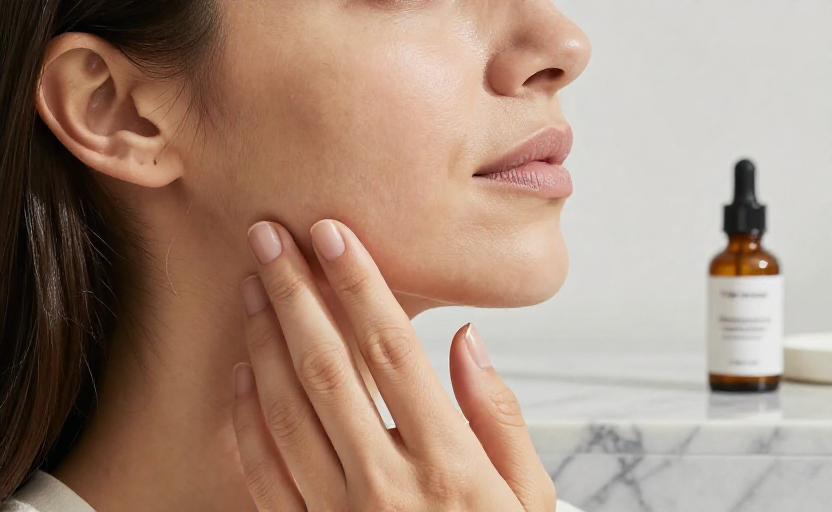
If you have been applying your serum diligently for three months and your skin still feels loose, crepey, or lacks its previous bounce, the product may not be delivering enough active peptides—or the peptides in the formula may have degraded. Look closely at fine lines around the jawline and cheeks. These areas often show the first signs of collagen loss. If they appear unchanged, the serum is likely underperforming.
A quick check: Gently pinch the skin on the back of your hand. If it snaps back quickly, your skin still has decent elasticity. If it lingers, collagen support is weak.
Sign 2: You see irritation, dryness, or breakouts in new places
Not all peptide complexes are created equal. Some formulations include low-quality carrier ingredients, excessive preservatives, or a pH level that disrupts your skin barrier. A peptide serum that is supposed to firm the skin should never cause stinging, redness, or persistent dryness. If your skin feels tighter (in a bad way) or looks flaky after application, the formula may be interfering with barrier function rather than supporting it.
Breakouts are another red flag. While peptides are generally non-comedogenic, some serums use occlusive silicones or heavy emulsifiers that can clog pores. Trust your skin's feedback. If the serum leaves your complexion looking dull or irritated, it is not creating the environment needed for collagen synthesis. In fact, chronic low-grade inflammation can accelerate collagen breakdown, working against the very goal of the product.
Sign 3: The serum pills, balls up, or sits on top of your skin
A well-formulated peptide serum should absorb reasonably well into the skin. While some slight tackiness is normal, persistent pilling—those little white or clear balls that roll off when you apply moisturizer or sunscreen—indicates that the serum is not penetrating. Instead, it is forming a film on the surface.
Pilling can happen for a few reasons: The molecular weight of the peptides is too large to absorb, the formula relies on film-forming polymers that don't sink in, or you are layering incompatible products underneath. Regardless of the cause, if the product sits on top of your skin, peptides are not reaching the deeper layers where collagen is made. You are essentially wearing an expensive, ineffective veil.
What to do if your serum is failing these checks
If one or more of these signs sounds familiar, you have options beyond just switching brands. First, check the ingredient list for proven peptide types: palmitoyl tripeptide-1, palmitoyl tetrapeptide-7, and copper peptides are among the most researched for firmness. Avoid serums where peptides appear near the bottom of the ingredient list, as concentration matters.
Second, re-evaluate your storage habits. Peptides are delicate molecules that degrade with heat, light, and air. If you have been storing your serum in a humid bathroom or near a sunny window, the active ingredients may have broken down prematurely. Store peptide serums in a cool, dark place and seal the cap tightly after every use.
Finally, consider your layering order. Peptides work best on clean, slightly damp skin. If you apply an acidic toner (like a glycolic acid or salicylic acid product) right before a peptide serum, the altered pH can denature the peptides. The same goes for layering directly after a strong vitamin C serum. Wait at least 20 minutes between active steps, or apply peptides on bare skin after cleansing.
When to give up and try something else
It is reasonable to give a well-formulated peptide serum about three months. After that, if you are still seeing sagging along the jawline, deepening nasolabial folds, or skin that simply does not feel bouncy, your skin may not respond well to that specific peptide blend. Some skin types (especially mature skin with significant collagen loss) may require stronger signalers like retinoids or in-office treatments to stimulate noticeable improvement.
Peptides are not a quick fix—they are a supportive maintenance strategy. If your serum is failing these three checks, trust your eyes and your skin's tactile feedback. The right serum should leave your skin feeling supple, looking smoother, and slowly—very slowly—firming over time. If that is not happening, your bottle is not doing its job.