
Get Advice
Home fitness weight-loss 3 warning signs your low-calorie diet is breaking down muscle
weight-loss 2 min read

3 warning signs your low-calorie diet is breaking down muscle

Written By Grace Bennett
Jun 16, 2026
Reviewed by   Amelia Grant, RD
Fitness and nutrition content creator. Former college athlete now focused on helping regular people find joy in movement and whole foods.
3 warning signs your low-calorie diet is breaking down muscle
3 warning signs your low-calorie diet is breaking down muscle Source: Pixabay

Low-calorie diets can be effective for weight loss, but they come with a hidden risk: the loss of hard-earned muscle. When your body doesn't get enough energy from food, it may start breaking down muscle tissue for fuel—a process that can sabotage your metabolism and leave you weaker than before. Here are three telltale signs that your low-calorie eating plan might be costing you muscle mass.

You feel unusually weak during your workouts

If your usual weights feel heavier or you can't finish a set you once handled easily, that's not just fatigue—it could be a sign that your muscles are shrinking. When calorie intake drops too low, especially in protein, your body begins to catabolize muscle for amino acids. This leads to a measurable drop in strength and endurance, often within a few days. If you notice your performance sliding despite sticking to your routine, your diet may be too restrictive.

You lose weight quickly but body fat percentage stays the same

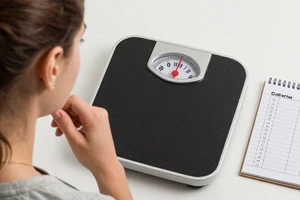
Rapid weight loss is often praised, but it's not always fat loss. If the number on the scale is dropping yet your clothes fit the same or you don't see a change in body composition, you're likely losing muscle and water, not fat. A sustainable, muscle-sparing approach targets about 1–2 pounds per week. Losing more than that typically means muscle is being broken down, which slows your resting metabolic rate and makes future weight loss harder.

You feel constantly tired and your mood is low

Muscle tissue plays a key role in your body's overall energy regulation. When muscle mass declines, so does your metabolic efficiency, leaving you chronically sluggish. Additionally, low-calorie diets that force muscle loss often miss key nutrients like B vitamins, iron, and zinc, which can worsen fatigue and affect mood. If you're irritable, foggy-headed, or struggling to recover from normal daily activities, your diet may be starving more than just your fat cells.


Protecting muscle while cutting calories is possible, but it requires strategic adjustments. To preserve lean mass, aim for a moderate calorie deficit (no more than 500 calories below maintenance), prioritize protein intake (around 1.6–2.2 grams per kilogram of body weight per day), and include resistance training in your fitness plan. If any of the signs above apply to you, it may be time to reassess your approach—your body will thank you.

Related FAQs
Some muscle loss can occur even with ideal protein intake and resistance training, but a well-designed moderate calorie deficit (about 300–500 calories daily) paired with adequate protein and strength training typically minimizes muscle breakdown. Losing more than 1–2 pounds per week or noticing strength declines suggests excessive muscle loss.
Yes, muscle can be rebuilt once you return to a maintenance or slight surplus calorie level. Focus on progressive resistance training and sufficient protein intake. The process may take several weeks to months, but muscle memory often helps speed recovery.
Fat loss shows up as smaller measurements and improved body composition without strength decline, whereas muscle loss is marked by decreased strength, slower metabolism, and a 'skinny-fat' appearance. Body composition tests like DEXA scans or bioelectrical impedance can help differentiate, but changes in workout performance are a reliable practical indicator.
If you experience persistent fatigue, drop more than 2 pounds per week after the first week, feel cold more often, or notice your strength decreasing week-over-week, your calorie intake is likely too low. A moderate deficit of 300–500 calories below maintenance, combined with 1.6–2.2 g of protein per kg of body weight daily, is a safe range for most people.
Key Takeaways
  • Muscle loss often goes unnoticed because the scale keeps dropping.
  • Feelings of unusual weakness and declining workout performance are early red flags.
  • Rapid weight loss with no change in body fat percentage indicates muscle breakdown.
  • Chronic fatigue and low mood can signal muscle wasting and nutrient deficiencies.
  • Preserving muscle requires moderate calorie deficits, adequate protein, and resistance training.
Medical Note
This article is for informational purposse only and should not be taken asanb caring teotio ongpontyBeotot bacnts Spotiroeprofestional medical loloice. Awwver consux with a healthcart-professenar-tal for medical advice and ineatment.
Comments
  • No comments yet. Be the first to share your thoughts.
Leave a Comment
Login with Google to comment.