
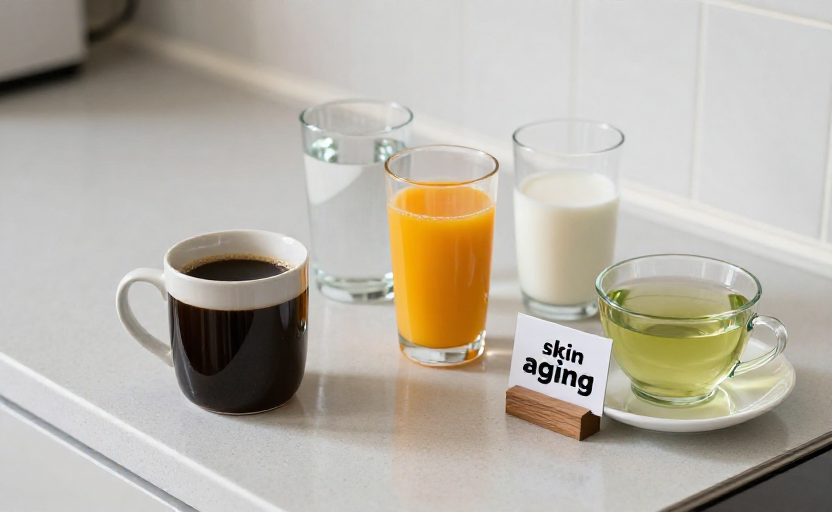
Your morning routine might be quietly undermining your skin's structure. While you focus on serums and sunscreens, the first thing you drink on an empty stomach could be breaking down collagen before your day even begins. Dermatologists point to three common beverages that, when consumed habitually, may accelerate collagen degradation—and the evidence comes down to how these drinks affect inflammation, glycation, and nutrient absorption.
1. Sugary Coffee Blends
A morning latte loaded with flavored syrups, whipped cream, or several teaspoons of sugar does more than spike your blood glucose. High sugar intake triggers a process called glycation, where sugar molecules bind to collagen and elastin fibers, forming advanced glycation end products (AGEs). These AGEs stiffen the skin's support network, making it less resilient and more prone to wrinkles. Dermatologists note that a caramel macchiato or a sweetened iced coffee can deliver 30 to 50 grams of sugar before 9 a.m.—an amount that promotes AGE formation throughout the day.
Tip: If you need a morning coffee, drink it black or with a splash of unsweetened milk. Your skin will thank you more than your taste buds will miss the syrup.
2. Fruit Juice (Even Fresh-Squeezed)
A glass of orange or apple juice seems healthy, but without the pulp and fiber of whole fruit, the natural sugars hit your bloodstream rapidly. This rapid absorption triggers a sharp insulin spike, which in turn promotes inflammation and oxidative stress—two forces that degrade collagen and impair its synthesis. Many commercial juices also contain added sugars or are made from concentrate, further compounding the problem. Dermatologists explain that a single 12-ounce glass of orange juice contains about 33 grams of sugar and almost no fiber, creating a glycemic load similar to soda.
3. Regular Milk in Large Quantities
Dairy milk has been linked to increased insulin-like growth factor 1 (IGF-1) levels, a hormone that can accelerate skin aging and acne. While moderate consumption may be fine for many people, drinking a large glass of milk first thing—especially as part of a protein shake or cereal—can elevate IGF-1 enough to stimulate collagen breakdown. Some dermatologists also point out that pasteurization reduces certain beneficial enzymes in raw milk, though the primary concern remains the IGF-1 effect and potential inflammation in lactose-sensitive individuals.
What to Drink Instead for Collagen Support
Swap those three beverages for options that support skin structure rather than attack it. Plain water is the simplest choice, helping maintain hydration that keeps collagen fibers plump and functional. Green tea offers catechins, which may inhibit collagen-degrading enzymes and reduce oxidative damage. A small glass of unsweetened pomegranate juice (diluted with water) provides ellagic acid and antioxidants that protect existing collagen. Bone broth, if you tolerate it, supplies glycine and proline—amino acids your body uses to build collagen.
Collagen Preservation Beyond Your Mug
What you skip in the morning matters, but so do other habits. Sun exposure remains the top cause of collagen loss; daily broad-spectrum SPF 30 or higher is nonnegotiable. Smoking, poor sleep, and chronic stress also raise cortisol levels that degrade collagen. Dermatologists recommend pairing a skin-supportive morning drink with a consistent sleep schedule, a diet rich in vitamin C (found in bell peppers, strawberries, and broccoli), and a simple routine that includes a gentle cleanser, moisturizer, and sunscreen.