You already know you should drink water when you wake up. But what about what you eat for breakfast? Many people unknowingly sabotage their morning hydration with the foods and drinks they choose first thing. Registered dietitians notice the same three patterns over and over — and fixing them is often simpler than you think.
Your body wakes up slightly dehydrated after a night without fluids. The morning meal can either help restore that balance or dig you into a deeper hole. Here are the three food-based hydration mistakes dietitians see every day, plus simple swaps that support steady energy and fluid levels.
Mistake #1: Starting the day with a diuretic beverage
A cup of coffee is a non-negotiable morning ritual for millions of people. While a moderate amount (one to two cups) fits into a well-hydrated day, problems start when you make coffee the first and only liquid before you eat anything. Caffeine acts as a mild diuretic, meaning it signals your kidneys to flush out more fluid. When you're already running low after sleep, this can amplify the deficit.
Dietitians often see clients who feel sluggish mid-morning and reach for another coffee, creating a cycle that never truly rehydrates the body. The fix isn't to swear off coffee — just pair it with a glass of water first. Or, at minimum, take a few sips of water alongside your mug. A simple shift: drink water before your coffee, not after.
Food that counteracts hydration
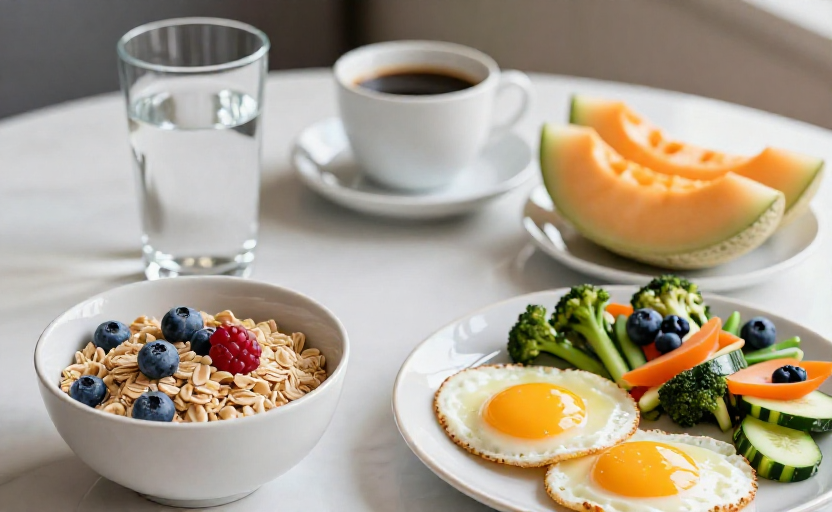
High-protein breakfasts built around processed meats (bacon, sausage) are especially tricky. Protein itself is fine, but the high sodium content in processed meats pulls water into your digestive tract and can leave you feeling puffy or thirsty. If you love a savory breakfast, balance it with something naturally hydrating — sliced cucumber, a few cherry tomatoes, or a handful of melon.
Mistake #2: Building breakfast around dehydrating foods
It's not just beverages that affect hydration. Several popular breakfast foods are surprisingly low in water content or actively work against fluid balance. Think: sugary cereals, pastries, white toast with jam, or pre-made breakfast bars. These foods are typically high in simple carbohydrates and low in water, fiber, and electrolytes.
When you eat a meal that's heavy on sugar and starch but light on water and minerals, your body has to pull fluid from your bloodstream into your gut to process it. That can leave you feeling thirsty, foggy, or headachy within a couple of hours — even if you had a glass of water earlier. Dietitians call this the "hidden dehydration" effect.
“I often tell clients to check if their breakfast plate has any color from produce. If it doesn’t, there’s a good chance they’re missing out on water-rich foods,” says a registered dietitian who works with busy professionals.
A better breakfast template
Instead of toast and jam, try oatmeal made with milk or plant-milk topped with berries. Instead of a dry breakfast bar, have a smoothie with spinach, frozen fruit, and unsweetened yogurt. The goal is to incorporate at least one serving of fruit or vegetables at breakfast — that alone can add 3–6 ounces of water to your meal.
Mistake #3: Relying on thirst cues alone
Thirst is a late sign — by the time you feel thirsty, you are already mildly dehydrated. Many people don't feel especially parched in the morning, so they assume they're fine. But low-level morning dehydration is extremely common, especially if you slept poorly, breathed through your mouth, or sweated during the night.
Dietitians see this pattern particularly in people who skip breakfast or eat a very small meal. Without breakfast, you lose another opportunity to take in fluids and electrolytes. Over weeks and months, chronic under-hydration can affect digestion, energy, mood, and even skin appearance.
Signs you might be under-hydrated at breakfast
- Waking up with a headache or dry mouth
- Feeling dizzy when you stand up quickly
- Dark yellow urine first thing in the morning
- Craving salty or sweet foods soon after waking
How to hydrate smarter at breakfast
You don't need to chug a liter of water the moment your alarm goes off. Small, consistent strategies make the biggest difference:
- Start with a glass of water (even half a glass) before anything else. Keep a glass or reusable bottle next to your bed or coffee maker.
- Choose water-rich foods at breakfast: berries, citrus, melon, cucumber, yogurt, oatmeal, chia pudding, or smoothies. Even an orange or an apple provides hydration plus fiber and vitamins.
- Pair your coffee with water. For every cup of coffee, drink an equal amount of water — ideally before you finish the coffee.
- Add a pinch of sea salt or a squeeze of lemon to your morning water if you tend to sweat a lot overnight or live in a hot climate. This helps replace small electrolyte losses.
- Set a gentle reminder — a phone alarm, a sticky note on the bathroom mirror, or simply the act of washing your face and pouring a glass of water as part of your morning routine.
Morning hydration isn't about perfection. It's about building a few small habits that help your body start the day balanced. When you pay attention to both what you eat and what you drink, you set yourself up for clearer thinking, steadier energy, and fewer mid-morning slumps.