
If you spend eight or more hours a day in a chair, you have almost certainly felt the consequences: a tight neck, aching lower back, or that vague sense of stiffness that follows you home. Our bodies are simply not built for static sitting, and over time, poor seated alignment can lead to chronic discomfort and reduced mobility.
But you do not have to accept this as normal. Small, intentional adjustments—anchored in biomechanics and habit science—can keep your spine supported and your muscles balanced, even during long workdays. Here are three expert-backed posture fixes designed for the reality of a desk-bound life.
Fix 1. Build a “Neutral Spine” Cue into Your Chair Setup
The most common postural mistake among sitters is slumping into a C-curve: the pelvis tilts backward, the low back rounds, and the head juts forward to meet the screen. Over a few hours, that position loads the discs unevenly and fatigues the extensor muscles.
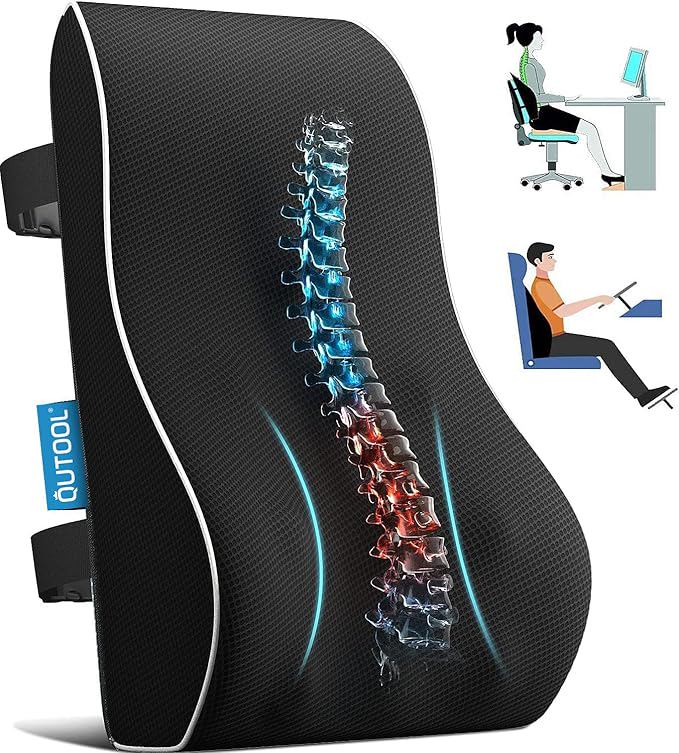
The first fix is not about willpower—it is about environment. Adjust your chair so your hips are slightly higher than your knees (use a cushion if needed) and your feet rest flat on the floor. Then place a small lumbar roll, rolled towel, or cushion at the curve of your lower back. This single change tilts the pelvis forward into a neutral position, which naturally aligns the spine above it.
Once the chair is set, practice a chin tuck: gently draw your chin straight back, as if creating a “double chin,” without tilting your head down. Hold for three seconds and release. Doing this every 20 minutes retrains the deep neck flexors and counters forward-head posture.
Quick win: Set a repeating alarm for “sit tall + chin tuck.” Within a week, the motion becomes automatic.
Fix 2. Use the “Thoracic Rotation” to Unlock Your Mid-Back
Sitting for hours locks the thoracic spine (the upper and mid-back) into a flexed, stiff position. That immobility forces your lower back and neck to take on extra movement, which often leads to pain in those areas.
A simple rotation drill restores mobility and reduces tension. While seated, sit up tall with your hands behind your head (elbows wide). Keeping your hips facing forward, rotate your torso to one side as far as comfortable, hold for a breath, then rotate to the other side. Move slowly and deliberately—the goal is not speed but reaching end-range without pain.
Perform five repetitions per side every hour. This motion lubricates the facet joints, wakes up the paraspinal muscles, and improves your ability to maintain upright posture for the rest of the day.
Fix 3. Break the “Postural Load” with a 90-Second Standing Reset
Posture is not a fixed state—it degrades over time under sustained load. The most effective way to stop that creep is to interrupt it frequently with brief, active standing breaks.
Stand up from your desk. Place your hands on your hips and gently arch backward, looking up slightly, to open the front of your hips and chest. Then roll your shoulders up, back, and down. Finally, rock your weight slowly from heels to toes a few times, letting your spine lengthen. This sequence takes about 90 seconds.
- Why it works: Standing unloads the lumbar discs (which lose hydration under constant pressure) and resets your hip flexors, which tighten when you sit. The backward arch counteracts the forward flexed position of sitting.
- How often: Aim for once every 45 to 60 minutes. If you forget, pair the break with a recurring event—after every phone call or before you start typing an email.
These three strategies are not gimmicks. They are rooted in how the spine responds to sustained loading, and they fit into a busy workday without requiring special equipment or a complete office makeover. Start with one fix, master it for a week, then layer on another. Your body will thank you.