
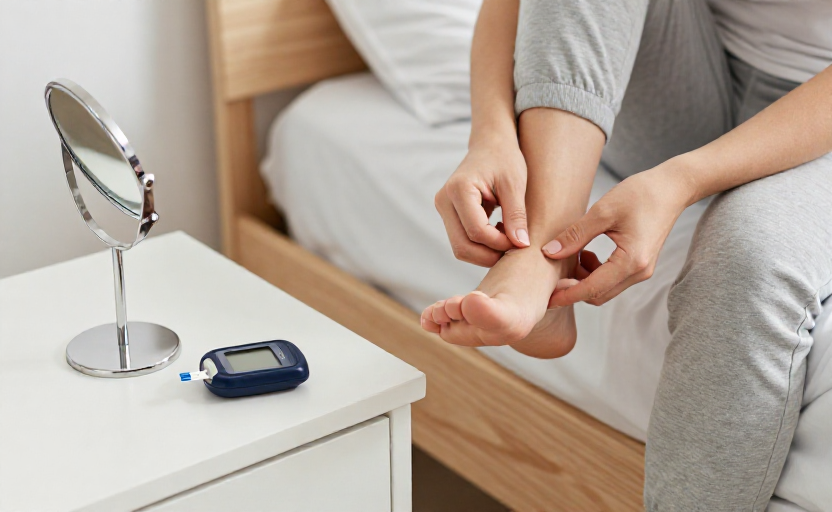
If you're living with diabetes, you've likely heard about the importance of blood sugar control. But there's a less talked about complication that affects nearly half of all people with diabetes over time: nerve damage, or diabetic neuropathy. The good news? Research shows that small, consistent daily habits can significantly reduce your risk. Here are three expert-backed habits that help protect your nerves and keep you moving comfortably.
1. Keep your blood sugar steady — not just low
It's not just about avoiding highs. Large swings in blood glucose — spiking after meals then dropping — are especially toxic to nerve cells. Aim for stable, gentle fluctuations rather than a rollercoaster. The American Diabetes Association recommends a hemoglobin A1c target below 7% for most adults, but working with your doctor to find a personalized goal matters more.
Steady glucose means quieter nerves. Volatility is the real troublemaker.
Practical ways to smooth your curve: eat protein and fiber with every meal, walk for 10 minutes after eating, and spread carbohydrate intake evenly across the day.
2. Move your body daily — even a little bit
Physical activity improves blood flow to your extremities, which delivers oxygen and nutrients to nerves and helps remove waste products. But you don't have to run a marathon. The key is consistent, moderate movement that fits your life.
Consider these approaches:
- Walking — aim for 15-20 minutes after the largest meal of the day.
- Stretching or yoga — great for flexibility and circulation.
- Chair exercises — if balance or joint pain is an issue, seated leg lifts and arm movements still help.
Aim for at least 150 minutes of moderate activity per week. If you have existing nerve pain in your feet, talk to a physical therapist about low-impact options like swimming or cycling.
3. Check your feet daily — catch problems early
Nerve damage can dull sensation in your feet, meaning you might not feel a blister, cut, or ingrown toenail. By the time you notice, an infection may already be developing. That's why a daily foot check is a non-negotiable habit.
Here's a simple routine to follow each evening:
- Look at every part of each foot — soles, between toes, and around nails. Use a mirror if needed.
- Feel for warmth, swelling, or any skin changes.
- If you find a cut or sore, clean it gently with mild soap and water, apply antibiotic ointment, cover with a sterile bandage, and notify your healthcare team.
Moisturize dry skin (avoid between toes) to prevent cracking. And wear well-fitting socks — seamless socks can reduce friction.
Why these habits matter together
Blood sugar control, movement, and foot care aren't three separate to-do lists. They reinforce each other. Stable glucose helps you feel well enough to be active; better circulation supports nerve health; and daily foot checks mean problems are caught before they become serious. Over time, this trinity of habits creates a powerful defense against neuropathy.
Your nerves are the wiring of your body — they carry messages, sensations, and signals that keep everything working. With these three habits, you're helping that wiring last.