You already know that drinking water is good for you. But what if when you drink matters just as much as how much? New research in psychophysiology suggests that hydration timing plays a subtle but real role in how your body handles daily pressure. If you are feeling stuck in a loop of tension and fatigue, your water schedule might be part of the problem.
Here are two specific warning signs that your hydration rhythm is working against your stress response—and what to do about it without overhauling your whole life.
Warning Sign #1: You chug water only after you feel parched
Thirst is a lagging indicator. By the time your mouth feels dry, your body may already be mildly dehydrated—and your stress hormones have already started to rise. A 2020 study from the Journal of Nutrition found that even a 1–2 percent drop in fluid balance can elevate cortisol levels in healthy adults. That means if you wait until you are thirsty to reach for a glass, you are essentially asking your nervous system to work overtime.
The practical fix: Instead of drinking only in response to thirst, front-load your intake early in the day and keep a steady baseline. Start your morning with a glass of water before coffee. Keep a bottle on your desk and sip every 30–45 minutes, whether you think you need it or not. This smooths out the hydration curve and helps keep your stress response more even-keeled.
Think of hydration like a thermostat, not a fire extinguisher. Small, consistent adjustments prevent the alarm from going off in the first place.
Warning Sign #2: Your largest water intake happens right before bed
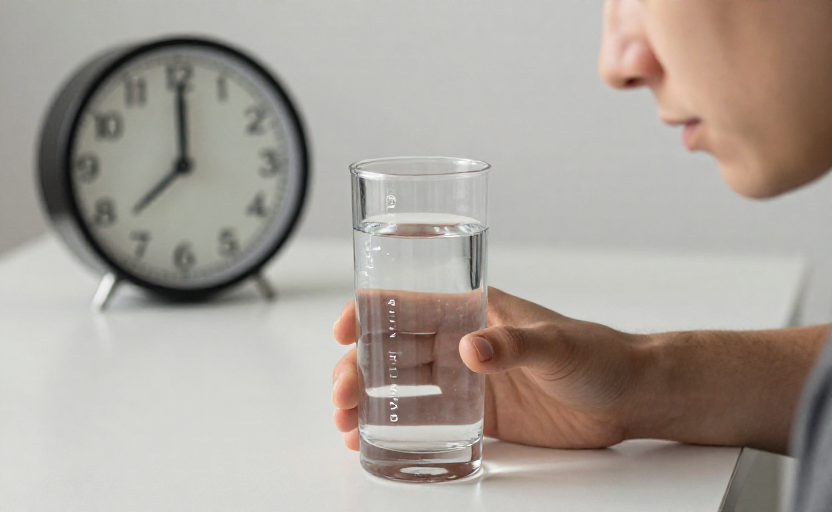
It is a common pattern: you realize at 9 p.m. that you barely drank anything all day, so you gulp down two or three glasses before brushing your teeth. This may feel like catching up, but it actually sets off two stress amplifiers. First, you will likely wake up multiple times at night to use the bathroom—fragmenting your sleep. Second, a full bladder triggers the sympathetic nervous system, keeping your body in a low-grade alert state even as you try to rest.
The practical fix: Front-load 70 percent of your daily water intake before 4 p.m. If you exercise in the evening, drink immediately after your workout—not right before bed. And if you need a drink in the hour before sleep, limit it to a small sip or a few ice chips. The goal is to let your kidneys do their work while you are awake, not while you are trying to drift off.
How hydration timing interacts with the stress cycle
Your body does not store water the way it stores glycogen or fat. Fluid balance is maintained hour by hour. When you fall behind, your brain signals the adrenal glands to release cortisol and adrenaline. That is useful if you are running from a threat, but if it happens every afternoon because you skipped your water breaks, you are essentially keeping your foot on the gas pedal all day long.
Over weeks and months, this pattern can magnify the effects of ordinary stressors. You might feel irritable by mid-afternoon, struggle with focus, or notice that small frustrations feel bigger than they should. If any of that sounds familiar, look at your water log before you blame your workload.
One more nuance: electrolytes and timing
Plain water works fine for most people, but if you are someone who sweats heavily or exercises for more than 60 minutes, your hydration timing also needs to account for sodium and potassium. Drinking large amounts of plain water without electrolytes can dilute your blood sodium levels, which actually makes the stress response worse because your cells cannot function properly. A pinch of salt in your water or a piece of fruit after a workout helps maintain balance.
Your stress-sensitive hydration checklist
- Morning rehydration: 8–12 ounces of water within 30 minutes of waking, before your first cup of coffee or tea.
- Steady baseline: Sip water consistently from breakfast through late afternoon. Set a timer if you forget.
- Evening taper: Reduce fluid intake two to three hours before bedtime. If you are thirsty, take small sips only.
- Electrolyte awareness: After heavy exercise or sweating, replace fluids with a small amount of sodium and potassium—not just plain water.
Making these shifts does not require you to carry a gallon jug everywhere. It just means being intentional about when you drink, not only about how much. Small changes in timing can help your nervous system reset, your sleep improve, and your stress feel more manageable—without adding another item to your to-do list.