Your skin feels tight, looks bumpy, and flares up red. The first instinct is to reach for a salicylic acid toner or a heavy moisturizer — but which one is correct depends entirely on whether you are dealing with oily acne-prone skin or an allergic reaction. Treating one like the other usually makes everything worse.
Acne and contact dermatitis can look surprisingly alike on the surface: papules, redness, irritation. But the root causes are completely different. Acne involves clogged pores, excess sebum, and bacterial overgrowth (typically Cutibacterium acnes), while an allergic reaction is an immune response to a substance the body perceives as a threat. Getting the distinction right determines whether you calm the rash or clear the breakout. Here are the two symptoms that separate them.
1. The texture difference: comedones versus papules
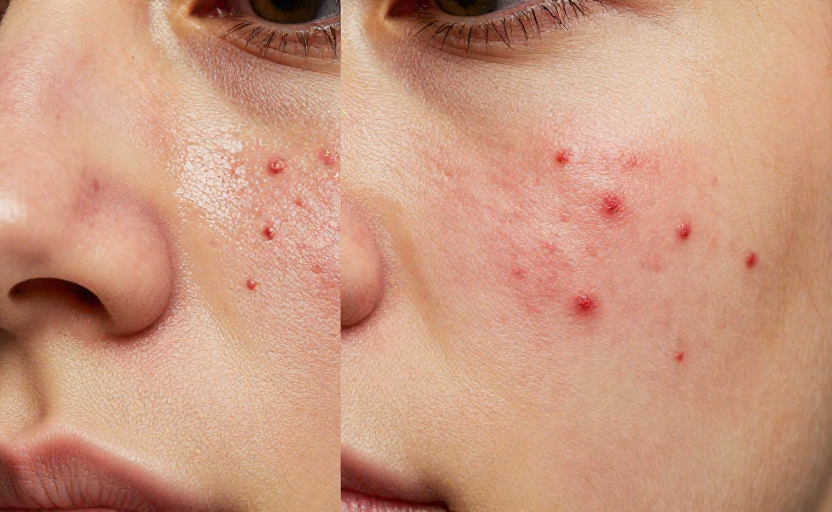
The most reliable visual clue comes down to what is inside the bump. Oily, acne-prone skin produces two classic structures: blackheads and whiteheads, which dermatologists call open and closed comedones. These small, flesh-colored or dark-topped bumps are non-inflammatory and filled with a plug of hardened oil and dead skin cells. If you can look closely and see something that looks like a tiny grain under the surface, it is almost certainly a comedo — and that is pure acne.
An allergic reaction, by contrast, rarely produces comedones. Instead, you see urticarial papules or small, raised red bumps that may form in clusters. They lack the central plug or the oily, shiny look that often accompanies acne-prone zones like the nose, chin, and forehead. Allergic lesions are usually more uniform in size and often appear as a flat red patch studded with tiny bumps. If the affected area feels rough and sandpapery rather than greasy, an allergen is the likely culprit.
Where to look for each pattern
Acne follows the oily zones of the face: the T-zone (forehead, nose, chin), cheeks near the jawline, and sometimes the upper chest and back. Allergic reactions usually appear on areas with thinner skin, such as the eyelids, the sides of the neck, the lips, and the crease of the elbow. If the flare is located somewhere you normally do not break out — say, your under-eye area or the back of your hands — treat it as a possible allergy until proven otherwise.
2. Sensation: burning and stinging versus tenderness
The second distinguishing symptom is how it feels. Acne-prone skin tends toward a dull tenderness, especially when a papule or pustule is inflamed. It might feel sore to the touch but rarely burns or stings. Allergic skin, however, is intensely reactive to sensation. Contact dermatitis typically produces itching, burning, or a prickly feeling, and many people describe a sensation of heat radiating from the area.
A quick self-check: If the area stings when you apply a gentle, fragrance-free moisturizer, that is a strong signal for allergic or irritated skin — not acne. Acne lesions may hurt, but they do not typically burn on contact with a basic moisturizer.
Itching is almost never a primary symptom of acne. If you find yourself scratching at the bumps, or if the irritation wakes you up at night, think allergen first. Histamine release from mast cells drives the itch in allergic reactions, and antihistamines can reduce it. Acne has no histamine component, so itching points away from a standard breakout.
Additional clues to help confirm your assessment
While the two symptoms above are the strongest differentiators, a few secondary signals can reinforce your reading:
- Timing of onset: Acne develops gradually over days. Allergic reactions often appear quickly — within minutes to 24 hours after exposure to a new product, food, or environmental trigger.
- Location spreading: Acne stays localized to the follicle. Allergic reactions spread outward from the point of contact and can migrate to nearby skin, including areas you never touched.
- Past history: If you have used the same cleanser for six months without issue, a sudden flare is less likely to be true acne. New products, laundry detergents, even a different shampoo can set off a reaction.
When it is both — and what to do about it
Oily, acne-prone skin can absolutely have an allergic reaction on top of it. The skin barrier in acne-prone people is often compromised by harsh cleansers or drying treatments like benzoyl peroxide and retinoids, which makes it easier for allergens to penetrate. In that case, you might see comedones alongside burny red patches. The rule of thumb: treat the allergic reaction first, because an inflamed barrier will not tolerate acne medications. A plain, fragrance-free moisturizer and a three- to five-day break from active ingredients usually settles the allergic component enough to see your baseline acne clearly again.
If you suspect an allergic reaction but cannot identify the trigger, consider patch testing. A dermatologist can apply common allergens to your back and read the results after 48 hours. This is especially useful for people who have had persistent, low-grade facial dermatitis that does not respond to acne treatment.
One more caveat: Never apply a topical steroid (even over-the-counter hydrocortisone) to your face for more than a few days unless directed by a doctor. Prolonged use can cause perioral dermatitis or steroid-induced acne, which adds a second problem onto the first.
Distinguishing oily, acne-prone skin from an allergic reaction ultimately comes down to two things: look for comedones (tiny plugs) as a sign of acne, and feel for burning or itching as a sign of allergy. Using those two clues, most people can save themselves weeks of treating a breakout that was actually a rash — or vice versa.