You know the feeling: you wake up, run your finger over your chin, and there it is—a tender, swollen bump that seems to have appeared overnight. But is it just a nasty pimple, or could it be something more stubborn, like cystic acne? The distinction matters, because the two require very different approaches to care and healing.
While a standard pimple often lives near the surface and resolves in a few days, cystic acne runs much deeper. It’s an inflammatory condition that forms when a hair follicle becomes clogged with oil and dead skin cells, then ruptures deep within the dermis. The result? Painful, persistent bumps that can stick around for weeks—and sometimes leave a lasting mark. Here are the two main symptoms that set cystic acne apart from a garden-variety pimple.
Symptom 1: Deep, Throbbing Pain and Tenderness
The most immediate clue is how the bump feels. A regular pimple—whether it’s a whitehead, blackhead, or small pustule—might be a little sore if you press on it, but the pain is usually mild and superficial. Cystic acne, on the other hand, is often described as a dull, throbbing ache that seems to radiate from underneath the skin. The area feels hard and tender to the touch, much like a bruise that hasn’t formed yet.
“If you can feel a deep, angry soreness even when you’re not touching it, that’s a hallmark of cystic acne,” says board-certified dermatologist Dr. Marci Klein. “Standard pimples rarely cause that kind of persistent discomfort.”
This deep pain occurs because the inflammation is happening far below the skin’s surface, where nerve endings are more abundant. The body’s immune response sends white blood cells to the area, causing swelling and pressure that just won’t quit.
Symptom 2: A Large, Hard Bump Without a Visible Head
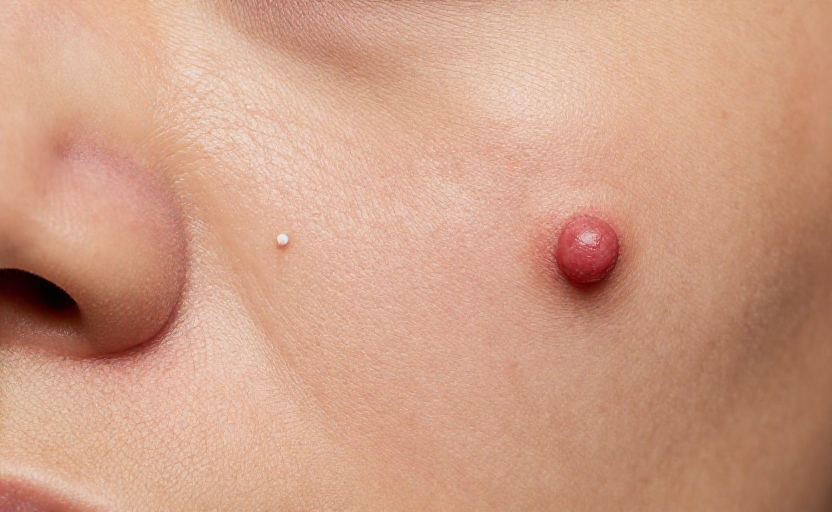
Look closely in the mirror. A typical pimple usually forms a visible, pus-filled head within a day or two—you can see the white or yellow center, and it may eventually drain or scab. Cystic acne, however, often stays as a large, round, and firm nodule under the skin. There’s no obvious head to pop (and you shouldn’t try, as that can worsen the inflammation and lead to scarring).
The bump can be as big as a pea or even a marble, with a reddish or purplish hue. Because the pore is completely blocked and the follicle has ruptured deep down, the contents don’t come to the surface. Instead, the body forms a cyst-like sac around the infection, which can persist for weeks or even months.
- Regular pimple: Small, surface-level, develops a head, resolves in 3–7 days.
- Cystic acne: Large (≥5 mm), dome-shaped, no head, lasts 2–6 weeks or longer.
Other Telltale Differences Worth Noting
While deep pain and the lack of a head are the two defining symptoms, a few other clues can help you identify cystic acne:
- Location: Cystic breakouts are most common along the jawline, chin, and cheeks—areas with denser oil glands. Regular pimples can show up anywhere on the face, chest, or back.
- Scarring: Even after a cystic lesion heals, it often leaves behind a dark mark (post-inflammatory hyperpigmentation) or an indented scar. Standard pimples rarely cause long-term skin changes unless you pick at them.
- Multiple lesions: Cystic acne usually appears as just a few large, angry bumps at a time, whereas regular breakouts often involve many smaller comedones.
When to See a Professional
If you suspect you’re dealing with cystic acne—especially if the bumps keep coming back or are causing significant pain—it’s a good idea to check in with a dermatologist or a trusted healthcare provider. Cystic acne is a medical condition that can lead to permanent scarring if left untreated. Topical over-the-counter creams rarely penetrate deep enough to make a difference. A professional can offer prescription options that target inflammation and bacteria from the inside.
In the meantime, resist the urge to squeeze, poke, or lance the bump. Gentle cleansing, a cold compress for pain, and non-comedogenic moisturizers are safe self-care tools. And remember: knowing the difference between a pimple and a cystic lesion is the first step toward treating your skin with the patience and respect it deserves.